Best Attic Insulation for Hot, Humid Climates
If you live in a region where summers feel scorching and humidity hangs in the air, your attic becomes one of the biggest contributors to indoor discomfort. Attic temperatures can soar above 150°F, causing your AC to work overtime, increasing your energy bills, and making your home feel warmer than it should.
This is where the right attic insulation becomes essential.
For homes in hot, humid climates—think Texas, Florida, Louisiana, Georgia, the Carolinas, and other southern regions—certain insulation materials perform better than others. They help:
✔ Reduce heat transfer
✔ Lower attic temperatures
✔ Prevent moisture buildup
✔ Improve indoor comfort
✔ Extend HVAC lifespan
✔ Reduce monthly cooling costs
In this complete guide, we break down the best attic insulation options designed specifically for hot and humid climates—and how to choose the right one for your home.
Why Hot & Humid Climates Need Specialized Attic Insulation
Homes in hot, humid regions face two major challenges:
1. Extreme Heat Buildup
When sunlight hits your roof, most of that heat transfers into the attic. Without proper insulation, it radiates into your home.
2. High Moisture Levels
Humidity can cause:
Mold and mildew
Wood rot
Pest attraction
Reduced insulation performance
That’s why insulating homes in these climates requires a heat-resistant and moisture-resistant strategy.
Best Attic Insulation Options for Hot & Humid Climates
Below are the most effective insulation types engineered to handle heat, humidity, and moisture.
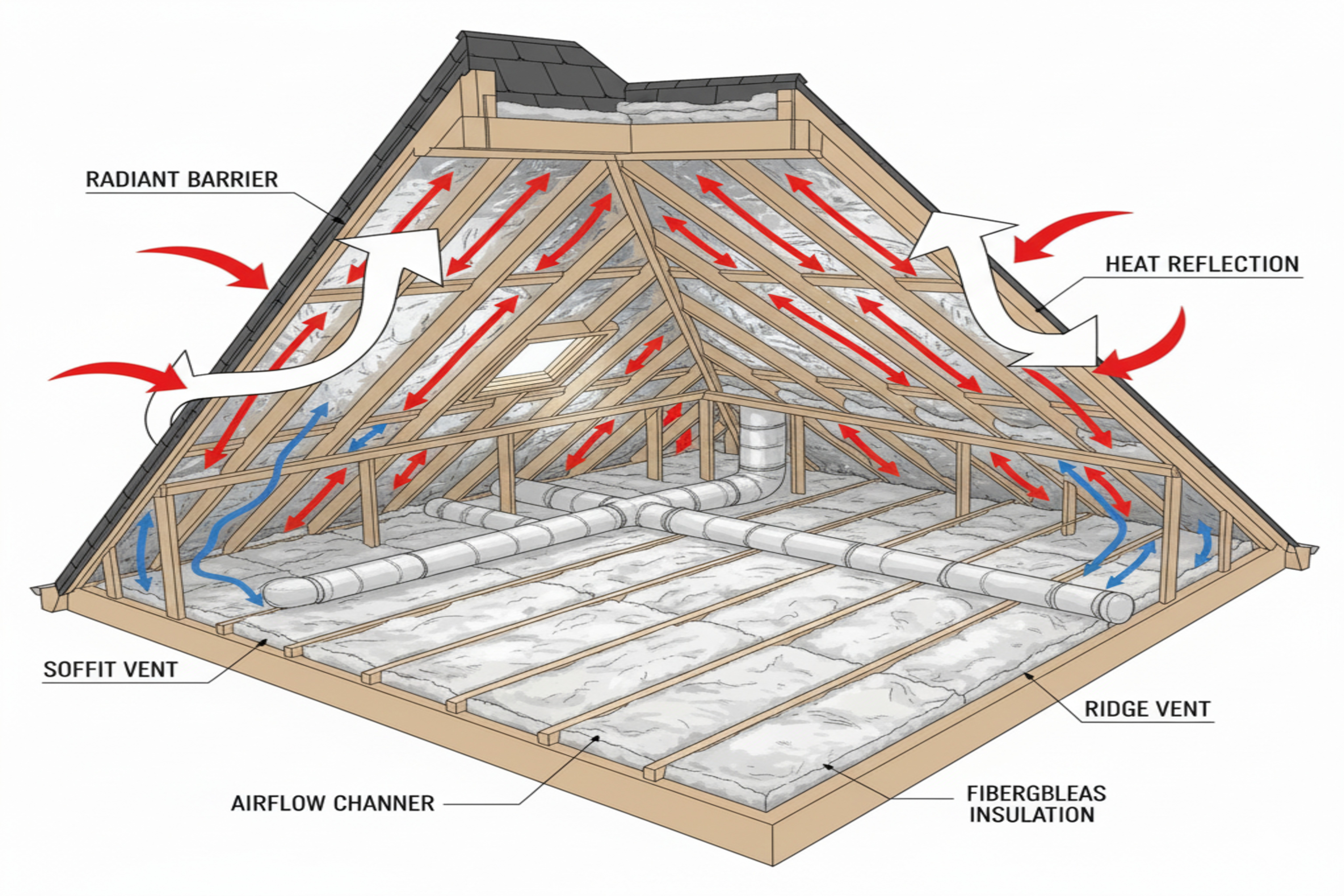
Radiant Barrier Insulation (Top Choice for Hot Climates)
A radiant barrier is one of the most affordable ways to cut attic heat. See our radiant barrier cost guide for current pricing by attic size.
Best for: Attics with extreme heat gain
A radiant barrier uses a reflective foil layer that blocks up to 97% of radiant heat, preventing it from entering your living spaces.
Why It Works Best in Hot Climates
✔ Reflects heat rather than absorbing it
✔ Keeps attic temperatures 20–30°F lower
✔ Reduces AC load and energy bills
✔ Works great when combined with other insulation
Best Placement: Installed under roof decking or stapled to rafters
BCP Inc. offers premium radiant barrier insulation solutions ideal for hot, humid regions.
Spray Foam Insulation (Closed-Cell for Humid Regions)
Best for: Moisture-prone attics, air sealing
Closed-cell spray foam is highly effective in humid climates because it creates an air- and moisture-tight seal.
Benefits of Closed-Cell Spray Foam
Acts as a vapor barrier
Prevents humid air from entering the home
Excellent heat resistance
Adds structural strength
Bonus: Helps prevent mold growth by eliminating moisture pathways.
Blown-In Fiberglass Insulation
Best for: Cost-effective attic insulation upgrades
Blown fiberglass is lightweight, moisture-resistant, and performs well in high-heat environments.
Advantages
Affordable
Good R-value
Easy to top off existing insulation
Does not absorb moisture
For extra protection: Pair fiberglass with a radiant barrier for maximum heat control.
Mineral Wool Insulation
Best for: Humid climates that also require fire resistance
Mineral wool (rock wool) performs reliably in hot and wet environments because it is:
✔ Water-resistant
✔ Fire-resistant
✔ Mold-resistant
✔ High-density
Its structure allows it to maintain performance even when humidity levels spike.
Cellulose Insulation (Treated, Not Recommended in Very Humid Areas)
Cellulose can be used in hot regions if specifically treated for moisture. However, in extremely humid climates, it may retain water and require monitoring.
Only use if:
You have proper attic ventilation
You pair it with a radiant barrier
You avoid roof leaks
Attic Ventilation: The Missing Piece in Hot & Humid Climates
Even with great insulation, your home needs proper airflow.
Best Ventilation Systems:
Ridge vents
Soffit vents
Gable vents
Solar attic fans
Ventilation + insulation together:
✔ Reduce attic heat
✔ Lower humidity
✔ Prevent mold
✔ Improve insulation performance

How to Choose the Best Attic Insulation for Your Climate
Consider these factors:
Temperature severity
Humidity levels
Existing attic insulation
Roof type and material
Your energy efficiency goals
Budget
Local building codes
Best Overall Combo for Hot & Humid Climates:
Radiant Barrier + Blown Fiberglass
OR
Radiant Barrier + Closed-Cell Spray Foam
This dual-layer system gives you reflective heat protection + high R-value insulation + moisture resistance.
Installation Tips for Humid Climates
Make sure attic is ventilated before adding insulation
Fix air leaks (gaps, cracks, penetrations)
Do not block soffit vents
Use vapor-resistant materials
Install radiant barrier on the roof rafters
Maintain proper spacing for airflow
Conclusion + CTA
Homes in hot and humid climates need insulation that does more than block heat—they need materials that resist moisture, improve airflow, and support long-term energy efficiency. Radiant barriers, spray foam, fiberglass, and mineral wool each offer powerful benefits depending on your attic conditions and climate zone.
If you want better year-round comfort, lower energy bills, and a healthier home, upgrading your attic insulation is the smartest move you can make.
BCP Inc. is here to help you choose the right insulation for your climate and home.
877-540-5678
[email protected]
bcpinc.us
