Construction Tarps: What to Use and What to Avoid
Construction Tarps: What to Use, What to Avoid, and How to Get the Most Out of Every Cover
Rain does not wait for your framing crew to finish. Wind does not care that your drywall delivery showed up a day early. And that pile of lumber sitting in the open? It is soaking up moisture with every passing hour.
Construction tarps are one of the cheapest and most effective ways to protect materials, structures, and equipment on a job site. But grabbing whatever tarp is closest to the register at the hardware store is how you end up with torn covers, soaked materials, and wasted money.
In this guide, we will walk through what construction tarps actually need to do, which types work best for different job site situations, how to avoid the cheap tarps that fail when you need them most, and how to secure your covers so they stay put in wind and rain.
Why Construction Sites Need Tarps
An active construction site is full of materials and structures that are vulnerable to weather. Framing lumber absorbs moisture and warps. Concrete bags harden if they get wet. Drywall is ruined by a single rainstorm. Plywood sheathing swells and delaminates. Tools rust. Insulation loses its R value.
Beyond protecting materials, tarps also protect the structure itself during construction. An unfinished roof, an open wall section, or an exposed foundation can all suffer water damage that delays the project and adds cost.
A set of quality heavy duty tarps on site is not an expense. It is insurance against weather delays, material waste, and rework.
Where Construction Tarps Are Used on a Job Site
Tarps serve multiple purposes throughout every phase of construction.
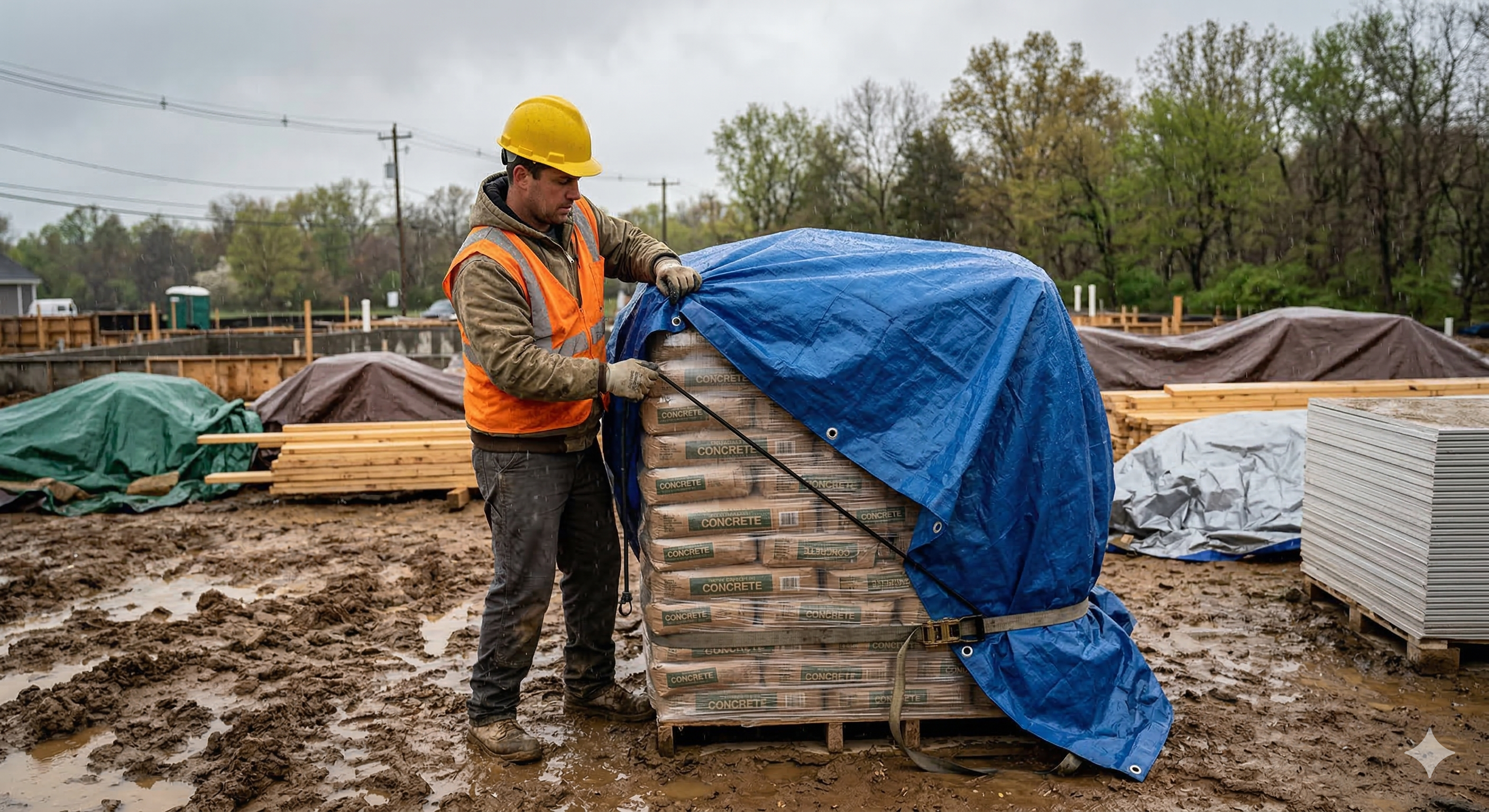
Covering building materials. Lumber, plywood, roofing supplies, concrete, and masonry products all need protection from rain and ground moisture. Tarps keep materials dry and usable until they are needed.
Protecting open structures. When a roof is partially framed or the sheathing is not yet installed, a tarp over the top prevents rain from soaking the floor framing and subfloor below. The same applies to wall openings before windows and house wrap are installed.
Ground covers. Laying a tarp under material stacks keeps them off the wet ground and prevents moisture from wicking up from below. This is especially important for wood products that absorb ground moisture quickly.
Debris containment. During demolition or renovation, tarps catch falling debris, dust, and waste material. This keeps the site cleaner and reduces cleanup time.
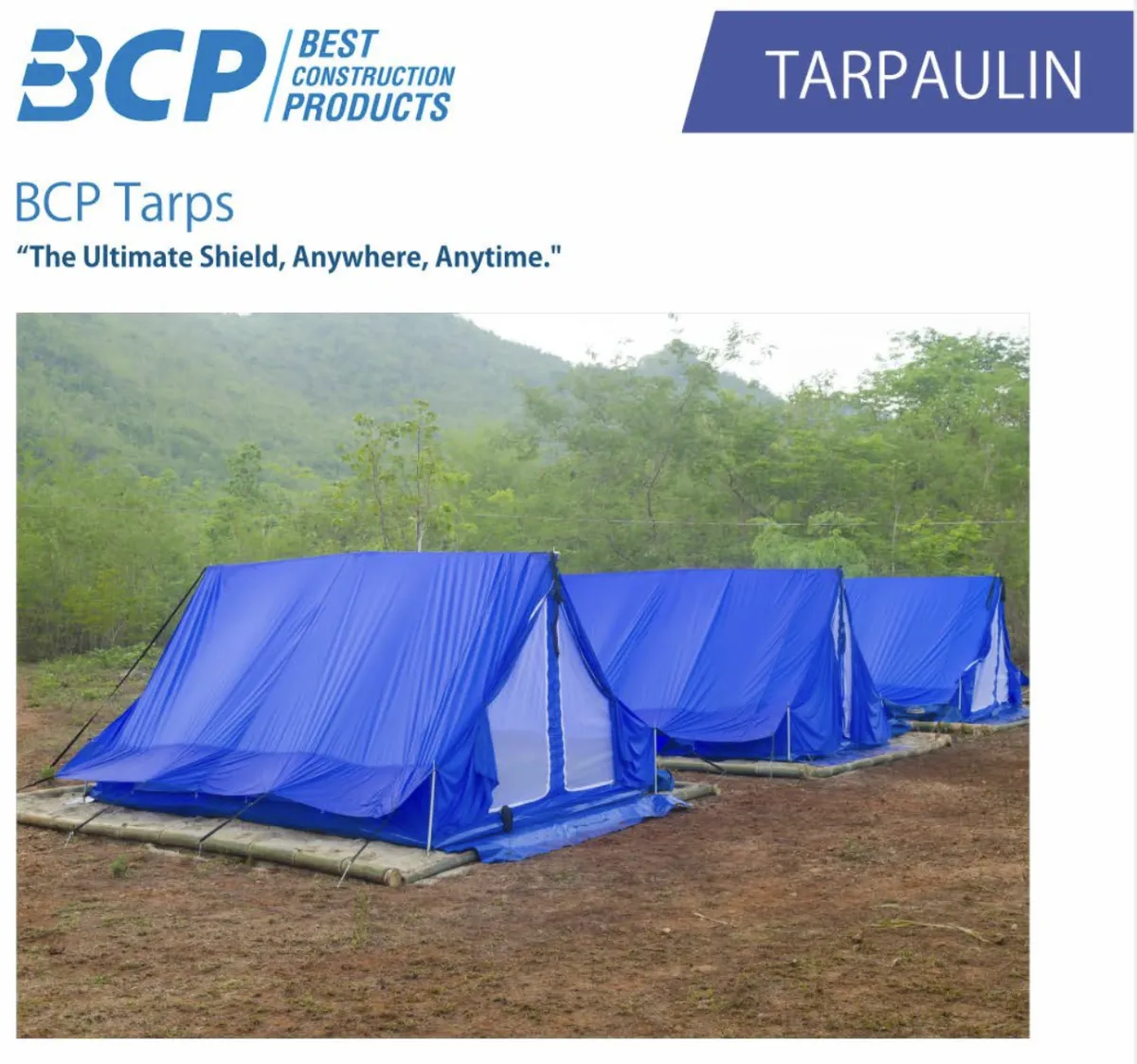
Temporary shelters. Tarps strung between supports create covered work areas where crews can continue tasks during light rain without exposing materials or tools to water.
Equipment protection. Generators, compressors, saws, and other equipment left on site overnight should be covered to prevent moisture damage and extend their working life.
What Makes a Construction Tarp "Heavy Duty"
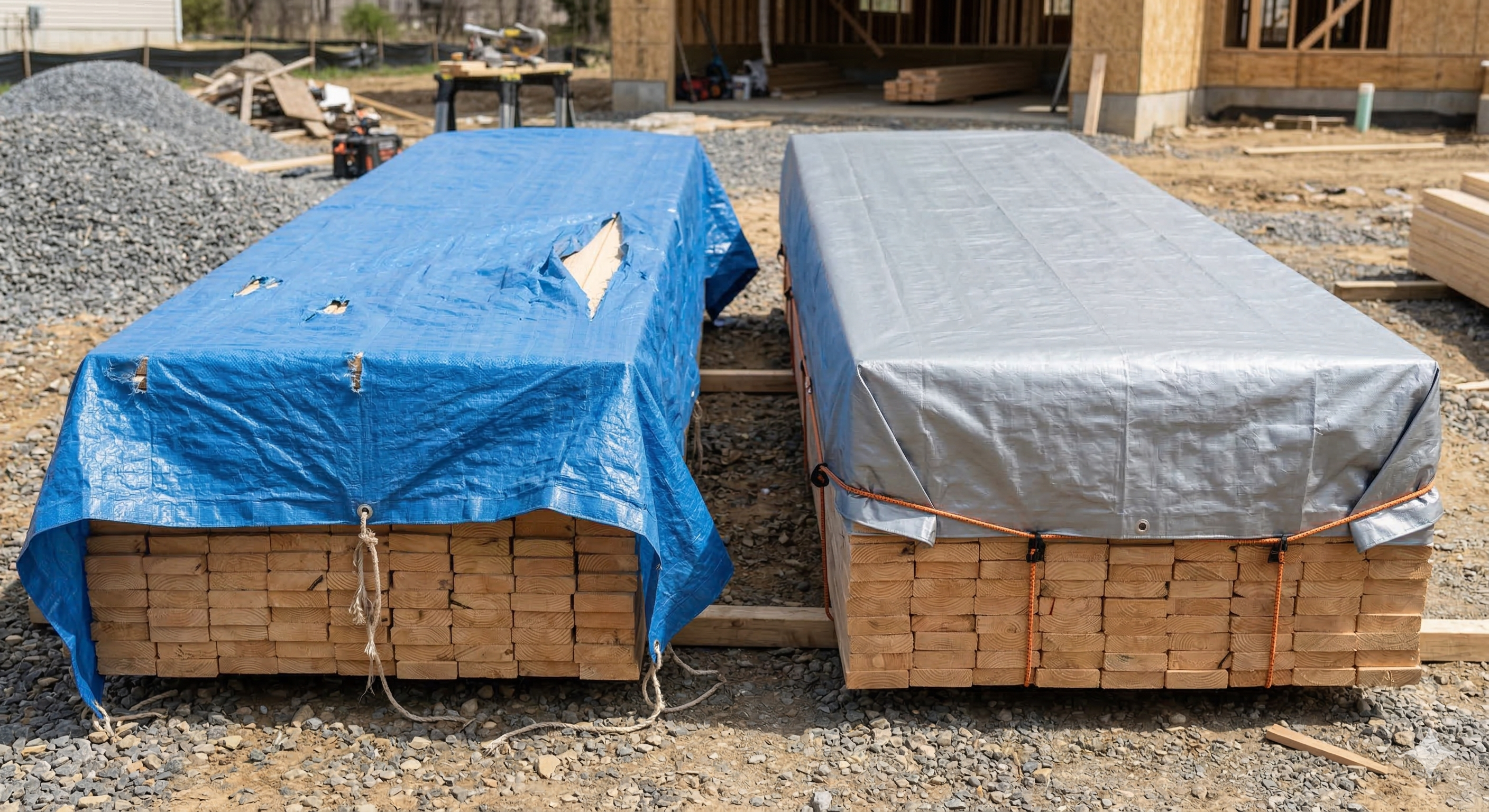
Not every tarp you find at a big box store is built for construction. Most of the cheap blue tarps sold at hardware stores are light duty products meant for temporary home use. They tear easily in wind, degrade in sunlight within weeks, and fall apart after one or two uses in real job site conditions.
A true heavy duty tarpaulin built for construction use should have these characteristics.
High mil thickness. Light duty tarps are 5 to 6 mil thick. For construction, you want at least 12 mil. For long term outdoor use or covering heavy materials, 16 to 20 mil or higher is better. Thicker tarps resist punctures, tears, and abrasion far better than thin ones.
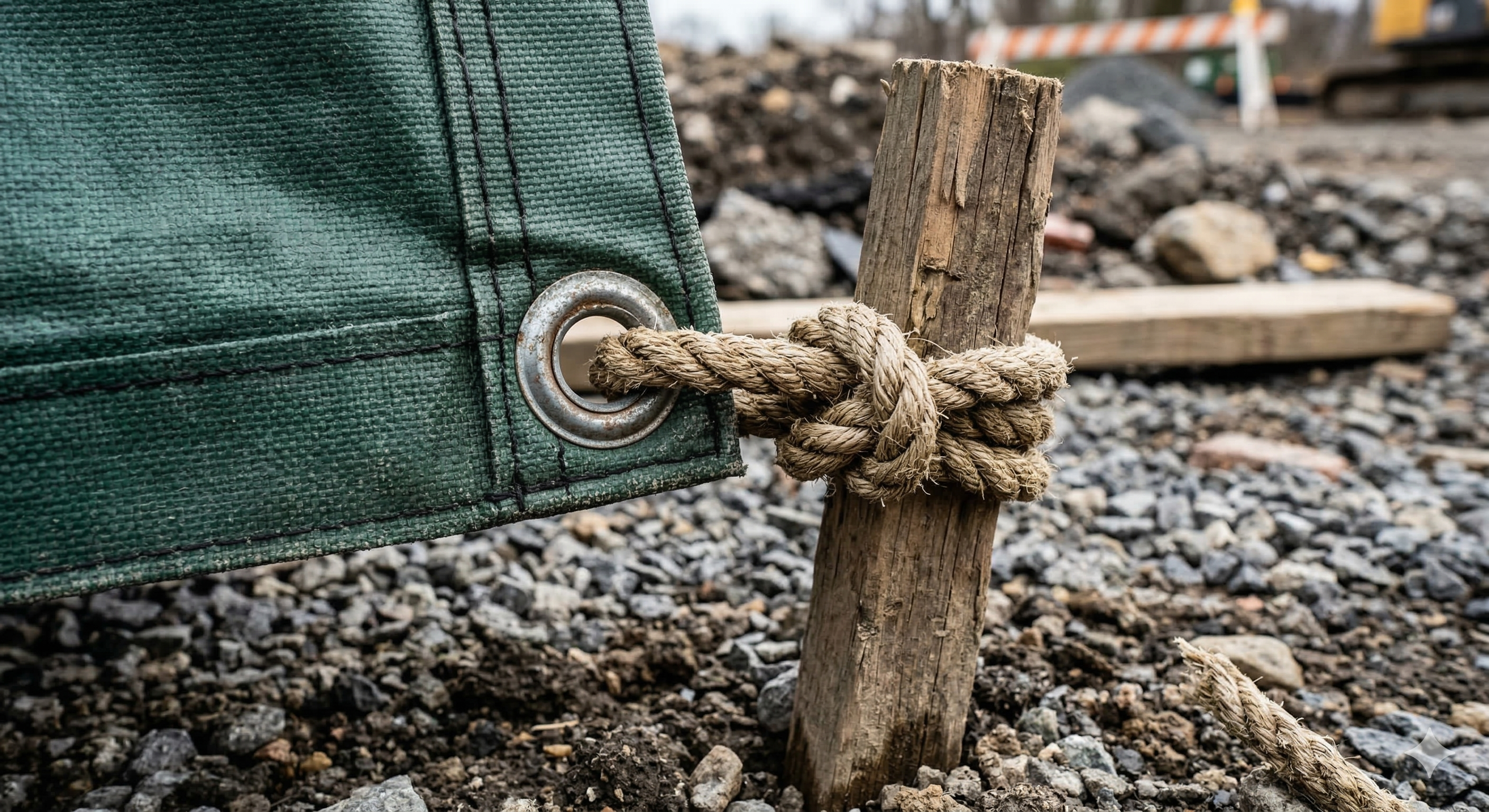
Reinforced grommets. Cheap tarps have flimsy grommets that rip out under load. Construction grade tarps use rust resistant metal grommets set into reinforced hems that hold up when ropes and straps are pulling against them in wind.
UV treatment. Any tarp that will be outdoors for more than a few days needs UV stabilization. Without it, the sun breaks down the polyethylene and the tarp becomes brittle and cracks. UV treated tarps hold up for months of outdoor exposure.
Heat sealed seams. On poly tarps, heat sealed seams prevent water from seeping through at the joints. Sewn seams on cheaper tarps can wick water through the thread holes.
High denier fabric. Denier measures the thickness and density of the woven fibers. Higher denier means a tighter, stronger weave that resists tearing. Construction tarps should have a denier count well above what you find on discount store products.
Choosing the Right Tarp for the Job
Different situations call for different tarps. Here is a quick guide.
Short term material coverage (days to weeks). A standard weight poly tarp in the 12 to 16 mil range will get the job done. Make sure it has UV treatment if it will be outdoors in direct sunlight. This is the most common use on residential construction sites.
Long term outdoor coverage (weeks to months). Step up to a heavy duty poly tarp at 16 mil or higher, or consider a vinyl tarp for maximum durability. Vinyl costs more but lasts years in outdoor conditions. If you are covering materials that will sit on site for an extended period, the extra cost pays for itself.
Covering structures during construction. Use the largest tarp you can manage and make sure it is fully waterproof with sealed seams. A tarp with grommets every 18 to 24 inches along the edges gives you more tie down points, which is critical when covering an open roof or wall section where wind can get underneath.
Ground covers under material stacks. Any waterproof tarp works here. The main requirement is that it prevents ground moisture from reaching the materials above. A standard poly tarp laid flat under the stack does the job.
Debris and dust containment. Mesh tarps work well when you need to contain debris while still allowing airflow. For dust control, a solid poly or vinyl tarp provides full containment.
At BCP Inc., our tarpaulin line covers all of these use cases. Our Tarpaulin Standard handles everyday job site coverage, the Tarpaulin Super steps up for tougher conditions, and the Tarpaulin Heavy Duty is built for the most demanding construction and industrial applications.
How to Secure Construction Tarps
A tarp that blows off in the first gust of wind is worse than no tarp at all because you think your materials are covered when they are not. Proper securing prevents this.
Use every grommet. Do not skip tie down points to save time. Every unsecured grommet is a place where wind can get under the tarp and lift it.
Pull the tarp tight. A loose tarp flaps in the wind, which creates stress on the fabric and grommets. Flapping is the primary cause of tarp failure. Use ratchet straps or bungee cords through the grommets to pull the tarp taut over the load.
Anchor to the ground when possible. If the tarp extends to ground level, weigh down the edges with sandbags, cinder blocks, or stakes. This prevents wind from getting underneath and ballooning the tarp upward.
Protect against sharp edges. Exposed nail heads, metal flashing, and sharp lumber corners will puncture or tear a tarp. Pad any contact points with scrap material before draping the tarp.
Check after every storm. Wind and rain shift loads and loosen tie downs. Walk the site after every weather event and re-secure any tarps that have moved or loosened.
What to Avoid When Buying Construction Tarps
Avoid the cheapest option. The $15 blue tarp from the hardware store is fine for covering your lawnmower at home. It will not survive a week on a construction site. One strong wind gust will tear it and leave your materials exposed.
Avoid tarps without UV treatment. A tarp that breaks down in sunlight after two weeks is not saving you money. It is costing you double because you have to buy a replacement.
Avoid tarps with weak grommets. If the grommets are not reinforced into the hem, they will rip out under tension. This is the most common failure point on cheap tarps.
Avoid undersized tarps. A tarp that barely covers the load leaves edges exposed. Always buy a tarp that is at least 1 to 2 feet larger than the area you need to cover on all sides. The extra material gives you room to tie down securely and ensures full coverage even if the tarp shifts slightly.
Frequently Asked Questions
How many tarps does a typical job site need? It depends on the size of the project, but most residential construction sites use 3 to 6 tarps at any given time. Having a few extra on site for emergencies is always a good idea.
Can I reuse construction tarps? Yes. Heavy duty tarps are designed for repeated use. After each use, shake off debris, let the tarp dry completely, fold it, and store it off the ground. A well maintained heavy duty tarp can last through dozens of uses over several years.
What size tarp do I need to cover a pallet of materials? A standard pallet is about 4 feet by 4 feet. A 10 x 12 or 12 x 16 tarp gives you enough material to cover the pallet with overlap on all sides for secure tie down.
Are poly tarps waterproof? Yes, polyethylene tarps with heat sealed seams are fully waterproof. Canvas tarps are water resistant but not fully waterproof. Mesh tarps are not waterproof at all.
What is the difference between a tarp and a tarpaulin? They are the same thing. "Tarp" is the shortened version of "tarpaulin."
Protect Your Site, Protect Your Budget
Every material that gets ruined by rain is money out of your pocket. Every weather delay caused by unprotected framing is a day added to the schedule. A few quality construction tarps on site prevent both.
At BCP Inc., we supply construction grade tarpaulins built for real job site conditions. Our products are thicker, stronger, and more weather resistant than what you find at retail stores, and we offer bulk pricing for contractors who need volume.
Ready to order? Call us at 877-540-5678 or visit bcpinc.us/tarpaulin to see our full tarpaulin lineup and request a quote.
