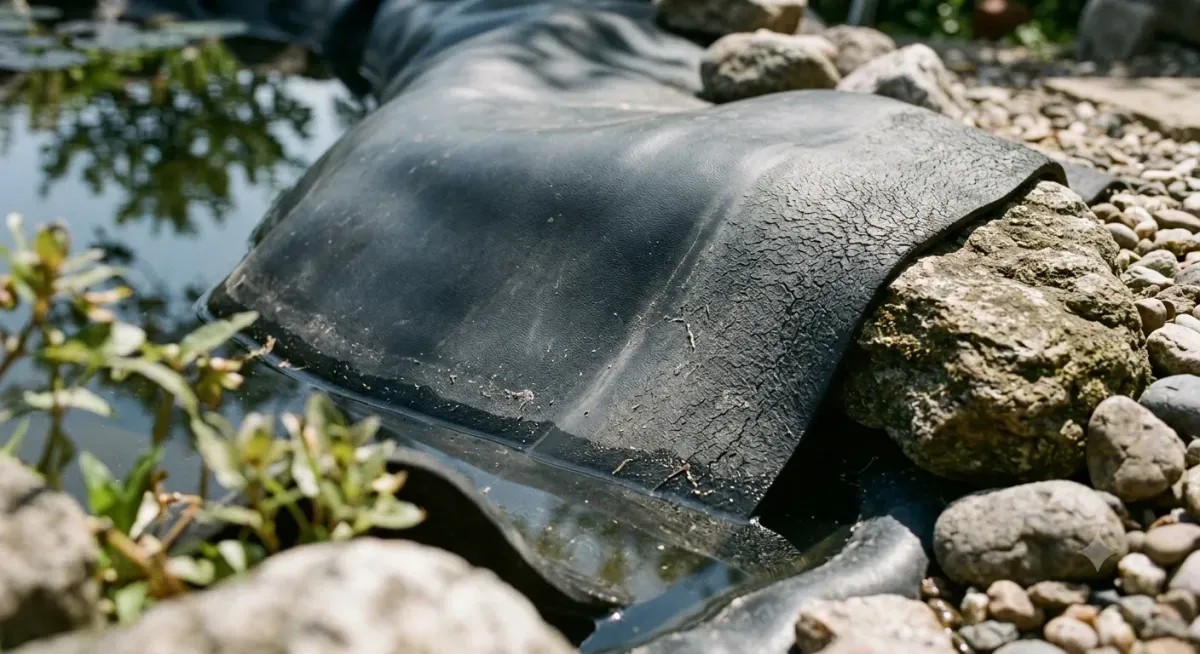
EPDM vs PVC Pond Liner: Which Is Stronger?
EPDM vs PVC Pond Liner: Which Is Stronger?
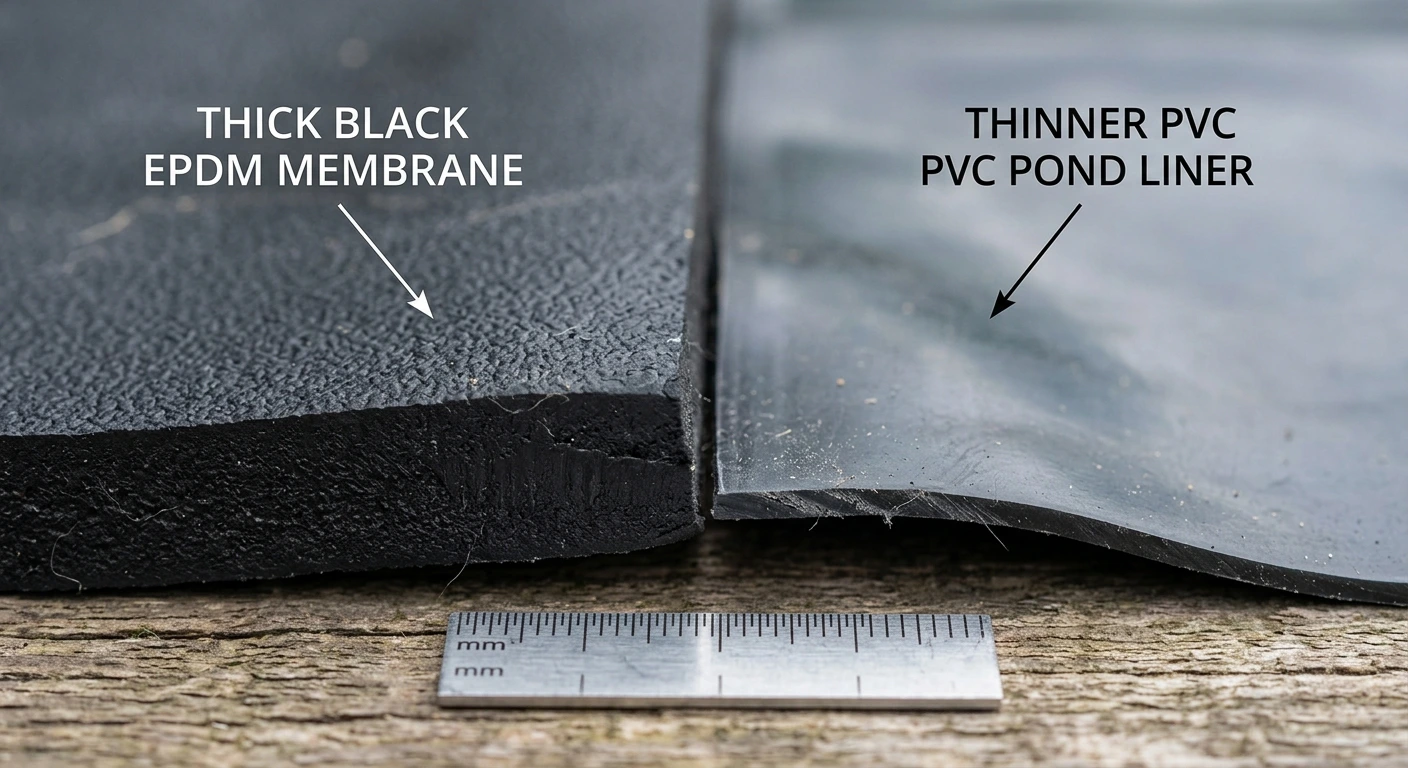
For most ponds, EPDM is the stronger, longer-lasting choice: it is a thick, flexible rubber membrane that resists UV, temperature swings, and punctures, and it commonly lasts 20 or more years. PVC pond liner is thinner, less expensive, and easier to handle, but it is more prone to becoming brittle over time, especially with UV exposure, and generally does not last as long. If you want durability and long life and do not mind the higher cost and weight, choose EPDM. If you want a lower-cost liner for a smaller or temporary pond and will protect it from sun, PVC can work. This guide compares the two on strength, lifespan, cost, fish-safety, and handling so you can choose the right one for your pond.
Below we break down what each material is, how they compare across the factors that matter, which is better for koi and fish ponds, and how to decide.
What is an EPDM pond liner?
EPDM (ethylene propylene diene monomer) is a synthetic rubber membrane widely used for pond liners and roofing. For ponds, it is prized for being thick, highly flexible, and very durable. It stays flexible across a wide temperature range, conforms easily to the shape and contours of a pond, and resists UV degradation, cracking, and punctures.
A quality EPDM liner commonly lasts 20 years or more, and fish-safe grades are specifically formulated to be safe for koi and other pond life. Its main trade-offs are that it is heavier and costs more than PVC.
What is a PVC pond liner?
PVC (polyvinyl chloride) pond liner is a plastic membrane that is thinner, lighter, and cheaper than EPDM. It is easier to fold and handle because of its lower weight, which can make installation simpler on smaller ponds.
The trade-off is durability. PVC is more susceptible to becoming brittle and cracking over time, particularly where it is exposed to sunlight, and it generally has a shorter lifespan than EPDM. Some PVC is also not formulated to be fish-safe, so if you keep fish, you must confirm the liner is rated safe for aquatic life.
EPDM vs PVC: side-by-side comparison
Which is stronger?
On raw strength and durability, EPDM wins. It is thicker, more puncture-resistant, more flexible, and far more resistant to the UV and temperature cycling that break liners down over years. That is why it is the go-to for permanent ponds where longevity matters.
PVC is not weak, and for a smaller, budget, or partly shaded pond it can serve well, but head to head, EPDM is the more durable material and the one that lasts longer in demanding, sun-exposed conditions.
Which is better for koi and fish ponds?
For koi and fish ponds specifically, EPDM in a fish-safe grade is usually the better choice. Koi ponds are typically a long-term investment with valuable fish, so the durability and long life of EPDM pay off, and fish-safe EPDM is formulated not to leach anything harmful into the water.
The critical rule for any fish pond: only use a liner explicitly rated fish-safe. Standard PVC and some general-purpose liners can contain additives that are toxic to fish. Whether you choose EPDM or PVC, confirm it is a fish-safe pond liner, not a general construction membrane. For more on choosing a koi pond liner, see our guide on the best pond liner for koi ponds.
When PVC makes sense
PVC is not the wrong choice everywhere. It can be a sensible pick when:
Budget is the priority and the pond is smaller or simpler.
The pond is shaded or the liner will be fully covered, reducing UV exposure that shortens PVC's life.
The install benefits from lighter material, PVC is easier to fold and position.
The pond is temporary or you plan to replace it before long-term brittleness becomes an issue.
If you go PVC for a fish pond, insist on a fish-safe rating.
How to decide
The choice comes down to priorities:
Choose EPDM if you want maximum durability and lifespan, have a permanent or koi pond, the liner will be sun-exposed, or you want the longest-lasting option and accept a higher cost.
Choose PVC if budget is the main driver, the pond is smaller, shaded, or temporary, and you have confirmed a fish-safe rating if fish are involved.
For most people building a pond they want to last, EPDM is the stronger, safer long-term investment, which is why it is the most popular choice for serious ponds.
Get the right pond liner
At BCP Inc., we supply durable pond liners suited to koi ponds, water features, and larger installations, and we can help you match the right material and grade to your pond and budget, including confirming fish-safe options. Choosing the right liner up front saves you from the far bigger cost of draining and relining a pond later.
To find the right pond liner for your project, call us at 877-540-5678 or visit bcpinc.us/pond-liner to see our products and request a quote.
Frequently asked questions
Which is stronger, EPDM or PVC pond liner? EPDM is stronger and more durable. It is thicker, more puncture-resistant, more flexible, and far more UV-resistant than PVC, and it commonly lasts 20 or more years. PVC is thinner and cheaper but more prone to becoming brittle over time.
Is EPDM or PVC better for a koi pond? For koi ponds, fish-safe EPDM is usually better because of its durability and long life, and fish-safe grades are formulated not to harm fish. Whichever you choose, it must be explicitly rated fish-safe, as some liners contain additives toxic to fish.
How long does an EPDM pond liner last? A quality EPDM pond liner commonly lasts 20 years or more thanks to its UV resistance and durability. PVC generally has a shorter lifespan, especially where it is exposed to sunlight.
Is PVC pond liner safe for fish? Only if it is specifically rated fish-safe. Standard or general-purpose PVC can contain additives that are toxic to fish. Always confirm a fish-safe rating before using any liner in a pond with fish.
Why is EPDM more expensive than PVC? EPDM is a thicker, more durable rubber membrane with better UV resistance and a longer lifespan, so it costs more up front. Over the life of a pond, that durability often makes it the better value because it needs replacing far less often.
Can I use a roofing membrane as a pond liner? Only if it is a fish-safe grade made or rated for pond use. Roofing-grade EPDM can contain additives that are not safe for fish. For any pond with fish, use a liner explicitly labeled fish-safe.
