Ice and Water Shield Roll Roofing Underlayment: Essential Protection for Leak-Free Roofs
Ice and water shield roll roofing underlayment is one of the most important layers in a long-lasting, leak-resistant roofing system. Designed to protect homes from moisture, wind-driven rain, and ice-related damage, this underlayment offers superior waterproofing performance compared to traditional felt materials. Whether you're building a new roof or replacing an old one, ice and water shield provides a reliable foundation that ensures your home stays dry, secure, and structurally sound.
What Is Ice and Water Shield Underlayment?
Ice and water shield is a self-adhering, waterproof roofing membrane made from rubberized asphalt or similar materials. Unlike traditional underlayment that relies on fasteners, this product sticks directly to the roof deck, creating a fully watertight seal. The membrane is flexible, highly durable, and capable of forming a tight bond even around nails, staples, and roofing penetrations.
This underlayment is specially designed to defend against roof leaks caused by ice dams, heavy rains, storm pressure, and melting snow. Its peel-and-stick design makes it easy to install while offering unmatched moisture protection.
How Ice and Water Shield Works

The effectiveness of ice and water shield comes from its ability to self-seal around nails and fasteners. When shingles or metal roofing panels are attached, the membrane forms a tight barrier around each penetration point, blocking water from entering.
In regions with freezing temperatures, ice dams can push water underneath shingles. This underlayment prevents trapped water from reaching the roof deck. In rainy or humid climates, it stops wind-driven rain and moisture from causing rot, warping, or leaks. Its adhesive backing maintains a secure bond in high heat, heavy rain, or cold conditions.
Benefits of Ice and Water Shield Roll Underlayment
Ice and water shield provides multiple advantages that make it a preferred choice for homeowners and roofing professionals:
Superior Waterproofing
The material forms a watertight seal over vulnerable areas, offering much better protection than felt or synthetic underlayment.
Protection Against Ice Dams
In colder regions, melting snow refreezes near roof edges, causing ice dams. This underlayment prevents the resulting trapped water from leaking into the home.
Ideal for Roof Valleys and Penetration Areas
Areas like valleys, chimneys, and vents are at higher risk of leaks. Ice and water shield reinforces these zones with strong moisture resistance.
Long-Term Durability
The membrane remains flexible, strong, and stable even as temperatures fluctuate throughout the seasons.
Adhesive Bonding for Maximum Safety
The peel-and-stick installation ensures a tight hold that stays in place during storms or strong winds.
Where Ice and Water Shield Should Be Installed
While the entire roof can be covered with this underlayment, certain areas benefit from it the most:
Roof edges and eaves
Valleys where two slopes meet
Chimney and vent areas
Skylight boundaries
Low-slope roofs
Areas exposed to wind-driven rain
Roof sections prone to ice dam formation
These sections face the highest moisture exposure and therefore need additional protection.
Installation Process for Ice and Water Shield Underlayment
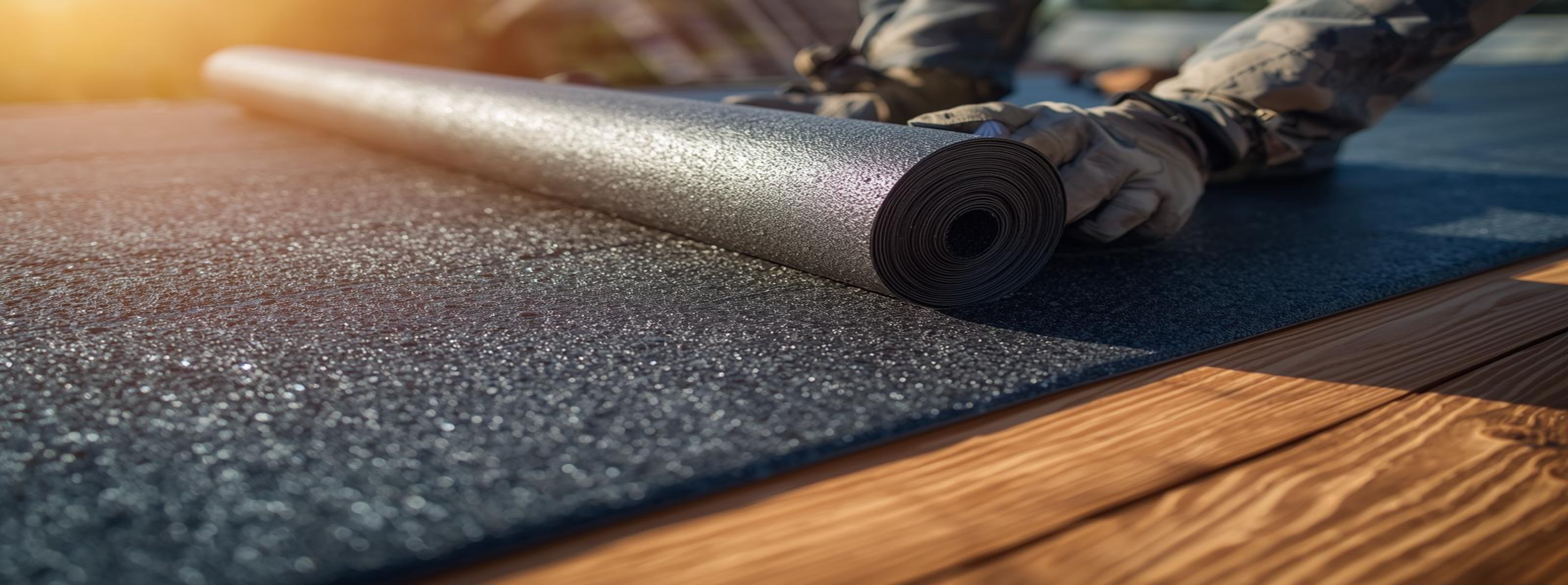
Installing ice and water shield requires proper technique to ensure full waterproof performance. The roof deck must be clean, dry, and free from debris. Once prepared, the membrane is unrolled across the roof, starting at the lowest point and moving upward. As the backing is peeled away, the adhesive layer bonds directly to the wood deck.
Each section overlaps the previous one to create a continuous moisture barrier. The membrane is carefully pressed along edges, valleys, and around roof penetrations to ensure a seamless fit. When shingles or roofing materials are added, the underlayment seals around every nail, maintaining integrity even under heavy weather exposure.
Why Ice and Water Shield Is Better Than Traditional Underlayment
Traditional felt underlayment provides minimal moisture resistance and relies heavily on nails, which create pathways for water to seep through. In contrast, ice and water shield offers full adhesion, eliminating gaps and providing an airtight, waterproof layer beneath the roof covering.
Its ability to self-seal around nails is the biggest advantage. Even if shingles lift during a storm, the underlayment remains attached to the roof deck, preventing water infiltration. This long-lasting bond makes it a superior protective layer in both cold and rainy climates.
Ideal Applications and Climate Suitability
Ice and water shield underlayment is ideal for:
Homes in snowy climates
Regions with frequent rainstorms
Coastal areas exposed to high winds
Homes with complex roof shapes
Valleys and low-sloped roof designs
Even in regions without snow, this underlayment offers unmatched leak prevention and is increasingly considered a best-practice roofing standard.
What to Expect After Installation
Once installed, ice and water shield provides immediate protection from the elements. It helps regulate temperature changes and supports the roofing material above it. Homeowners will notice fewer leaks, better moisture resistance, and improved roof longevity.
The membrane remains effective for decades and rarely requires replacement unless the entire roof system is being redone. Its durability ensures long-term savings by preventing costly water damage and repairs.
Conclusion
Ice and water shield roll roofing underlayment is one of the most reliable forms of roof protection available today. Its adhesive bonding, waterproof performance, and ability to prevent leaks make it an essential part of a long-lasting roofing system. Whether you're dealing with intense storms, heavy snow, or fluctuating weather conditions, this underlayment provides unmatched security and peace of mind for homeowners.
Installing ice and water shield is an investment in durability, safety, and long-term structural health — ensuring your roof performs at its best in any climate.
