What Is Roof Rejuvenation? How It Works
What Is Roof Rejuvenation? How It Works and Is It Worth It
Roof rejuvenation is a treatment that restores flexibility and water resistance to aging asphalt shingles by replacing the natural oils they lose over time, extending the life of the roof for a fraction of the cost of replacement. Instead of tearing off shingles that still have structural life left, a rejuvenation product is sprayed on to soften brittle shingles, help them reseal, and slow the drying and cracking that eventually forces a full replacement. A quality bio-based treatment can add roughly five years of life per application and be reapplied up to three times, extending a roof's service life by as much as 15 years. For homeowners with a roof that is aging but not failing, it is one of the most cost-effective ways to protect the investment they already have.
That is the short answer. Below we explain why shingles wear out, how rejuvenation actually works, who it is right for, how the product is applied, and how it compares to simply replacing the roof.
Why asphalt shingles wear out
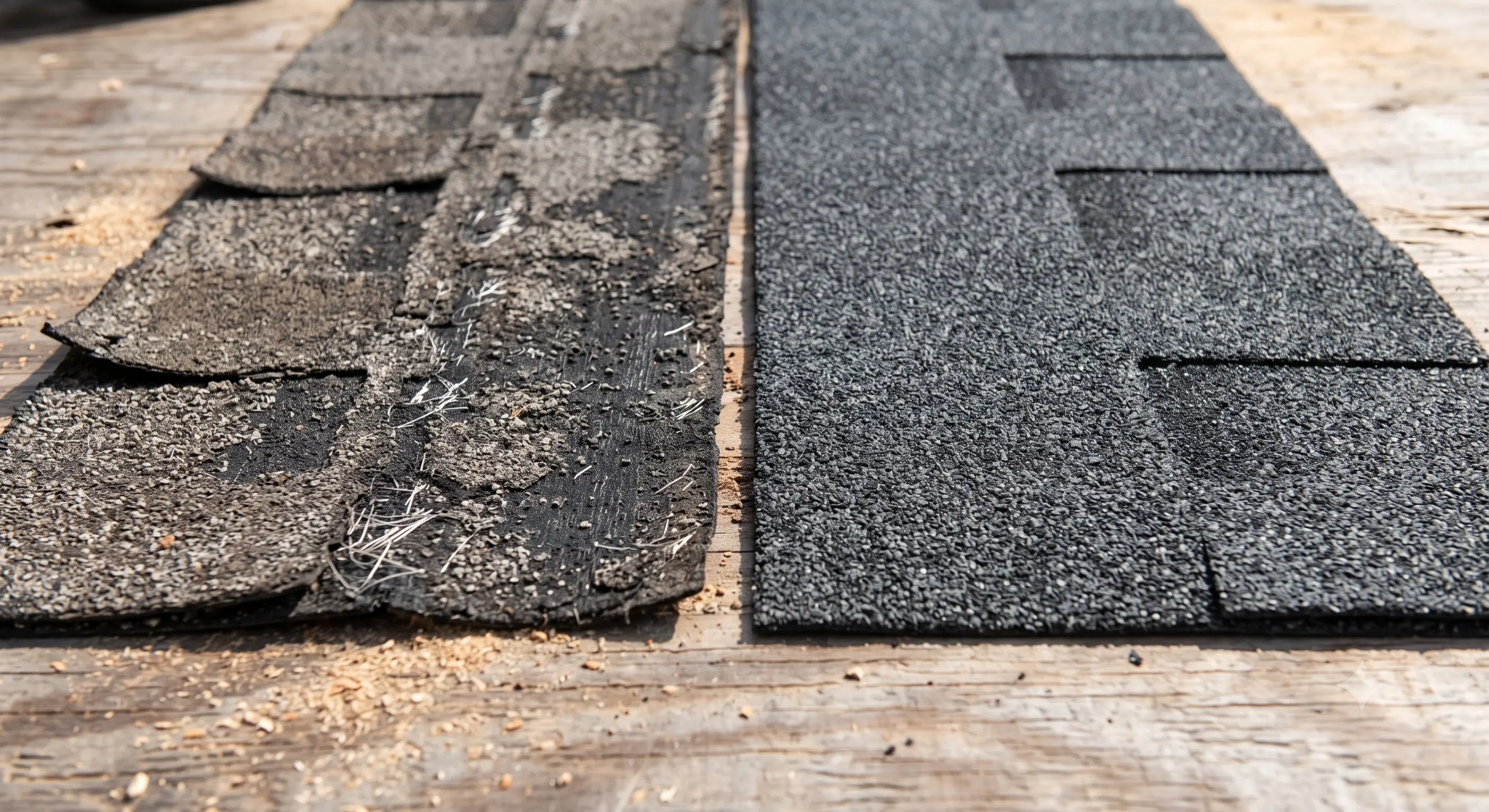
Asphalt shingles are made of a mat saturated with asphalt and topped with mineral granules. When they are new, the asphalt is rich in oils that keep the shingle flexible and waterproof. Over time, sun, heat, and weather bake those oils out. As the shingle dries, it becomes brittle, the granules start to shed, and small cracks form. Once that happens, water gets in more easily and the shingle loses its ability to protect the roof.
This drying process is the main reason shingle roofs age, and it usually starts well before the roof actually fails. That gap, when shingles are dried out but still structurally sound, is exactly where rejuvenation is designed to help.
How roof rejuvenation works
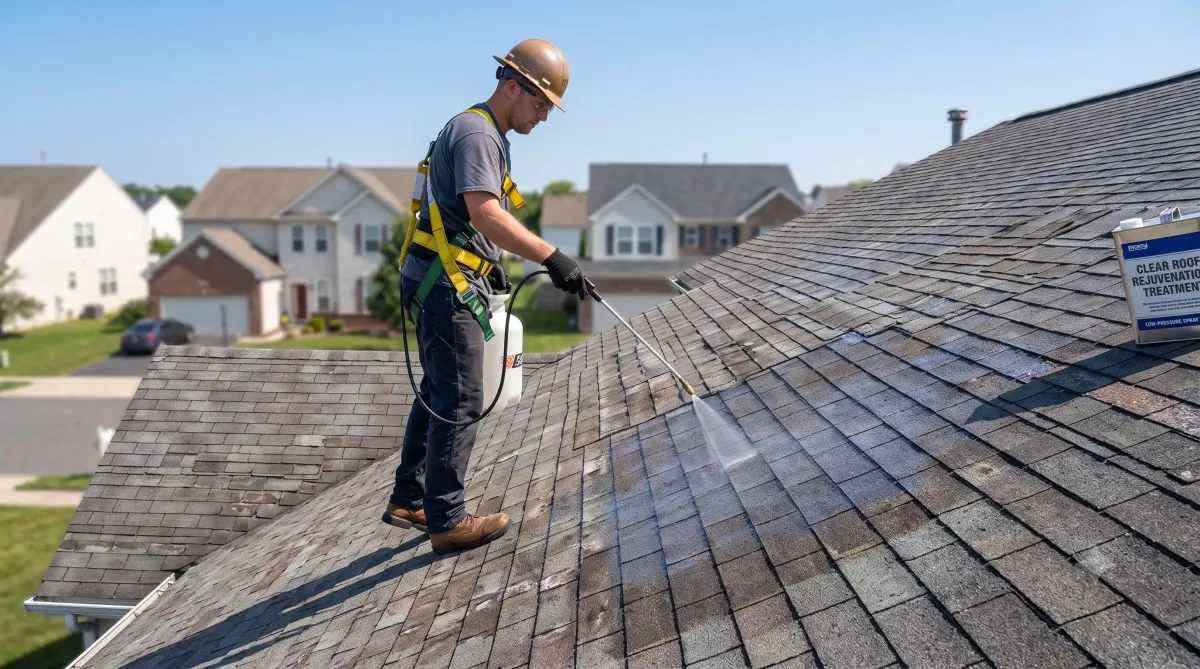
Roof rejuvenation works by putting oils back into the shingle. A treatment is applied across the roof surface, typically sprayed on, and it penetrates the aging shingles to restore the flexibility and water resistance they have lost. The goal is to slow the drying and cracking cycle, help the shingles reseal, and hold off the point at which replacement becomes necessary. Flexible shingles also stand up better to wind, rain, snow, and hail than brittle ones do.
A typical process looks like this:
The roof is inspected to confirm the shingles are a good candidate (aging but not already failing).
The surface is cleaned of debris, dirt, and any moss or algae, then allowed to dry.
The rejuvenation product is sprayed on evenly across the shingles.
The treatment absorbs into the shingles and cures, usually drying to the touch within an hour and fully curing within 24 hours.
The result is a roof that stays flexible and water resistant longer, buying years before a full reroof is needed.
What roof rejuvenation is (and isn't)
It helps to be clear about what this treatment does and does not do, because it is not a fix for every roof problem.
Roof rejuvenation is good for: aging shingles that are drying out and losing flexibility but are still intact and doing their job. It is a preventive, life-extending treatment.
Roof rejuvenation is not a fix for: roofs that are already leaking, have widespread missing or broken shingles, significant storm damage, exposed fiberglass reinforcement, or structural problems. Once shingles have failed, no treatment brings them back, at that point replacement is the answer.
Think of it like conditioning leather before it cracks, not gluing it back together after it has fallen apart.
Roof rejuvenation vs replacement, at a glance
We break down the full decision and the pricing side of it later in this cluster, but the short version is: rejuvenation extends a sound roof, replacement is for a roof that has failed.
Who should consider roof rejuvenation?
Rejuvenation makes the most sense if:
Your roof is roughly 8 to 15 years old and starting to look dry or weathered, but is not leaking.
Shingles are losing granules or looking faded, but are still flat and intact.
You want to extend the roof's life and delay the cost of a full replacement.
The roof is structurally sound with no active water intrusion.
It makes less sense if the roof is near the end of its life with widespread damage, or already leaking, in those cases the money is better spent on replacement.
How Shingle Serum works
At BCP, the roof rejuvenation product we supply is Shingle Serum, a professional-grade, bio-based treatment made from tall oil that penetrates deep into asphalt shingles to restore flexibility and water resistance. It is a concentrate that is diluted with water and sprayed onto clean, dry shingles with a low-pressure sprayer, going on milky white and drying clear within about an hour.
A few things that make it a strong choice:
Adds years of life. A single application can add about five years to a roof, and it can be reapplied up to three times, extending roof life by up to 15 years.
Backed by a 7-year warranty. Shingle Serum guarantees treated shingles stay flexible and serviceable for seven years from the date of treatment.
Bio-based and safe. It is a water-based, plant-derived formula with zero to trace VOCs, no harsh solvents, and it is safe for surrounding vegetation. Cleanup is just soap and water.
Good coverage. One gallon of concentrate covers roughly 400 square feet, and a 5-gallon pail (mixed with water) treats a typical roof in a single visit.
It is designed for asphalt shingle roofs that are aging but sound. It is not recommended for shingles that are already deteriorating or where the fiberglass reinforcement is exposed.
If you want to know whether your roof is a good candidate for Shingle Serum, BCP can help you figure out the right move. Call us at 877-540-5678 to talk it through.
Is roof rejuvenation worth it?
For the right roof, the value is straightforward: you spend a small fraction of the cost of a new roof to add several years of life to the one you have. That delays a major expense and keeps usable shingles out of a landfill. The key is timing, rejuvenation pays off when it is done while shingles are still sound, not after they have started to fail. Treating a roof too late is money wasted; treating it at the right time is money saved.
The honest caveat: rejuvenation extends life, it does not make an old roof new, and it is not a substitute for replacing a roof that has reached the end. A good inspection is what tells you which situation you are in.
Frequently asked questions
What is roof rejuvenation? Roof rejuvenation is a treatment, usually sprayed on, that restores oils to aging asphalt shingles so they regain flexibility and water resistance. It extends the life of a roof that is aging but not yet failing, at a fraction of the cost of replacement.
How does roof rejuvenation work? A rejuvenation product is applied across the shingles and penetrates them, replacing the natural oils lost to sun and weather. This softens brittle shingles, helps them reseal, and slows the drying and cracking that leads to roof failure.
How long does roof rejuvenation last? A quality treatment like Shingle Serum can add about five years of life per application and be reapplied up to three times, extending a roof's life by as much as 15 years. It carries a 7-year warranty on treated shingles.
Is roof rejuvenation worth it? For a roof that is aging but still sound, yes, it adds years of life for a small fraction of replacement cost. For a roof that is already failing or leaking, it is not worth it, replacement is the right call.
Can rejuvenation fix a leaking roof? No. Rejuvenation is a preventive treatment for shingles that are still intact. Once a roof is leaking or has widespread damage, or the fiberglass is exposed, it needs repair or replacement, not rejuvenation.
What kind of roof can be rejuvenated? It is used on asphalt shingle roofs that are aging but structurally sound. It is not for metal, tile, or other roofing, and not for shingles that are already deteriorating. A roof inspection confirms whether the shingles are a good candidate.
Is roof rejuvenation safe for my plants and gutters? Shingle Serum is a bio-based, water-based formula that is safe for surrounding vegetation, with zero to trace VOCs. As with any spray treatment, plants, siding, and windows are covered during application to protect from overspray, and cleanup is done with soap and water.
