Best Underlayment for Metal Roofs | Synthetic Guide
Best Underlayment for Metal Roofs: Why Synthetic Beats Felt Every Time
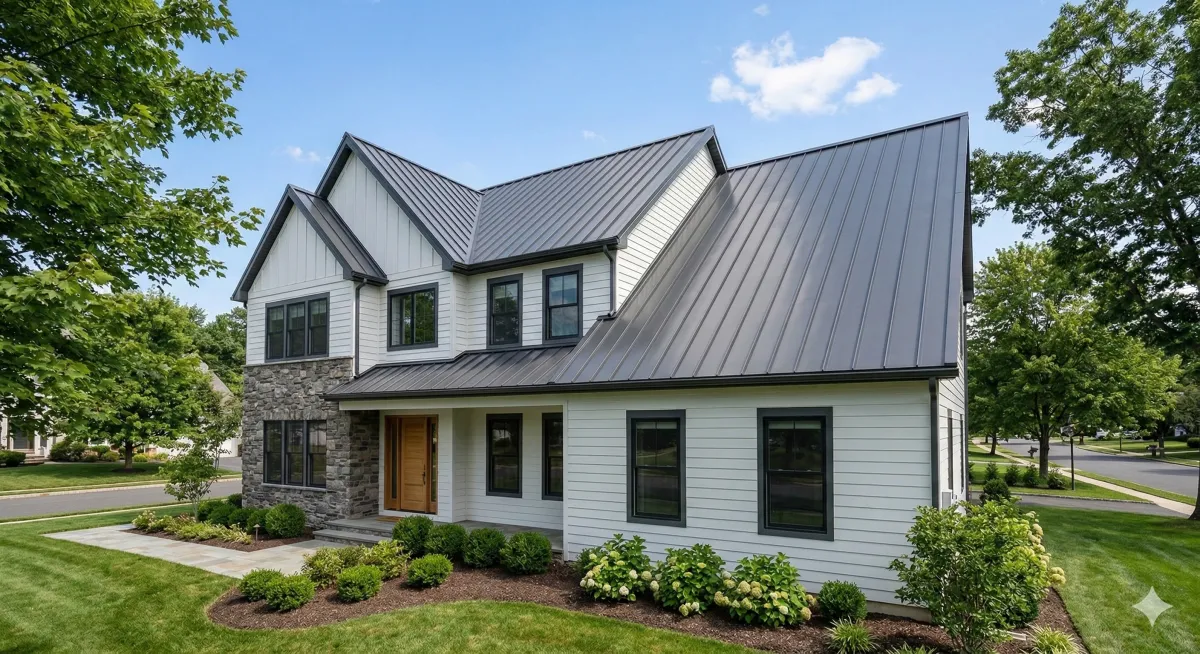
Metal roofs are built to last 40 to 60 years or more. They handle wind, resist fire, and stand up to weather that would shred asphalt shingles. But all of that performance depends on what is underneath the metal panels.
The wrong underlayment under a metal roof does not just underperform. It can actively cause problems: trapped condensation, heat damage to the underlayment material, and leaks that are almost impossible to trace once the metal is installed.
If you are installing or specifying a metal roof, choosing the right underlayment is not optional. In this guide, we will explain why metal roofs have unique underlayment requirements, why felt paper is a poor match, and why synthetic underlayment is the clear winner for metal roofing projects.
Why Metal Roofs Need the Right Underlayment
Metal behaves differently than asphalt shingles, tile, or slate. These differences create specific demands on the underlayment layer that sits between the metal panels and the roof deck.
Metal conducts heat. On a sunny day, the surface temperature of a metal roof can exceed 150 degrees Fahrenheit. That heat transfers directly to the underlayment below. Any material that softens, sticks, or breaks down under high temperatures will fail under a metal roof faster than it would under shingles.
Metal creates condensation. When warm, humid air from inside the building rises and hits the cold underside of a metal panel, moisture forms. If the underlayment traps that moisture against the roof deck instead of letting it escape, you end up with wood rot, mold, and eventually structural damage.
Metal expands and contracts. Metal panels move with temperature changes throughout the day. This constant expansion and contraction can pull on underlayment that has bonded to the panels, creating tears and gaps in the moisture barrier over time.
Water moves differently under metal. Unlike shingles that overlap tightly, metal panels have ribs, seams, and fastener points where wind driven rain can find its way underneath. The underlayment needs to handle water that enters at multiple points and moves laterally before draining downward.
These factors make underlayment selection for metal roofs more critical than for any other roofing material.
Why Felt Fails Under Metal Roofs
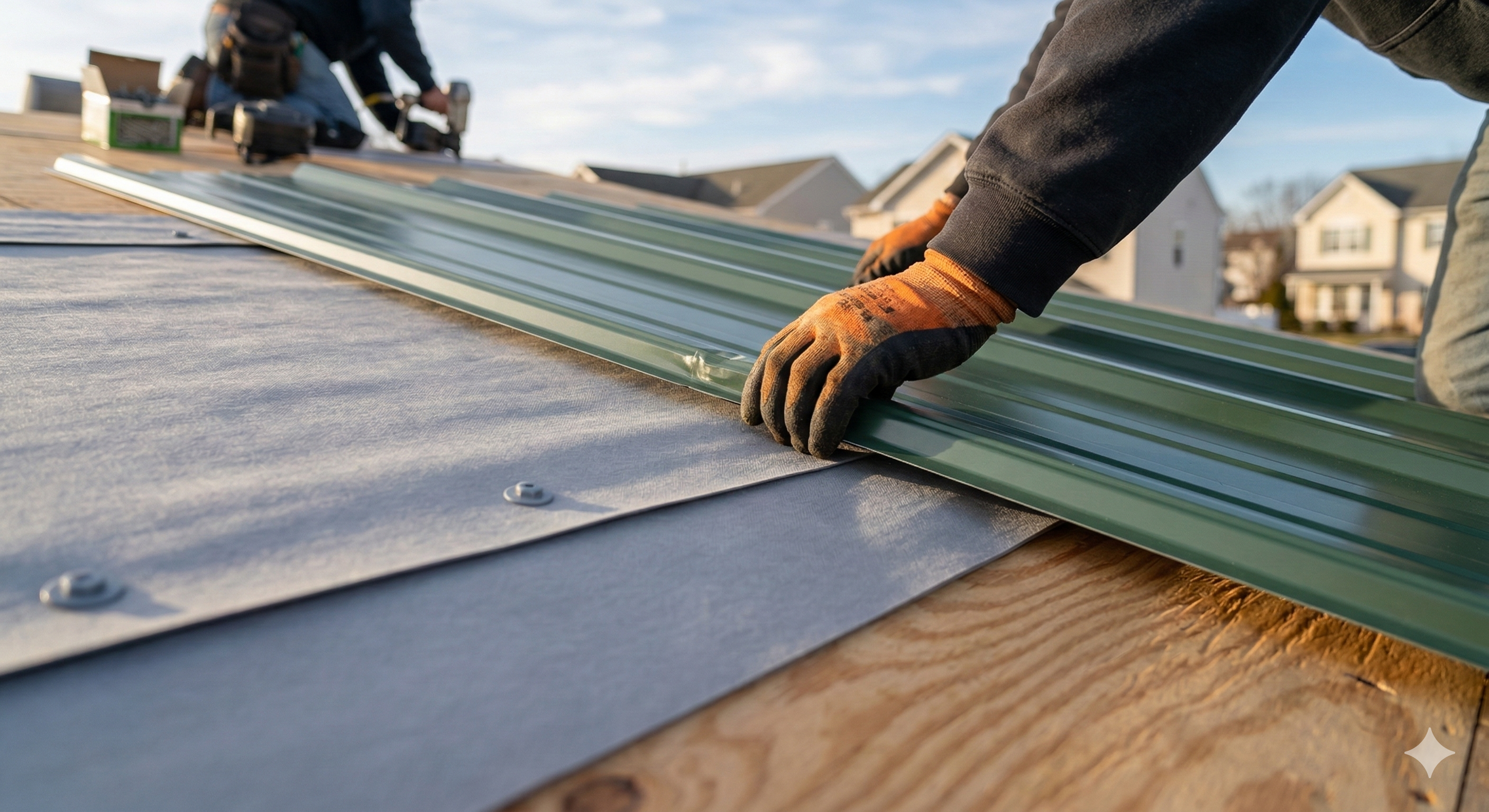
Felt paper (tar paper) has been used as roof underlayment for over a century. It works fine under asphalt shingles in moderate conditions. But under metal roofing, it creates real problems.
Heat damage. The asphalt in felt softens and becomes sticky at the temperatures metal roofs commonly reach. When hot felt sticks to the underside of metal panels, it tears apart during thermal expansion. This leaves gaps in the moisture barrier that are hidden and nearly impossible to repair without removing the metal.
Short lifespan. Felt underlayment lasts 15 to 20 years at best. Metal roofs last 40 to 60 years. That means the underlayment will fail decades before the metal above it, and replacing it requires removing the entire roof. It does not make sense to put a 15 year product under a 50 year roof.
Moisture absorption. Felt absorbs water. Under a metal roof where condensation is already a concern, an underlayment that holds moisture against the deck is the worst possible choice. Trapped moisture leads to rot and mold growth on the plywood or OSB beneath.
UV breakdown. If the underlayment is exposed to sunlight during installation, felt starts to degrade within days. Metal roof installations often take longer than shingle jobs because of the precision required for panel alignment and flashing details. That extended exposure time can damage felt before the metal even goes on.
For these reasons, most metal roofing manufacturers do not recommend felt underlayment for their products. Some explicitly state that using felt will void the warranty.
Why Synthetic Underlayment Is the Best Match for Metal
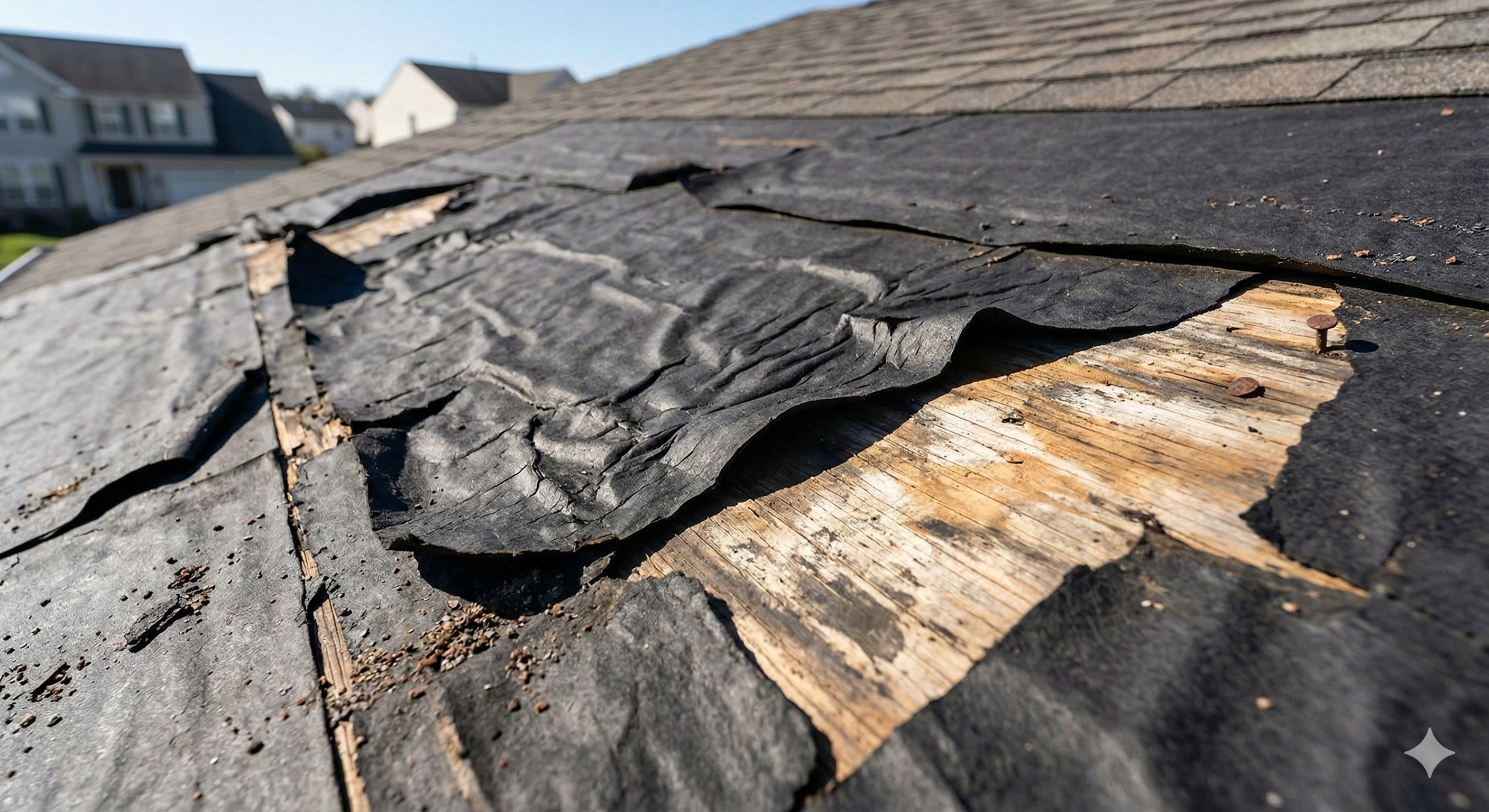
Synthetic underlayment is made from woven or spun polypropylene or polyethylene. It was designed to address every shortcoming of felt, and it performs especially well under metal roofing.
Heat resistance. Synthetic underlayment does not contain asphalt, so it will not soften or stick to metal panels at high temperatures. Most quality synthetic products are rated for temperatures well above what a metal roof generates, even in the hottest climates.
Lifespan that matches the roof. A good synthetic underlayment can last 40 years or more under metal panels. That means it will perform for the full life of the roof without needing replacement.
No moisture absorption. Synthetic does not absorb water. Condensation that forms under the metal will not soak into the underlayment and damage the deck below. Water runs off or evaporates as the roof heats up during the day.
UV stability. Most synthetic underlayments can handle 90 to 180 days of UV exposure without breaking down. This gives your crew plenty of time to complete the metal installation without worrying about the underlayment deteriorating.
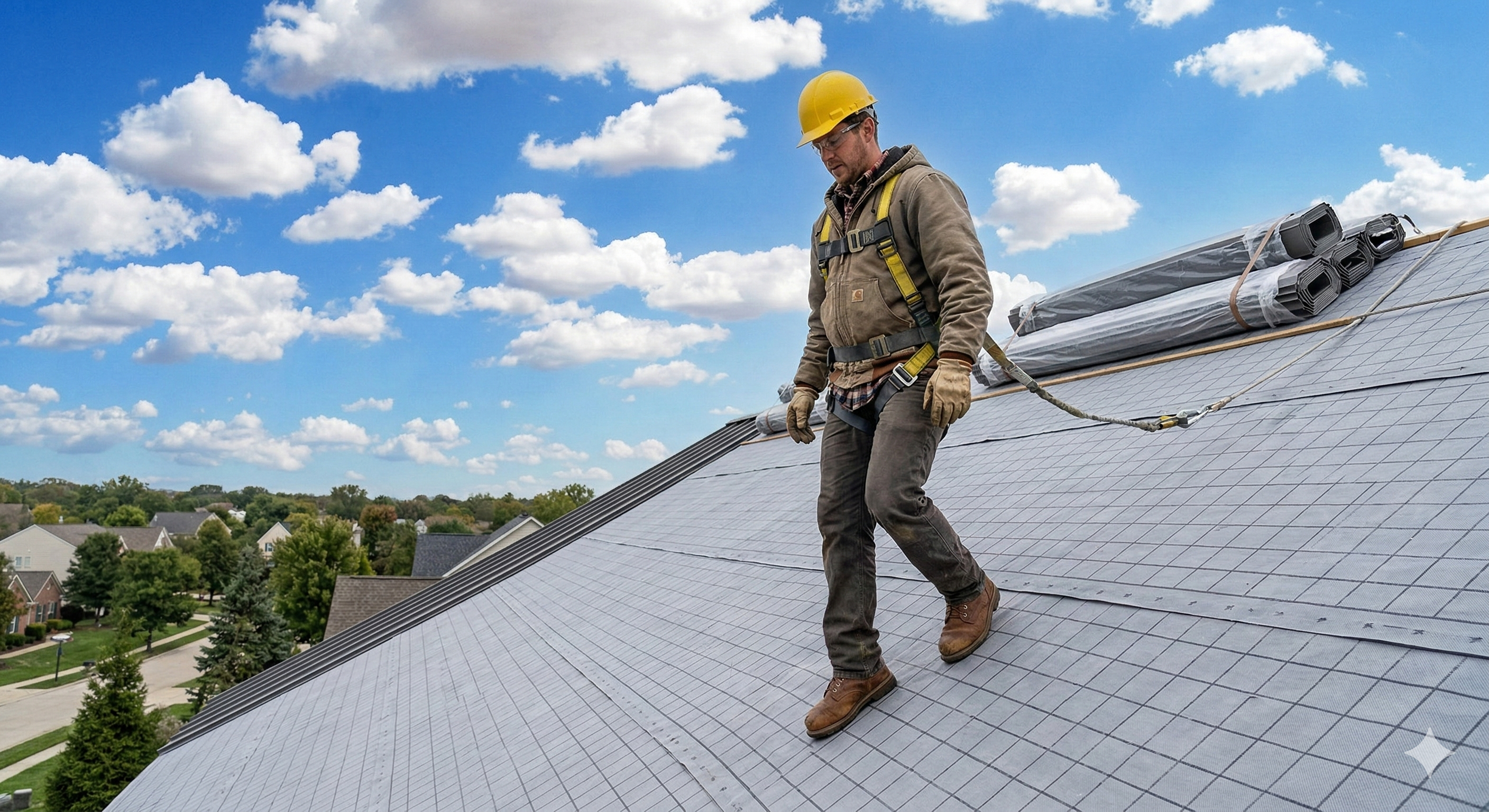
Tear resistance. Metal roof installations involve a lot of foot traffic, tool drops, and panel handling on the underlayment surface. Synthetic is significantly stronger than felt and resists tearing from boots, fasteners, and rough handling.
Non slip surface. Many synthetic products have a textured or coated surface that provides better traction for workers on steep slopes. This is especially important for metal roof installations, which often involve steeper pitches.
At BCP Inc., our RoofLayer synthetic underlayment is built to handle the demands of metal roofing. It resists heat, sheds moisture, and provides the long term durability that matches the lifespan of a metal roof system.
What About Peel and Stick Underlayment?
Peel and stick (self adhered) underlayment uses rubberized asphalt with a sticky backing that bonds directly to the roof deck. It creates a fully waterproof seal and is self sealing around nail and screw penetrations.
For metal roofs, peel and stick is an excellent choice in high risk areas like eaves, valleys, and around penetrations. The self sealing property is especially valuable at screw locations on exposed fastener metal roofs, where the rubber gaskets on screws can degrade over time.
However, standard peel and stick may not handle the heat generated by metal panels. If you use peel and stick under a metal roof, make sure the product is rated as "high temperature" (typically 240 degrees Fahrenheit or higher). Standard temperature peel and stick can soften and fail under the heat that metal roofs produce.
The most effective approach for metal roofing is to use high temp peel and stick underlayment at the eaves, valleys, and around all penetrations, and then cover the rest of the roof deck with synthetic underlayment. This gives you waterproof protection where you need it most and reliable moisture resistance across the full roof.
What to Look for in a Metal Roof Underlayment
When choosing underlayment for a metal roof project, here are the specs that matter most.
Temperature rating. Make sure the product can handle the heat your metal roof will generate. For standing seam and exposed fastener metal roofs, look for underlayment rated to at least 220 degrees Fahrenheit. In hot climates or on south facing slopes, 240 degrees or higher is better.
UV exposure rating. Metal roof installations take time. Choose an underlayment that can stay exposed for at least 90 days without degrading. If your project has a longer timeline, look for products rated to 180 days or more.
Tear resistance. Check the ASTM D4533 rating. For metal roof applications, look for a minimum of 15 pounds of tear resistance. Products rated at 25 pounds or higher are ideal for heavy foot traffic and demanding job sites.
Vapor permeability. The underlayment should allow moisture vapor to escape from the roof deck, not trap it. This is critical under metal roofs where condensation is a common concern. Look for products with a perm rating that meets your local building code requirements.
Weight and coverage per roll. Synthetic underlayment covers 4 to 10 times more area per roll than felt. Lighter rolls mean faster installation, fewer trips up the ladder, and less crew fatigue.
Manufacturer compatibility. Always check your metal roofing manufacturer's installation guidelines. Many manufacturers specify which types of underlayment are approved for use with their panels. Using the wrong product can void your warranty.
Frequently Asked Questions
Do I need underlayment under a metal roof? Yes. Building codes require underlayment under metal roofing in nearly all applications. Beyond code compliance, underlayment protects the deck from condensation, provides a backup moisture barrier, and helps the roofing system perform as designed.
Can I use felt paper under a metal roof? Technically you can, but it is not recommended. Most metal roofing manufacturers advise against felt because it breaks down in heat, absorbs moisture, and does not last as long as the metal above it. Synthetic is the better choice in every measurable category.
Is peel and stick underlayment necessary for a metal roof? It is not required across the full deck, but it is highly recommended in high risk areas like eaves, valleys, and around screw penetrations. Make sure you use a high temperature rated product designed for metal roofing.
How much does synthetic underlayment add to a metal roof project? The material cost for synthetic underlayment is typically $0.15 to $0.25 per square foot depending on the product. On a 2,000 square foot roof, that is roughly $300 to $500 for the underlayment material. Given that a metal roof costs $10,000 to $25,000 or more, the underlayment is a small percentage of the total project cost and well worth the investment.
Will the wrong underlayment void my metal roof warranty? It can. Many metal roofing manufacturers specify which underlayment types and brands are compatible with their panels. Using felt or a non approved product could void the warranty, leaving you responsible for any future claims.
Protect Your Metal Roof from the Bottom Up
A metal roof is only as good as what is underneath it. The right underlayment protects the deck, manages condensation, handles heat, and lasts as long as the metal panels above. The wrong one fails silently and creates problems that are expensive to fix.
For metal roofing projects, synthetic underlayment is the clear choice. It outperforms felt in heat resistance, durability, moisture management, and lifespan. Pair it with high temp peel and stick in the valleys and eaves, and your roof system is protected at every level.
At BCP Inc., our RoofLayer underlayment products are designed for demanding roofing applications, including metal. From our budget friendly Eco line to our high performance Premium product, we have the right underlayment for your metal roof project.
Need help choosing? Call us at 877-540-5678 or visit bcpinc.us to compare products and request a quote.
