Coil Nails: Types, Sizes & How to Choose | Guide
Coil Nails Explained: Types, Sizes, and How to Choose the Right Ones
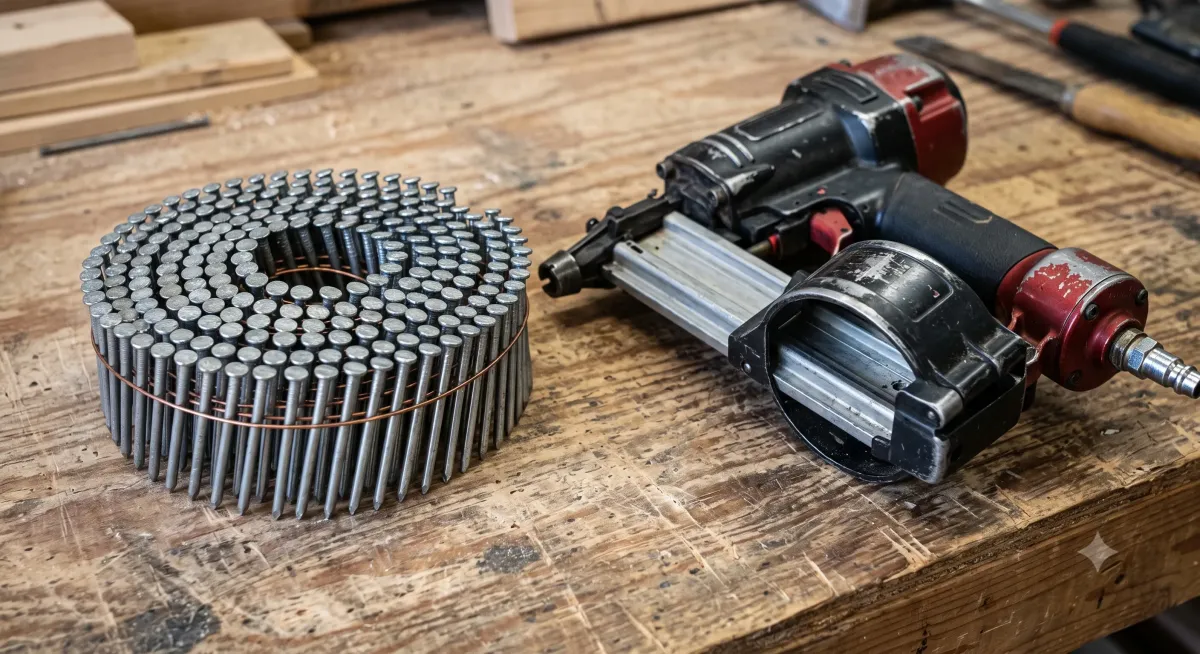
Coil nails are nails joined together in a long, spiral coil so they can feed through a coil nailer, which lets you drive far more nails between reloads than a strip nailer. They are the standard choice for high-volume jobs like roofing, siding, and framing, where speed matters and you do not want to stop and reload every few minutes. The right coil nail for your job comes down to three things: the material being fastened, the length and gauge you need, and the collation that fits your nailer.
That is the short version. Below we break down the types of coil nails, how to read the sizes, which ones to use for roofing versus siding versus framing, and what to look for so you buy the right box the first time.
What coil nails are and why contractors use them
A coil nail is exactly what it sounds like, a nail that comes in a coiled strip rather than a straight stick. The nails are held together by either thin wire or a flat plastic sheet, wound into a roll that drops into the round magazine of a coil nailer.
The big advantage is capacity. A coil can hold 120, 300, or more nails in a single load, compared to the 30 or so in a typical strip. On a job where you are driving thousands of fasteners, like a full roof or a siding run, that means far less time spent reloading and far more time actually working. For production crews, coil nailers and coil nails are the default for this reason.
The trade-off is that coil nailers are usually a bit bulkier than strip nailers, but for high-volume fastening the speed more than makes up for it.
Types of coil nails
Coil nails are grouped by the job they are made for. The main types:
Roofing coil nails. Short, with a wide flat head to hold down shingles, felt, and underlayment without tearing through. Usually ring or smooth shank. This is the most common coil nail on a job site.
Siding coil nails. Medium length with a smaller head, often ring shank for extra grip, used for vinyl, fiber cement, and wood siding.
Framing coil nails. Longer and thicker for structural work, sheathing, and framing where holding power matters most.
Fencing and pallet coil nails. Specialty coil nails for fencing, decking, and pallet assembly.
Within each type you will also choose the shank and the head, which is where holding power comes from.
How to read coil nail sizes
Coil nails are described by length, gauge, head, shank, and collation. Here is what each one means so the specs on the box actually make sense:
Smooth, ring, and screw shank: which to pick
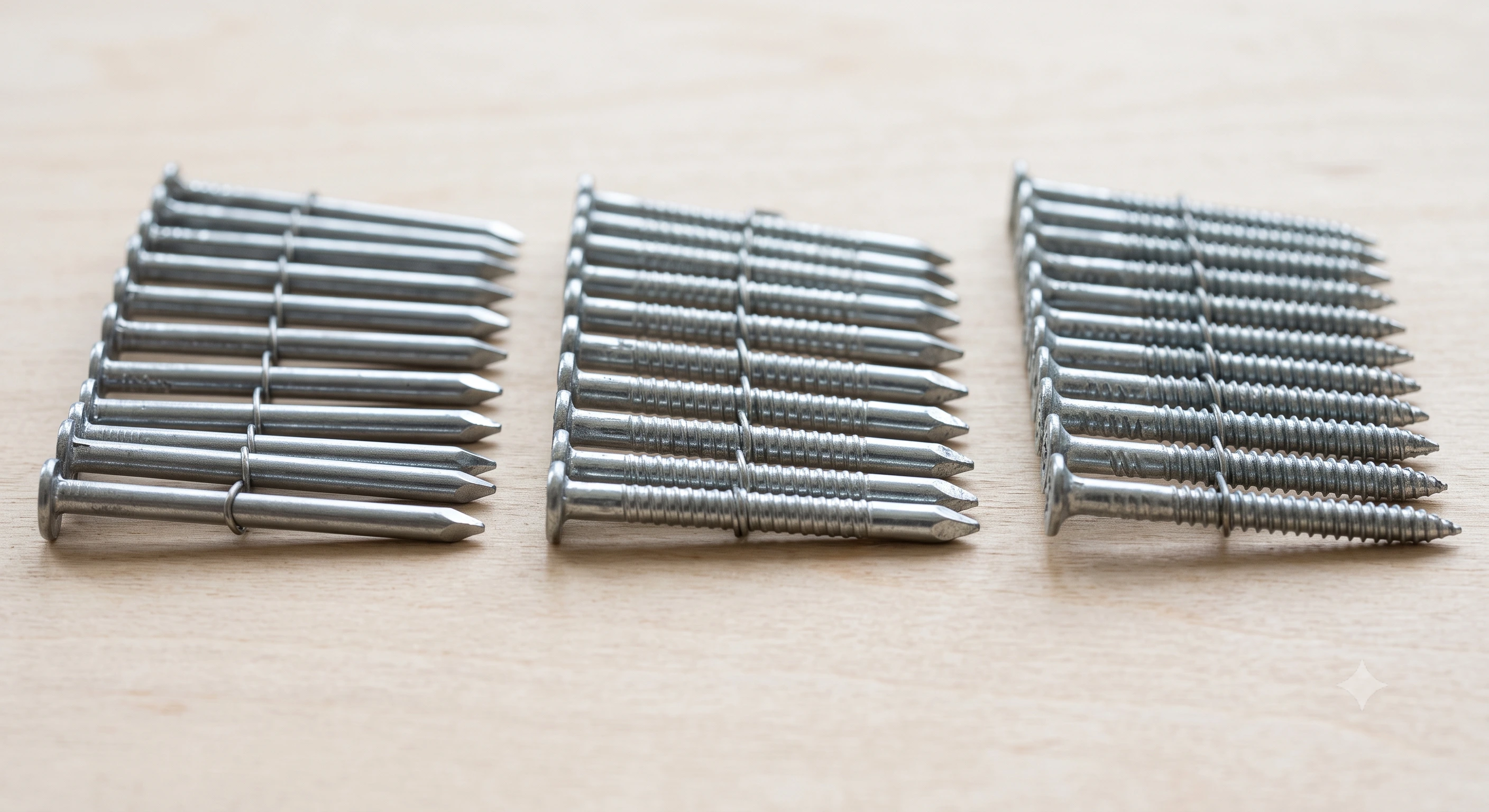
The shank is the part of the nail that grips the wood, and it makes a real difference in holding power:
Smooth shank. The plainest and easiest to drive. Fine for general work and temporary fastening, but the lowest grip.
Ring shank. Has rings along the shaft that bite into the wood fibers, giving much stronger pull-out resistance. The go-to for roofing and siding where wind uplift is a concern.
Screw shank. Twisted like a screw for the strongest hold, used in framing, decking, and structural work.
For most roofing and siding, a ring shank is the safe choice because it resists the nail backing out over time.
Choosing the right coil nail by job
Roofing
Use roofing coil nails with a wide head and, ideally, a ring shank. The head holds the shingle or underlayment down flat, and the length needs to pass through the roofing material and bite into the deck. Galvanized or otherwise coated nails are important here because they sit outside and need to resist rust.
Siding
Use siding coil nails sized to pass through the siding and into the framing or sheathing behind it. Ring shank helps hold the siding tight against wind. For fiber cement and exposed work, corrosion-resistant nails are worth it.
Framing and sheathing
Use longer, thicker framing coil nails. Holding power and shear strength matter most here, so a thicker gauge and a ring or screw shank are the right call.
What to look for when buying coil nails
A few things separate a good box of coil nails from a frustrating one:
Consistent collation. Cheap coils break apart or jam in the nailer. Well-made coils feed smoothly and waste fewer nails.
Corrosion resistance for outdoor work. Galvanized or stainless steel for anything exposed to weather, and especially near the coast.
The right coating. Some coil nails have an adhesive coating that grips harder once driven.
Nailer compatibility. Always match the nail length, gauge, and collation to what your coil nailer accepts. The wrong fit jams the tool or misfires.
Buying the right coil nails in the right quantity for a job keeps a crew moving and avoids mid-job runs to the supply store. If you are not sure which coil nails suit your project, BCP can help you match the right fastener to the material and the nailer. Call us at 877-540-5678 to talk it through.
How coil nails fit with the rest of your roof
Fasteners are one piece of a roof that lasts. They work with the underlayment, the ice and water shield, and the drip edge to keep water out and hold everything down through wind and weather. If you are speccing a full roof, our roof underlayment guide and ice and water shield guide cover the layers your nails fasten down.
Frequently asked questions
What are coil nails used for? Coil nails are used for high-volume fastening jobs like roofing, siding, framing, fencing, and decking. They feed through a coil nailer, which holds far more nails than a strip nailer so you reload less often.
What is the difference between coil nails and strip nails? Coil nails come in a round coil that holds a large number of nails, while strip nails come in a straight stick that holds fewer. Coil nailers carry more fasteners per load, which is why they are favored for production work.
What shank is best for roofing coil nails? A ring shank is best for roofing because the rings grip the wood and resist the nail backing out under wind uplift, which keeps shingles secure over time.
Do coil nails need to be galvanized? For any outdoor or exposed job, yes. Galvanized or stainless coil nails resist rust. Coastal and high-moisture areas especially need corrosion-resistant fasteners.
How do I know which coil nails fit my nailer? Match the nail length, gauge, and collation type (wire or plastic) to your coil nailer's specifications. Using nails outside that range can jam the tool or cause misfires.
What size coil nails do I need? The nail must be long enough to pass through the material you are fastening and bite firmly into the solid wood beneath it. Heavier structural work needs longer, thicker nails than roofing or siding.
