Coil Nails vs Strip Nails: Which to Use | Guide
Coil Nails vs Strip Nails: Which Should You Use?
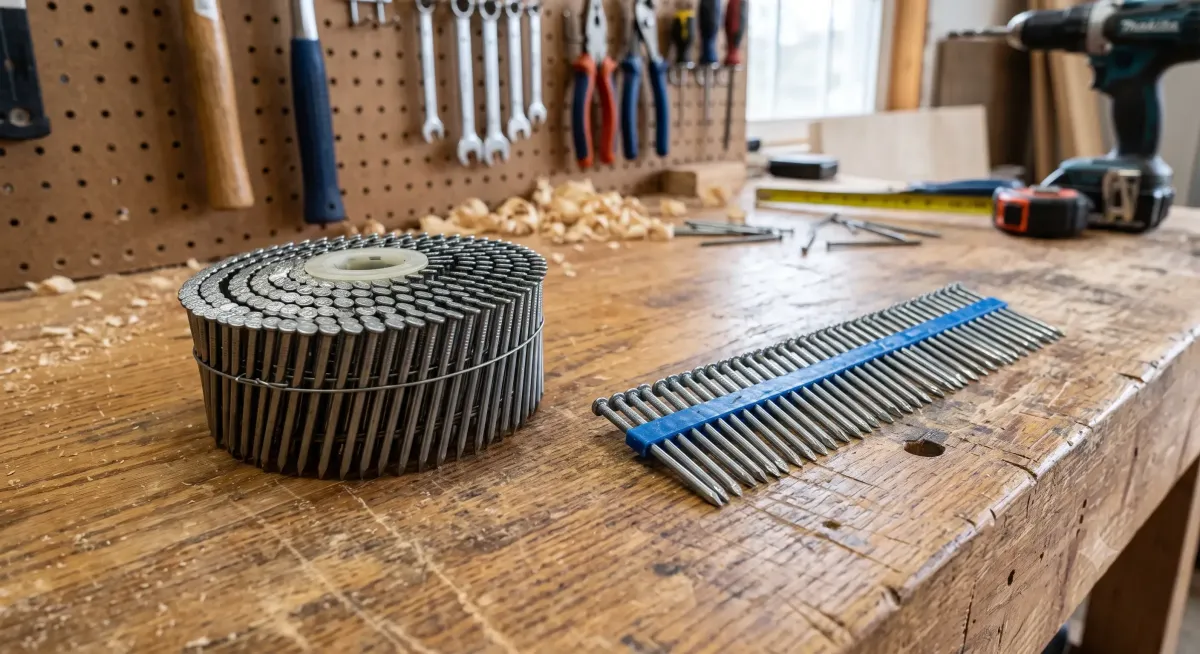
Coil nails come in a round, spiraled coil that holds hundreds of nails at once, while strip nails come in a straight stick that holds around 30 to 40. The practical difference: coil nailers let you drive far more fasteners between reloads, which makes them faster for high-volume jobs like roofing and siding, while strip nailers are lighter, easier to maneuver, and better for framing and finish work in tight spots. Neither is universally better, the right one depends on how many nails you are driving and where.
That is the short answer. Below we cover how each system works, where each one wins, and how to decide which belongs on your job.
The core difference: how the nails are collated
The whole comparison comes down to how the nails are held together, what the trade calls collation.
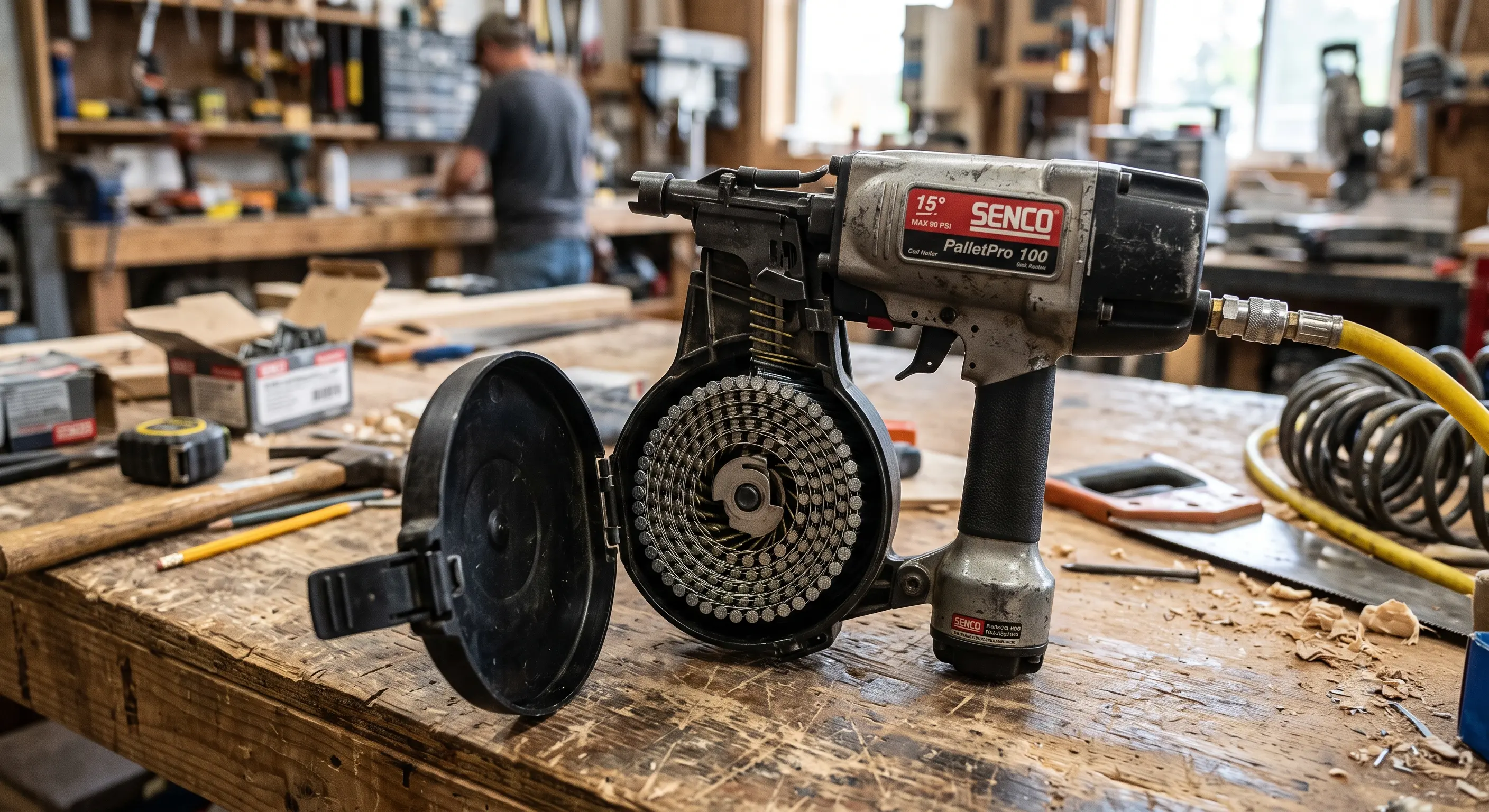
Coil nails are wound into a flat spiral coil, held by thin wire or a plastic sheet, that drops into the round drum magazine of a coil nailer. A single coil can hold anywhere from about 120 to 300 or more nails.
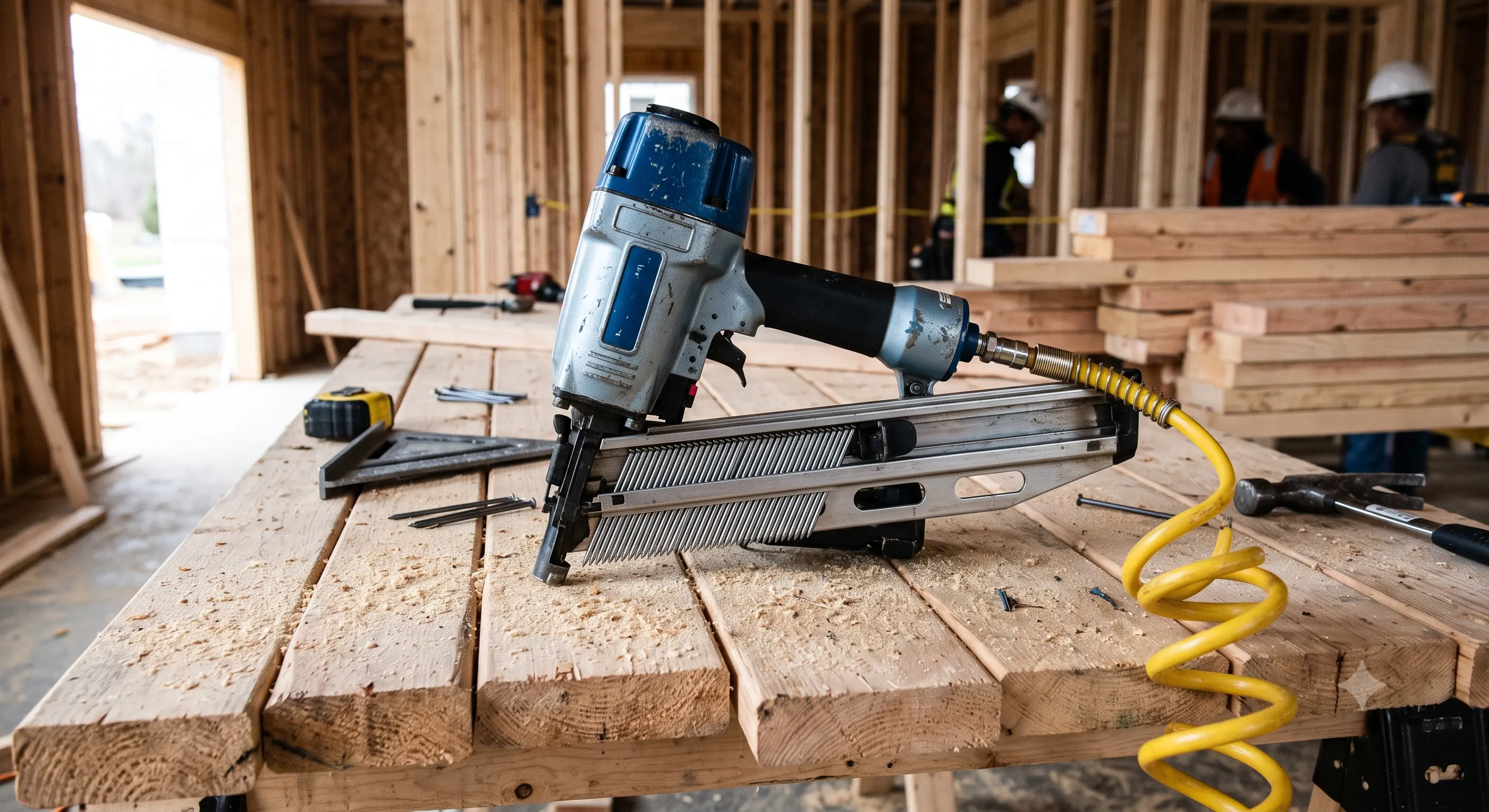
Strip nails are glued or wired into a straight strip that loads into the long, angled or straight magazine of a strip nailer. A strip typically holds around 30 to 40 nails.
That single design difference, round coil versus straight strip, drives every other trade-off between them: capacity, tool weight, maneuverability, and which jobs each is suited for.
If you want the full rundown on coil nail types, sizes, and shanks, our coil nails guide covers that in detail. This article focuses on the coil-versus-strip decision.
Where coil nails win
High-volume fastening. This is the big one. Because a coil holds many times more nails than a strip, you reload far less often. On a job where you are driving thousands of fasteners, roofing, siding, sheathing, fencing, that saved time adds up fast. Production crews reach for coil nailers for exactly this reason.
Compact magazine. The round drum keeps the loaded nails close to the tool body, which can help in some repetitive fastening positions.
Roofing and siding. These trades involve huge nail counts over large areas, which is why coil nailers dominate there. Roofing coil nailers and siding coil nailers are job-site standards.
Where strip nails win
Lighter and easier to handle. A strip nailer with 30 nails loaded is lighter than a coil nailer with 200. For work that involves a lot of moving around, repositioning, and overhead or awkward angles, that lighter weight reduces fatigue.
Better in tight spaces. The slim strip magazine fits into corners and confined framing bays more easily than a bulky round drum. For framing between studs and joists, that maneuverability matters.
Framing and finish work. Framing nailers and finish nailers are typically strip-fed. The jobs favor precision and access over raw nail capacity, so the strip design fits better.
Often lower tool cost. Strip nailers are frequently less expensive than comparable coil nailers, though this varies by brand and type.
Coil vs strip: side by side
How to choose
The decision is mostly about nail volume and access:
Driving thousands of nails over open area? Go coil. Roofing, siding, subfloor, sheathing, and fencing all favor coil nailers because fewer reloads means real time savings.
Framing, or working in tight bays and awkward angles? Go strip. The lighter, slimmer tool is easier to place accurately where access is limited.
Finish and trim work? Strip (finish nailers are strip-fed), for precision and a lighter touch.
Running a mixed crew? Many contractors keep both, a coil nailer for the high-volume envelope work and a strip nailer for framing and detail work.
Remember that the nailer and the nails have to match, the nail length, gauge, and collation type all need to fit the specific tool. Using the wrong fit jams the tool or causes misfires.
Nail heads and shanks: both systems offer them
One thing worth clearing up: choosing coil or strip does not lock you out of the nail features that matter for holding power. Both systems come in a range of heads and shanks.
Shank types (the surface of the nail shaft that grips the wood) are available in both:
Smooth shank, easiest to drive, lowest grip, fine for general and temporary work.
Ring shank, rings bite into the wood fibers for much stronger pull-out resistance, the go-to for roofing and siding where wind uplift is a concern.
Screw shank, twisted for the strongest hold, used in framing and structural work.
Head types matter too. Roofing nails use a wide flat head to hold down shingles and underlayment without tearing through, and these are common in coil form. Framing nails often use a round or clipped head, common in strip form. Finish nails use a tiny head that sits flush, strip only.
So the real decision order is: first pick the system (coil or strip) based on the job and volume, then pick the head and shank based on the material and holding power you need. You are not giving up grip by choosing one collation over the other.
Matching the nailer to the job: real scenarios
A few common situations and the sensible pick for each:
Full roof of asphalt shingles. Coil, with wide-head ring-shank roofing nails. Thousands of fasteners over open area, capacity wins.
Vinyl or fiber cement siding. Coil, ring shank for grip against wind. Again, high nail count over a large surface.
Framing walls, floors, and roofs. Strip framing nailer, the lighter tool and slim magazine make working between studs and joists far easier.
Sheathing and subfloor. Either works, but many crews use coil for the sheer volume, with ring shank for hold.
Trim, baseboard, and finish work. Strip finish nailer, precision and a small head matter more than capacity.
Fencing and decking. Coil, high fastener counts and ring or screw shank for a lasting hold outdoors.
If your crew does a mix of these, keeping both a coil nailer for envelope work and a strip nailer for framing and detail is common and practical.
Reliability and jamming: what to expect
Both systems are reliable when the nails match the tool and are good quality, but they fail in slightly different ways when they do not.
Coil nailers depend on the coil feeding smoothly out of the drum. Cheap or damaged coils where the wire or plastic collation breaks apart will jam and waste nails. Buying well-made coils with consistent collation is the main way to avoid this.
Strip nailers are generally simple to clear when they do jam, since the straight magazine is easy to open, but they run dry faster because of the smaller capacity, which means more stops on a big job.
In both cases, matching the exact nail length, gauge, and collation the tool is rated for is the single biggest factor in trouble-free driving. The wrong nail is the most common cause of jams and misfires, not the system itself.
If you are stocking fasteners for a job and want to match the right coil nails to your tools and materials, BCP can help. Call us at 877-540-5678 or visit our coil nails guide to learn more.
Frequently asked questions
What is the difference between coil nails and strip nails? Coil nails are wound in a round coil that holds hundreds of nails, while strip nails come in a straight strip holding about 30 to 40. Coil nailers reload less often and suit high-volume work; strip nailers are lighter and better for framing and tight spaces.
Are coil nailers better than strip nailers? Neither is better overall. Coil nailers win on high-volume jobs like roofing and siding because of their large capacity. Strip nailers win on framing and finish work because they are lighter and fit tight spots.
Why do roofers use coil nailers? Roofing involves driving thousands of nails over a large area, so the high capacity of a coil nailer means far fewer reloads and a faster job. That is why coil nailers are the standard for roofing.
Are strip nailers lighter than coil nailers? Generally yes. A strip nailer holds fewer nails, so it is lighter when loaded, which reduces fatigue during work that involves a lot of movement or overhead fastening.
Can I use coil nails in a strip nailer? No. Coil and strip nails are collated differently and are not interchangeable. You must use the nail type, length, and gauge that match your specific nailer, or the tool will jam or misfire.
Which is more cost effective? For large jobs, coil nails often win on labor savings from fewer reloads. Strip nailers can have a lower upfront tool cost. The best value depends on how many nails you drive and how often.
Can you get ring shank nails in both coil and strip? Yes. Ring shank, smooth shank, and screw shank nails are available in both coil and strip collation. You choose the system based on the job, then choose the shank based on the holding power the material needs.
Do coil and strip nails hold differently? No. Holding power comes from the nail's shank and head, not from whether it was collated as a coil or a strip. A ring shank nail holds the same whether it came off a coil or a strip.
