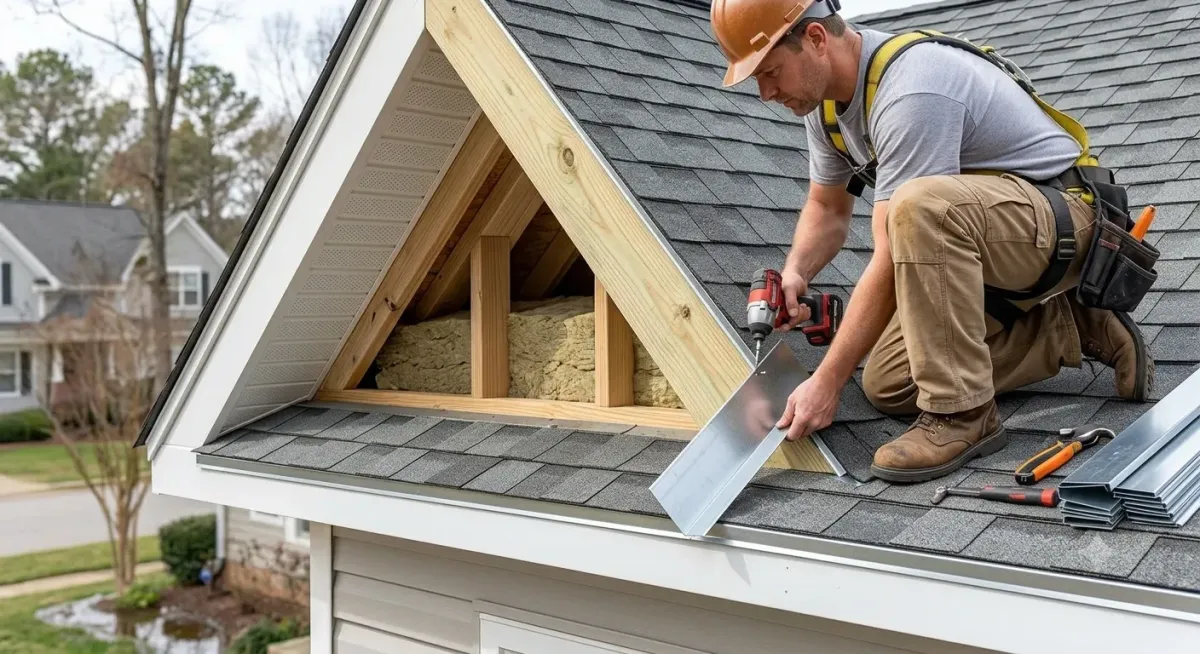
Drip Edge and Gutters: How They Work Together
Drip Edge and Gutters: How They Work Together
Drip edge and gutters work as a team to move water off your roof and away from your home, and the key detail is how they overlap: the drip edge should direct water into the gutter, not behind it. At the eaves, the drip edge tucks under the underlayment at the top and its bottom lip hangs over the front edge of the roof, extending into the gutter so runoff drops cleanly into the trough. Installed correctly, drip edge stops water from running back under the roof edge and rotting the fascia and soffit. Installed wrong, or left out, water sneaks behind the gutter and causes exactly the damage the system is meant to prevent. This guide explains how the two fit together, the right overlap, and the common mistakes that cause leaks.
Below we cover what each part does, exactly how they should overlap at the eaves, whether gutters go over or under the drip edge, and how to avoid the errors that let water get behind your gutters.
What drip edge and gutters each do
They solve two halves of the same problem: getting rainwater off the roof and safely away from the structure.
Drip edge is a metal flashing installed along the edges of the roof (the eaves and the rakes). Its job is to control where water goes as it leaves the roof surface. The bent lip directs runoff outward and down, so instead of clinging to the underside of the roof edge and running back toward the fascia, the water drops away cleanly. Drip edge also protects the vulnerable wood at the roof edge from moisture.
Gutters are the channels mounted at the eaves that catch that runoff and carry it to the downspouts, which route it away from the foundation. Gutters only work well if the water actually makes it into them, and that is where the drip edge comes in.
Together, the drip edge delivers the water into the gutter, and the gutter carries it away. Neither does the whole job alone. For the full rundown on drip edge itself, see our drip edge roofing guide.
How drip edge and gutters overlap at the eaves
This is the part people get wrong, so here is the correct relationship.
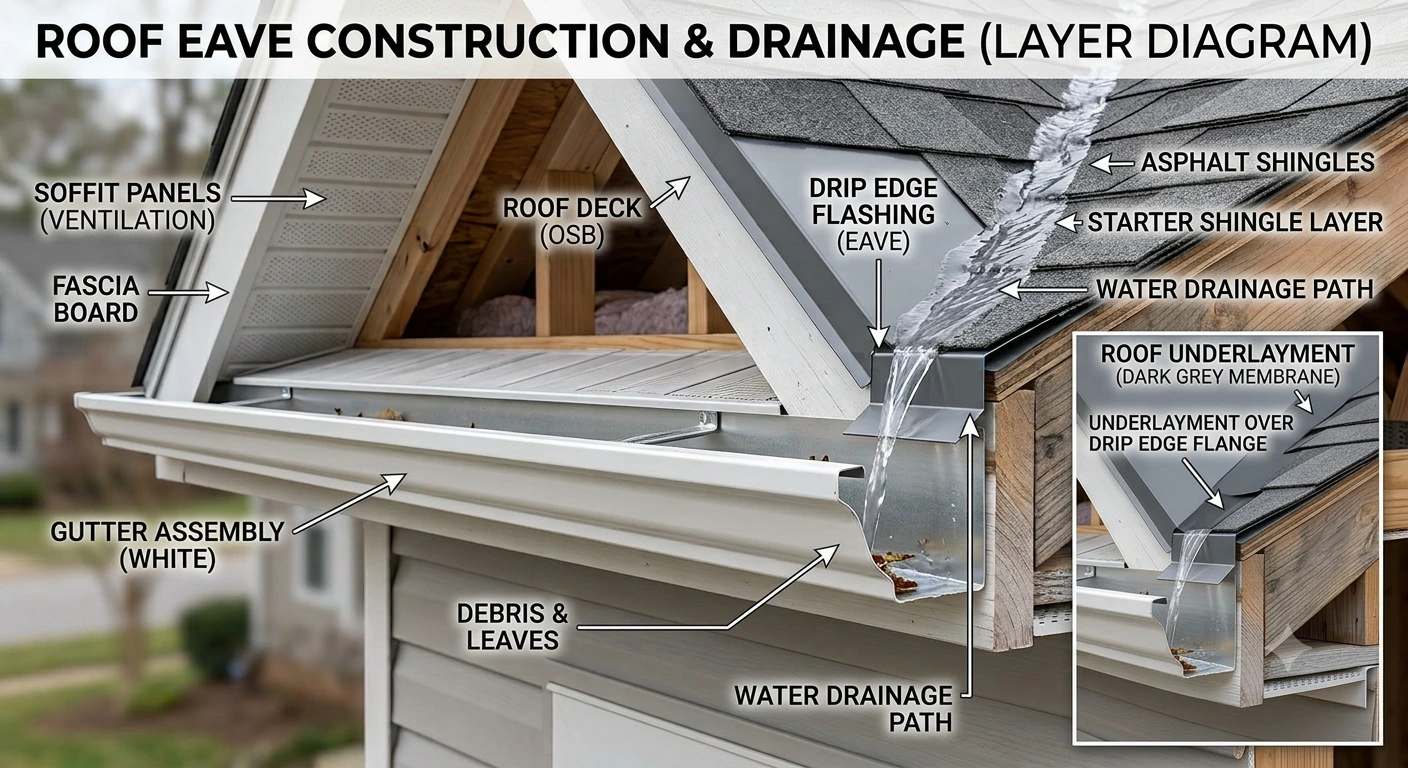
At the eaves, the drip edge sits at the roof edge with:
Its top flange under the underlayment (and under the ice and water shield if present), so water on the roof deck runs on top of the drip edge, not behind it.
Its bottom lip hanging over the front edge of the roof and extending into the gutter.
The gutter is mounted so that the drip edge's lower lip overhangs the back edge of the gutter trough, directing water down into the gutter. The drip edge should extend far enough that water dripping off it lands inside the gutter, not behind it against the fascia.
Get this overlap right and every drop that leaves the roof edge is guided into the gutter. Get it wrong, and water runs behind the gutter and down the fascia.
Do gutters go over or under the drip edge?
This is the most common question, and the answer has two parts because there are two drip edge locations:
At the eaves (bottom edge): the drip edge goes behind/above the back of the gutter, with its lip pointing into the gutter. In practice, the gutter's back edge sits against the fascia and the drip edge lip extends over it into the trough. So the drip edge directs water into the gutter, and the gutter's hangers attach to the fascia below the drip edge.
At the rakes (sloped edges): there is no gutter, so the drip edge simply runs along the edge over the underlayment.
The short version: at the eave, the drip edge's lip should end up inside the gutter, so water is delivered into the trough. If your gutter is installed so high that it covers the drip edge lip and water can wick behind it, that is a problem. The drip edge lip must clear into the gutter.
What happens without proper drip edge (or with it done wrong)
Skipping drip edge, or installing it so water gets behind the gutter, causes a predictable chain of damage:
Water runs back under the roof edge by surface tension, soaking the roof decking and the fascia board.
The fascia and soffit rot over time from constant moisture.
Water gets behind the gutter and runs down the exterior wall instead of through the downspout.
Staining and paint failure appear on the fascia and siding.
In cold climates, ice can build up at the unprotected edge and worsen ice dam problems.
All of this is preventable with a correctly installed drip edge that channels water into the gutter.
Drip edge and gutter setup at a glance
Common drip edge and gutter mistakes
Drip edge lip behind the gutter, not inside it. The single most common error. If the lip does not reach into the trough, water runs behind the gutter. The lip must clear into the gutter.
No drip edge at all. Some older homes and rushed jobs skip it, leaving the fascia exposed to water running back under the edge.
Gutter mounted too high. If the gutter sits above the drip edge lip, water can wick behind it. The gutter back should sit below where the drip edge delivers water.
Wrong layering with underlayment. At the eave, the drip edge goes under the underlayment so deck water runs on top of it. Reverse that and water gets under the drip edge.
Gaps at corners and seams. Water finds gaps. Corners and joints in the drip edge and gutter should be sealed and overlapped correctly.
Get the right roofing components
At BCP Inc., we supply the roofing components that make a roof edge shed water the way it should, drip edge, underlayment, and ice and water shield for the vulnerable edge zones. Getting the edge detail right is one of the cheapest ways to prevent expensive fascia and soffit damage.
If you are building or reroofing and want the right materials for your roof edge, call us at 877-540-5678 or visit bcpinc.us/roof-underlayment to see our products and request a quote.
Frequently asked questions
Does drip edge go into the gutter? Yes. At the eaves, the bottom lip of the drip edge should extend into the gutter trough so runoff drops cleanly into the gutter rather than behind it. If the lip does not reach into the gutter, water can run behind it and damage the fascia.
Do gutters go over or under the drip edge? At the eave, the drip edge's lower lip extends over the back edge of the gutter and into the trough, so effectively the drip edge directs water into the gutter from above. The gutter's back sits against the fascia below where the drip edge delivers the water.
Can you install drip edge with gutters already up? It is possible but harder. Drip edge is best installed during roofing, tucked under the underlayment, with the lip directed into the gutter. Adding it after gutters are up can require adjusting the gutter or using a specific profile. A roofer can advise on your setup.
What happens if you don't have drip edge? Without drip edge, water can run back under the roof edge and soak the fascia and soffit, causing rot, staining, and water getting behind the gutter. Drip edge is inexpensive insurance against this damage, and it is required by many building codes.
Why is water running behind my gutter? Usually because the drip edge is missing, or its lip does not extend into the gutter, or the gutter is mounted too high. The fix is ensuring the drip edge directs water into the trough. Check that the drip edge lip clears into the gutter.
Is drip edge required by code? In many areas, yes. Modern building codes commonly require drip edge at eaves and rakes. Beyond code, it is standard good practice because it protects the roof edge and directs water into the gutters. Check your local requirements.
