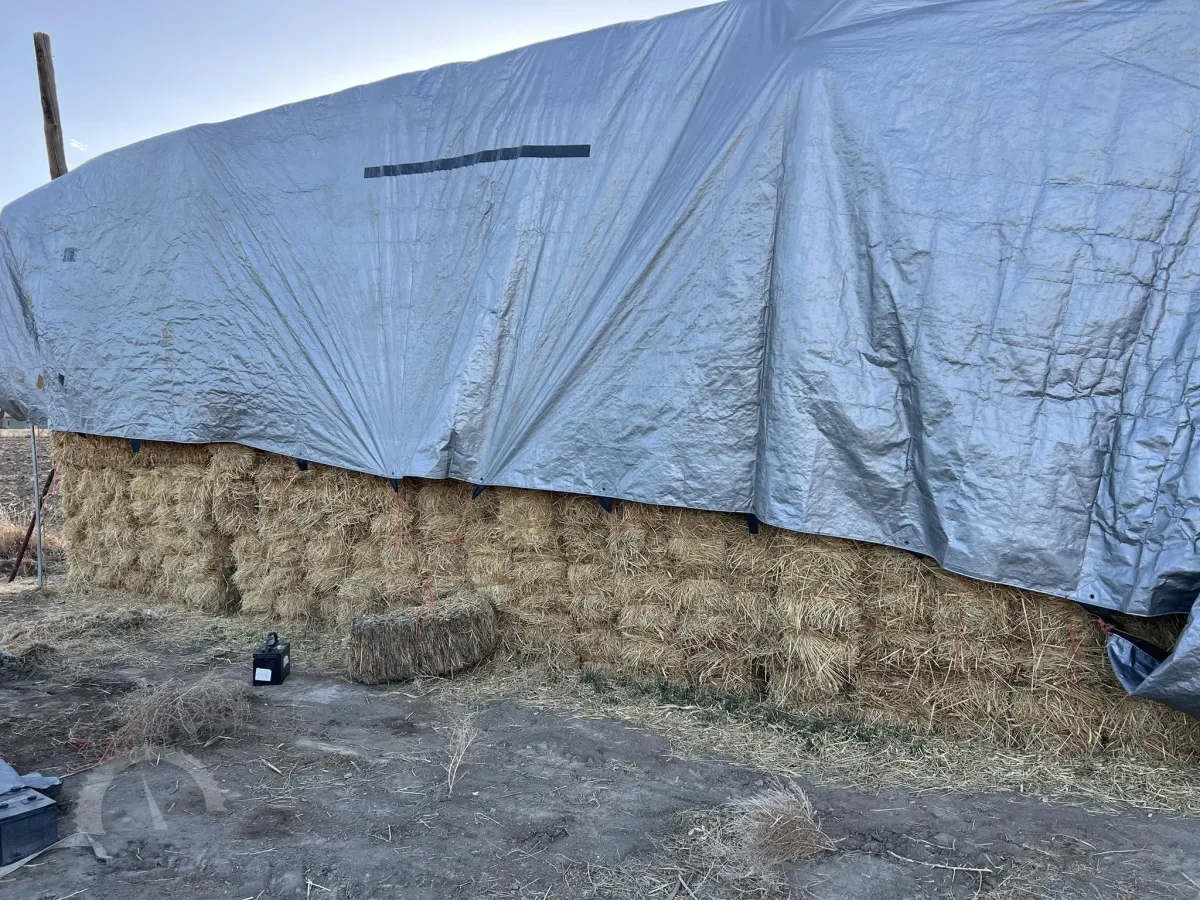
Hay Tarps: How to Cover Hay Bales Outside
Hay Tarps: How to Cover Hay Bales Outside
Hay stored outside without cover loses quality from the top down. Rain soaks into the top bales, the moisture works its way into the stack, and the outer layer can spoil before you ever feed it. A hay tarp protects stacked bales by shedding rain and snow off the top of the stack while the bales stay off the ground and air can still move around them.
This guide covers how to cover hay bales outside: how a hay tarp should fit, how to stack and tie down the pile, small square vs large round bales, breathable vs waterproof tarps, and which tarp grade holds up season after season.
For more on how tarp weight and material affect strength, see our tarp thickness guide.
Why cover hay stored outside
Hay is the feed you already paid to cut, bale and haul. Leaving it uncovered means:
Weathering on the top and sides, where rain and snow hit first
Moisture wicking up from the ground into the bottom row
More waste at feeding time, because spoiled hay gets refused or thrown out
A barn or hay shed is the best protection. When you don't have the room, a well-secured hay tarp over a well-built stack is the next best option.
How a hay tarp should fit
Cover the top completely. The top of the stack takes the most rain and snow.
Bring the tarp down the sides. Let it hang down the sides of the stack so rain runs off away from the bales instead of into the gap between tarp and hay.
Leave the bottom open. Stop short of the ground so humid air and moisture coming up from the soil can escape.
Overhang the ends. Extend the tarp past both ends of the stack so wind-driven rain doesn't get in.
How to stack and cover hay bales
Pick a well-drained site. Choose high ground away from low spots where water collects, and away from trees that drip on the stack.
Get the bales off the ground. Stack on pallets, a gravel pad or old tires so the bottom row doesn't soak up moisture.
Build a peaked or sloped top. Stack so the top is higher in the middle than at the edges. A flat top lets water pool on the tarp.
Measure before you buy. Measure the length, width and height of the finished stack. The tarp needs to cover the top and come down the sides with room to tie off.
Lay the tarp on a calm day. Unroll it across the stack with help from a second person, keeping the overhang even.
Tie it down through the grommets. Run ropes or straps from grommets on one side, over the stack, to the other side, and anchor them to the pallets, ground anchors or a weight at the base. Use every grommet you can.
Check after every storm. Re-tension loose ropes, empty water pockets and repair small tears before they spread.
Small square bales vs large round bales
Small square bales | Large round bales | |
|---|---|---|
Stacking | Tight, tall rectangular stacks | Rows or a pyramid, one or two high |
Tarp shape | One large tarp over the whole stack | One long tarp over each row, or over a pyramid |
Biggest risk | Water pooling on a flat top | Water collecting in the gaps between bales |
Tie-down | Ropes across the stack to the base | Ropes or straps across the row to ground anchors |
Round bales shed some rain on their own, but the top and the gaps between bales still take on water. Covering rows of round bales with a tarp cuts the weathered outer layer you have to throw away.
Breathable vs waterproof hay tarps
You'll see both types on the market.
Waterproof tarps keep all rain and snow out of the top of the stack. Because they don't breathe, airflow has to come from the open bottom and the space around the stack.
Breathable hay tarps let some moisture escape through the fabric itself.
BCP tarps are 100% waterproof polyethylene. They work well for hay when the bales go into the stack properly cured and dry, the stack sits off the ground, and you leave the bottom of the sides open so air can move. Never cover damp hay tightly with a waterproof tarp. Wet hay can heat up inside the stack, which is a fire risk.
Common mistakes
Covering hay that isn't dry. Moist bales can heat inside the stack. Make sure hay is properly cured before you stack and cover it.
Stacking on bare ground. The bottom row soaks up water and spoils.
A flat top. Water pools, the tarp stretches, and leaks start.
A tarp that's too small. If it only covers the top, rain runs down the sides and into the bales.
Weighing a tarp down with a few tires. Wind gets under it. Tie it through the grommets on both sides.
Light tarps left out all year. Thin, low-UV tarps tear and turn brittle after a season in the sun.
Which BCP tarp for hay
BCP makes three tarp grades. All three are 100% waterproof with grommets for tying down. You can compare them on the BCP tarpaulin page.
BCP tarp | Material | Weight | Grommets | Good for hay when |
|---|---|---|---|---|
Polyethylene with lamination | 65 to 70 GSM | Metal, every 1 m | You need a short-term cover for a small stack | |
Heavy-duty PE, multi-layer lamination | 110 to 120 GSM | Brass, every 60 cm | Hay stays outside for a full season | |
HDPE, cross-laminated, PVC coated | 200 to 240 GSM | High-tensile metal, every 50 cm | Large stacks, open fields, high wind or heavy snow |
BCP Tarps Super is built for agricultural use. It has advanced UV protection, mildew resistance, double-reinforced hems with poly rope inside, brass grommets every 60 cm and cold-crack resistance down to -20°C (-4°F). For big stacks on exposed ground, BCP Tarps Heavy Duty is rated from -40°C to +70°C (-40°F to 158°F), with triple-reinforced borders and high-tensile grommets every 50 cm.
Frequently asked questions
What is the best way to cover hay bales outside?
Stack the bales off the ground on a well-drained site with a peaked top, then cover the top and sides with a tarp tied down through the grommets. Leave the bottom of the sides open so air can move.
Should you cover round bales stored outside?
Yes, if you can. Round bales shed some rain, but the tops and the gaps between bales still take on water. A tarp over each row reduces the spoiled outer layer.
Do hay tarps need to be breathable?
Not always. A waterproof tarp works when the hay is properly cured, the stack is off the ground and the bottom of the sides stays open. Never cover damp hay tightly.
How do you keep a tarp on a haystack in the wind?
Tie ropes or straps through the grommets on both sides of the stack and anchor them at the base. Use every grommet and re-tension after storms. Tires on top alone won't hold it.
What size hay tarp do I need?
Measure the length, width and height of the finished stack. The tarp should cover the top, run down the sides and overhang both ends, with enough left over to tie off.
Get the right tarp for your hay
Before you order, have ready:
Length, width and height of each stack
Small square or large round bales
How long the hay stays outside
How exposed the site is to wind and snow
How many tarps you need
Send us your stack sizes and our team will recommend the right tarp grade and size. Or call 877-540-5678.
