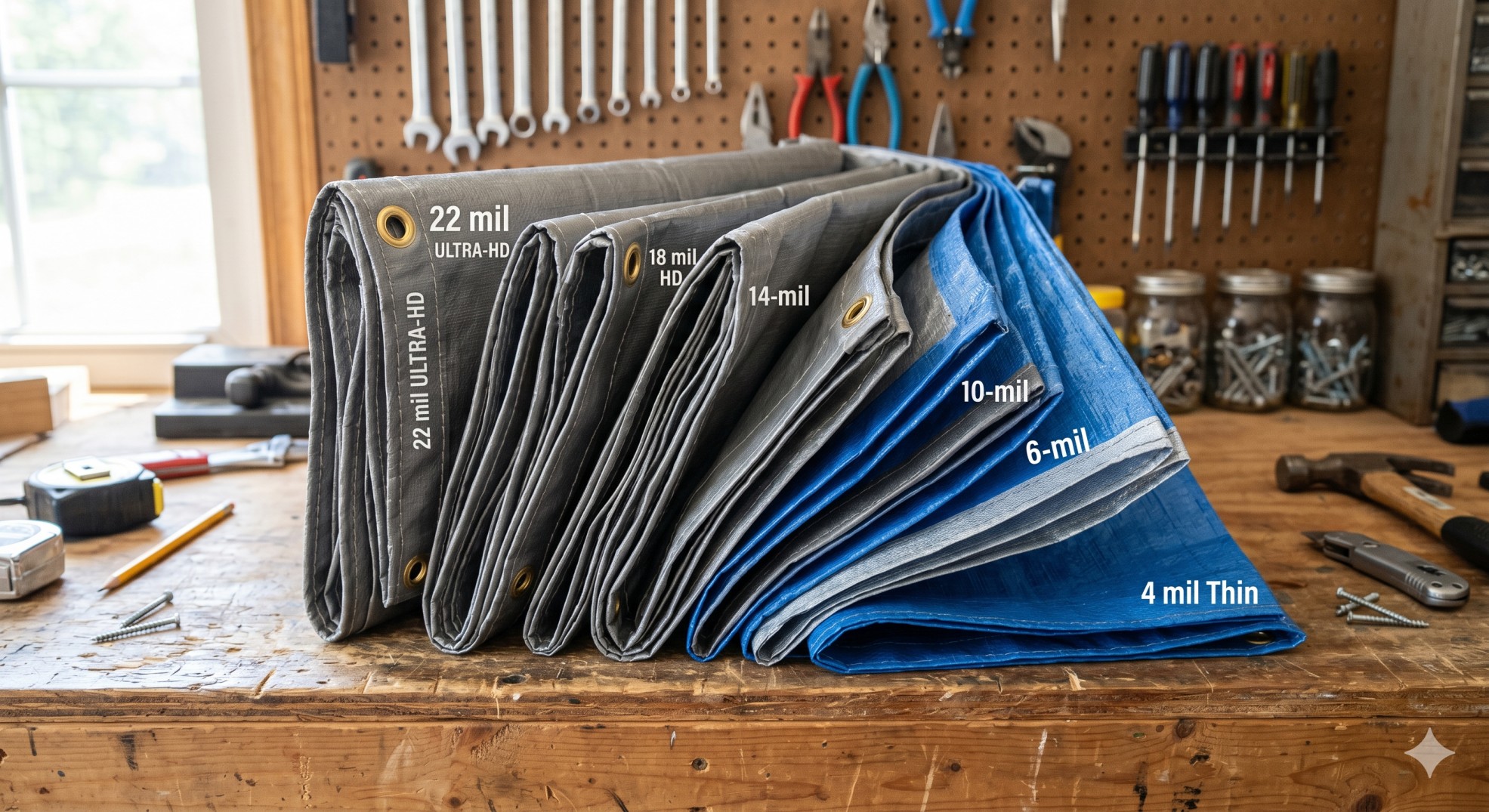
Tarp Thickness Guide: What Mil Do You Need?
Tarp Thickness Guide: What Mil Do You Actually Need?
A tarp's thickness is measured in mils, where 1 mil equals one-thousandth of an inch. For most jobs, light-duty tarps run 5 to 8 mil, medium-duty 10 to 12 mil, and heavy-duty 14 to 23+ mil. As a quick rule: use 5 to 8 mil for short-term covering and light protection, 10 to 12 mil for general outdoor and construction use, and 16 mil or higher for long-term, heavy-duty jobs that face wind, abrasion, and constant weather. Thicker means stronger and longer-lasting, but also heavier and more expensive, so match the mil to the job instead of overpaying.
Tarp thickness is the spec people get wrong most often. Buy too thin and it tears on the first windy night. Buy too thick and you've overpaid for a stiff, heavy tarp that's hard to handle. The good news is that picking the right thickness is simple once you understand what "mil" actually means and which range fits your job.
This guide explains tarp mil ratings, what each thickness range is good for, and how to choose without guessing.
What Does "Mil" Mean on a Tarp?
A mil is a unit of thickness equal to one-thousandth of an inch (0.001 inch). It is not a millimeter, and that trips a lot of people up. A 10 mil tarp is 0.010 inches thick.
The higher the mil number, the thicker and generally stronger the tarp. Thickness affects almost everything that matters: tear resistance, puncture resistance, how well it stands up to sun and weather, and how long it lasts. A 5 mil tarp and a 20 mil tarp can look similar folded on a shelf, but in the field they perform in completely different leagues.
One important note: mil measures thickness, not always strength on its own. A well-made tarp with a tight weave and quality coating can outperform a cheaply made tarp of the same mil. So treat mil as your starting point, then look at weave count and material quality too.
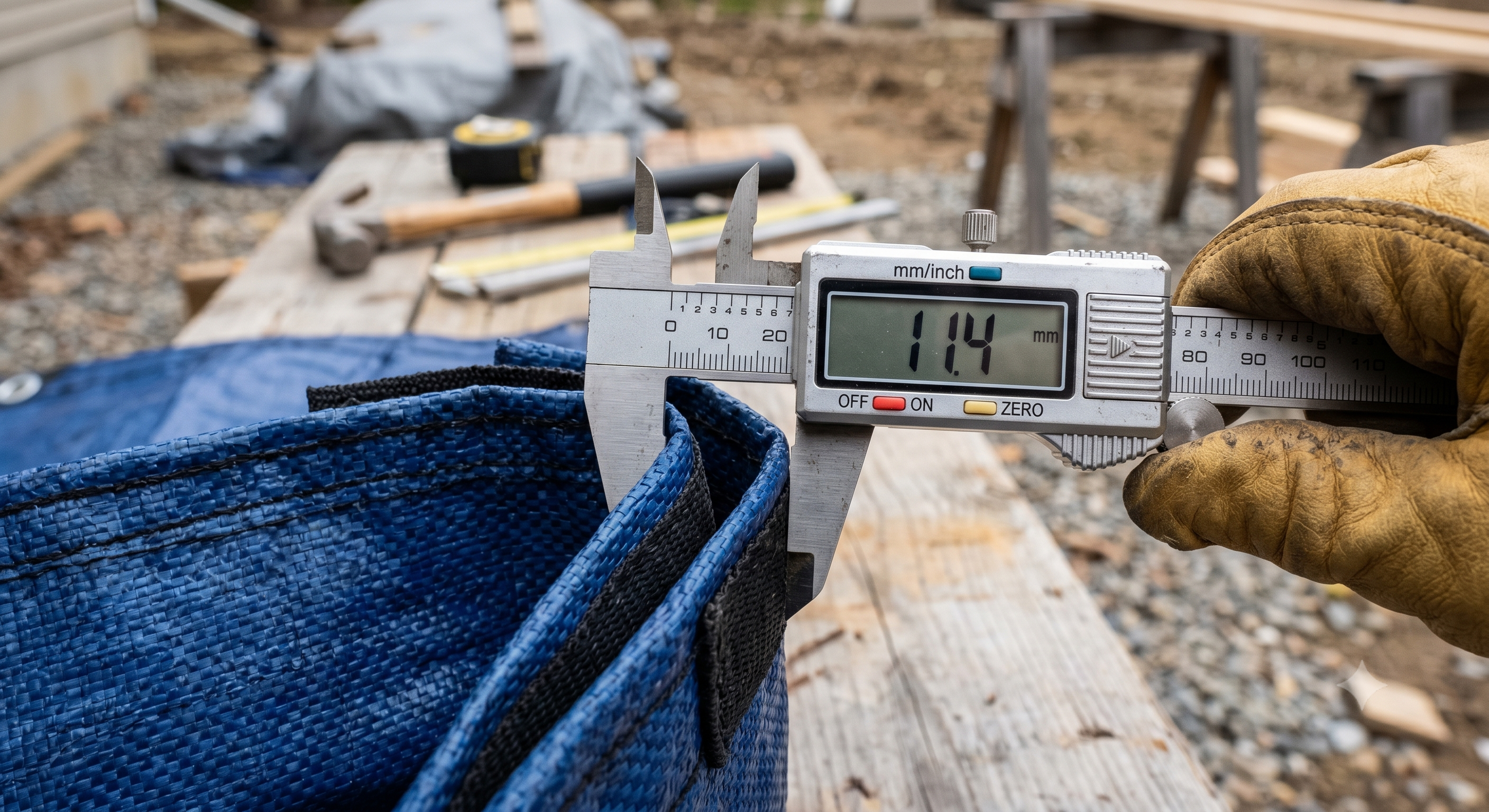
Tarp Thickness Chart by Job Type
Here's how the common thickness ranges line up with real-world use.
Light-Duty Tarps (5 to 8 mil)
Light-duty tarps are thin, cheap, and fine for jobs where the tarp won't take much stress.
Use them for short-term covering, light rain protection, drop cloths when painting, covering items in storage, or one-time uses. They fold up small and weigh almost nothing.
The trade-off is durability. Light tarps tear easily, don't handle wind well, and break down fast under sun. Don't count on a 5 mil tarp lasting more than a few weeks outdoors in real weather. For anything that needs to hold up, size up.
Medium-Duty Tarps (10 to 12 mil)
This is the sweet spot for most general jobs. Medium-duty tarps balance strength, weight, and cost better than any other range.
They handle general outdoor cover, protecting construction materials, covering firewood or equipment, securing loads in a truck or trailer, and short-to-medium-term weather protection. A 10 to 12 mil tarp will take normal wind and rain without tearing and last a reasonable stretch outdoors.
If you're not sure what thickness to buy and the job isn't extreme, medium-duty is the safe default. It covers the widest range of everyday needs.
Heavy-Duty Tarps (14 to 16 mil)
When the tarp has to survive real weather over time, step up to heavy-duty.
These handle long-term outdoor exposure, equipment and machinery covers, lumber protection, and any job where wind, abrasion, and sun would destroy a thinner tarp. The extra thickness means stronger grommets, better tear resistance, and a tarp that holds up season after season.
The trade-offs are weight and cost. Heavy-duty tarps are noticeably heavier to handle and cost more upfront, but for jobs that would shred a medium tarp, they pay for themselves by not needing replacement.
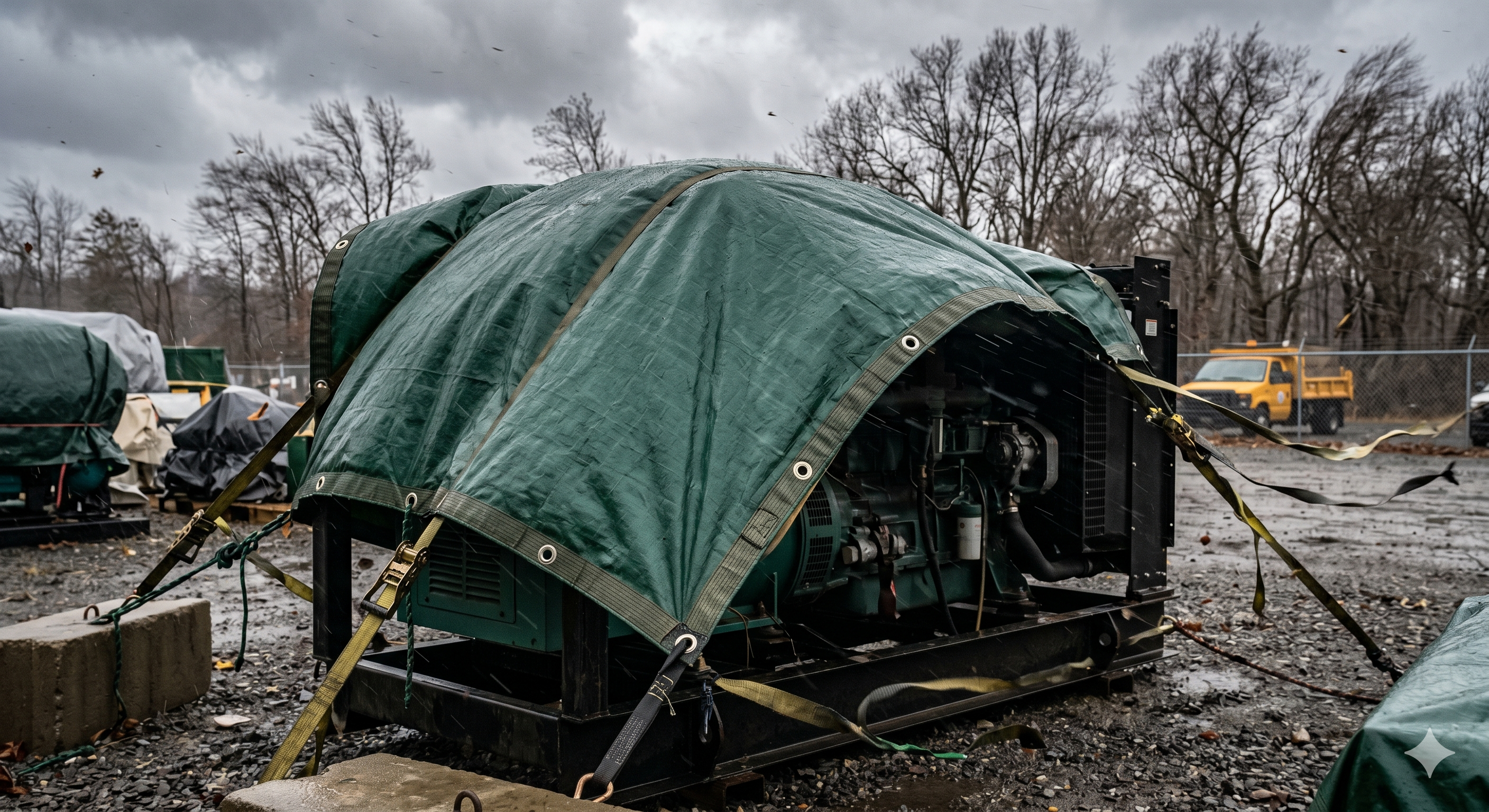
Extra Heavy-Duty Tarps (18 to 23+ mil)
The thickest tarps are built for punishment. Industrial sites, harsh climates, abrasion-heavy jobs, and multi-year outdoor cover all call for extra heavy-duty.
At this thickness, the tarp resists punctures, tearing, and weather that would wreck anything lighter. The downside is that these are heavy and stiff, which makes large sizes harder to fold, move, and secure. Only go this thick when the job genuinely demands it. For most users, heavy-duty (14 to 16 mil) is already plenty.
How to Choose the Right Tarp Thickness
Four questions point you to the right mil rating.
How long will the tarp be in use? A weekend job can use light-duty. Weeks to months of use call for medium-duty. Long-term or permanent cover needs heavy-duty or higher.
How harsh are the conditions? Calm, sheltered, light use means you can go thinner. Wind, sun, rain, and abrasion mean you need more thickness to survive.
What are you protecting? Covering scrap or low-value items doesn't justify a heavy tarp. Protecting expensive equipment, materials, or anything that can't get wet justifies stepping up.
What's your budget over time? A thin tarp is cheap but gets replaced often. A thicker tarp costs more upfront but lasts. If you'd otherwise rebuy light tarps repeatedly, the heavier one is usually the better value.
Thickness isn't the only spec that matters. The material also drives performance, and our PE vs PVC vs canvas tarp guide explains how that choice interacts with thickness. For broader job-site selection, see our heavy duty tarps guide and construction tarps guide.
Frequently Asked Questions
Is a higher mil tarp always better? No. A higher mil tarp is stronger and lasts longer, but it's also heavier, stiffer, and more expensive. For light or short-term jobs, a thinner tarp is the better, cheaper choice. Match the thickness to the job rather than always buying the thickest.
What is the difference between mil and millimeter? A mil is one-thousandth of an inch (0.001 inch), used to measure tarp thickness in the US. A millimeter is a metric unit equal to about 39 mils. They are not the same, so a "10 mil" tarp is much thinner than 10 millimeters.
What thickness tarp do I need for long-term outdoor use? For long-term outdoor exposure, choose at least 14 to 16 mil (heavy-duty). For harsh climates or multi-year use, 18 mil or higher. Thinner tarps break down under sustained sun and weather.
What mil tarp is best for covering a roof? For temporary roof cover, a heavy-duty tarp of at least 12 to 16 mil is recommended so it withstands wind and weather while in place. Thinner tarps can tear and lift off in gusts.
Does a thicker tarp mean it's more waterproof? Not necessarily. Waterproofing depends more on the material and coating than thickness. A thin PVC tarp can be fully waterproof while a thicker poly tarp is only water resistant. Thickness affects strength and lifespan more than water resistance.
How long does a heavy-duty tarp last? A quality heavy-duty tarp (14 mil and up) can last several years outdoors depending on material, sun exposure, and how it's secured. Lighter tarps may last only weeks to months in the same conditions.
Get the Right Thickness for Your Job
Tarp thickness comes down to matching the mil rating to the demands of the job. Light-duty for quick, low-stress cover. Medium-duty for everyday outdoor use. Heavy-duty and up for long-term protection in tough conditions. Buy for the conditions the tarp will actually face, and it'll do its job without tearing early or costing more than it needs to.
At BCP Inc., we supply tarpaulins across the full thickness range, built for real job-site conditions. Call us at 877-540-5678 or visit our tarpaulin page to find the right grade for your project and request bulk pricing.
