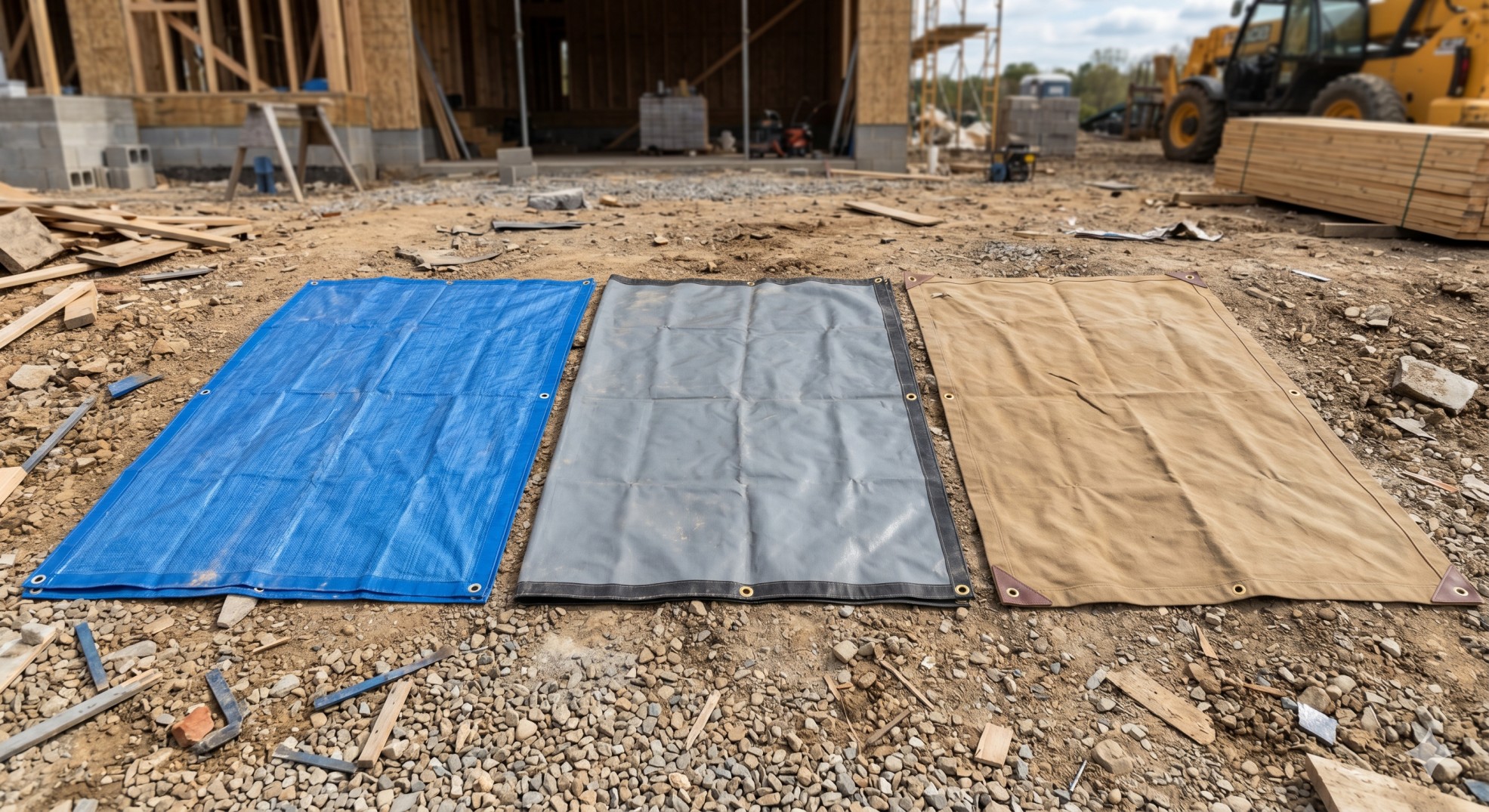
Tarp Materials Compared: PE vs PVC vs Canvas
PE vs PVC vs Canvas Tarps: Which Material to Choose
The short answer: PE (polyethylene) tarps are the most affordable and best for light, short-term jobs and general waterproof cover. PVC (vinyl) tarps are the most durable and fully waterproof, best for heavy-duty and long-term use. Canvas tarps are breathable and tough against abrasion, best for covering items that need airflow, like equipment, lumber, or furniture. Pick PE to save money on quick jobs, PVC for the toughest weatherproof protection, and canvas when you need a breathable cover that won't trap moisture.
If you have ever stood in a supply aisle staring at a wall of tarps wondering why some cost a few dollars and others cost fifty, the answer comes down to the material. The three main options, polyethylene, PVC, and canvas, each behave very differently in the field. Choosing the wrong one means a cover that rips in the wind, traps moisture and rots what's underneath, or wears out months before it should.
This guide breaks down all three materials so you can match the right tarp to your job the first time.
What Are the Three Main Tarp Materials?
Every tarp you'll find falls into one of three material families. Here's what each one actually is.
Polyethylene (PE), also called poly or "blue tarps," are woven plastic mesh laminated with a polyethylene coating on both sides. They're lightweight, water resistant, and cheap to produce, which is why they're the tarps most people picture. PE tarps cover the widest range of everyday uses.
PVC (polyvinyl chloride), also called vinyl tarps, are made from heavy vinyl-coated polyester. They're thicker, heavier, and far stronger than PE. PVC is fully waterproof, resists tearing and abrasion, and stands up to sun, chemicals, and temperature swings that destroy lighter tarps.
Canvas, also called cotton duck, is woven natural cotton, sometimes treated for water resistance. Canvas breathes, which is its defining trait. It lets moisture vapor escape instead of trapping it, and it grips surfaces well so it doesn't slide off loads.
The rest of this guide compares them where it counts: waterproofing, strength, weight, lifespan, and cost.
PE vs PVC vs Canvas: Side-by-Side Comparison
Here's how the three materials stack up across the factors that matter most on a job.
Polyethylene (PE) Tarps: Affordable and Versatile
PE tarps are the workhorses of the tarp world. They're inexpensive, lightweight, and handle the majority of everyday covering jobs.
Where PE wins: they shed rain well, weigh very little, fold up small, and cost a fraction of vinyl. For covering a woodpile, protecting materials overnight, throwing over a load in the truck bed, or short-term weather protection, PE does the job without a big spend.
Where PE falls short: the plastic coating breaks down under prolonged sun. UV exposure makes PE brittle, and after a season or two outdoors it can crack and tear. PE also traps moisture underneath, so condensation can build up against whatever you're covering. And while PE comes in different thicknesses, even heavy PE can't match vinyl for tear strength.
Choose PE when the job is short-term, the budget is tight, the tarp won't sit in direct sun for months, and you don't need to cover anything moisture-sensitive long-term.
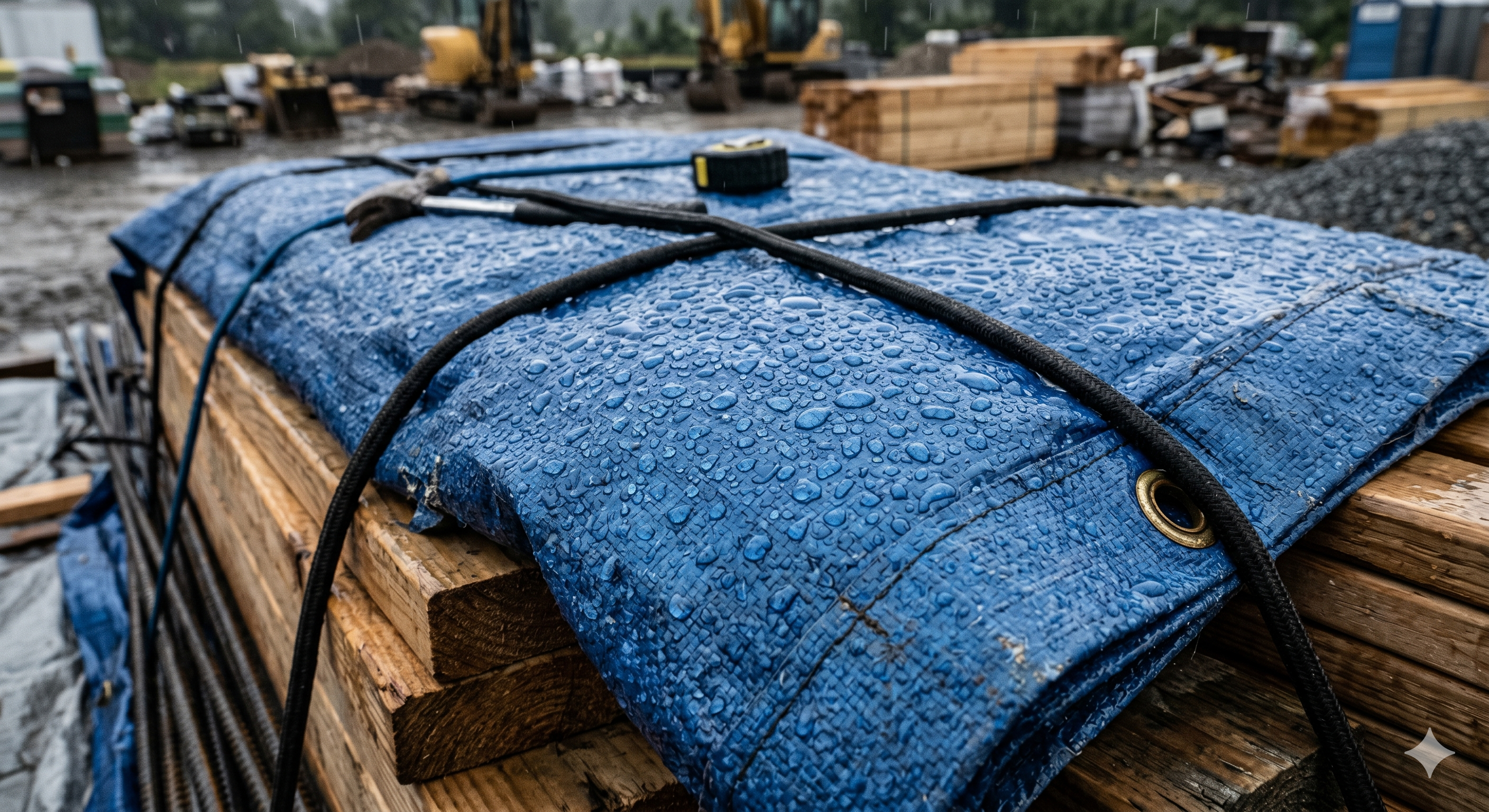
PVC (Vinyl) Tarps: Maximum Durability
PVC tarps are the heavy-duty choice. When you need a tarp that lasts years and shrugs off weather, vinyl is the answer.
Where PVC wins: it's fully waterproof, not just water resistant, so it handles standing water and heavy rain without seeping through. It resists tearing, punctures, and abrasion far better than PE. It holds up to UV, chemicals, oil, and temperature extremes. A quality PVC tarp can last five to ten years or more in conditions that would shred a poly tarp in months.
Where PVC falls short: it's heavy, which makes large vinyl tarps harder to handle and secure. And it costs significantly more upfront. But over the life of the tarp, that cost often works out cheaper than replacing PE tarps every season.
Choose PVC when the tarp will live outdoors long-term, face harsh weather, cover something valuable, or take physical abuse. Industrial covers, long-term equipment protection, truck and trailer covers, and anything that needs to stay bone dry all point to vinyl.
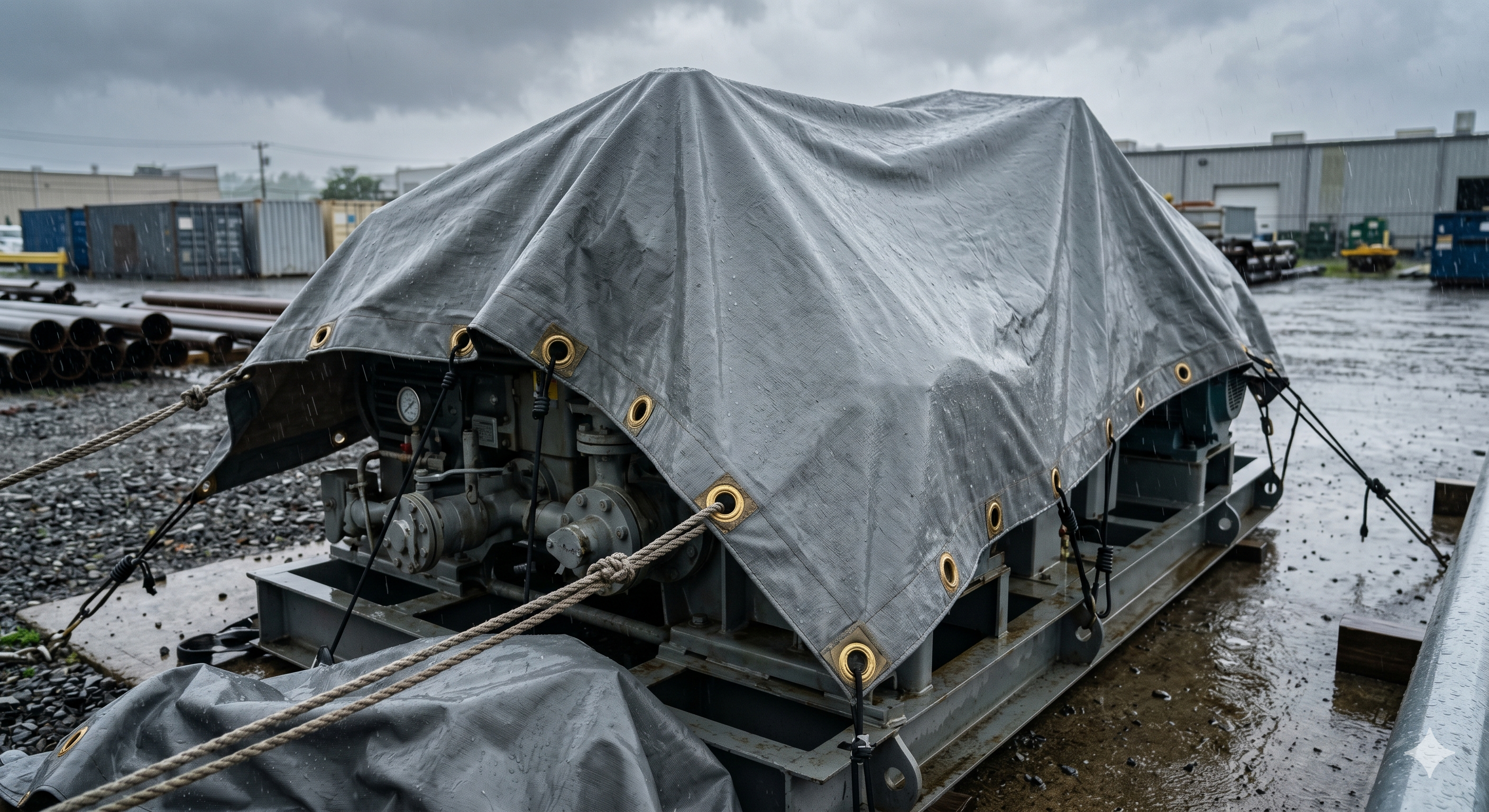
Canvas Tarps: Breathable and Tough
Canvas is the specialist. Its one standout feature, breathability, makes it the right choice for jobs where plastic tarps actually cause problems.
Where canvas wins: because canvas breathes, moisture vapor escapes instead of getting trapped underneath. That matters when you're covering things that sweat or need airflow, like freshly cut lumber, machinery, furniture, or anything that would grow mold or mildew under a sealed plastic tarp. Canvas is also tough against abrasion and grips surfaces so it doesn't slide around.
Where canvas falls short: untreated canvas is only water resistant, not waterproof, and heavy rain will eventually soak through. Treated canvas resists water better but adds cost. Canvas is also heavier than PE and can mildew itself if stored wet.
Choose canvas when you need a breathable cover, you're protecting moisture-sensitive goods that shouldn't be sealed in plastic, or you want a tarp that grips and stays put without trapping condensation.
How to Choose the Right Tarp Material for Your Job
The best tarp material comes down to four questions.
How long will it be in use? Short-term or one-off jobs favor PE. Long-term outdoor use favors PVC. Canvas sits in the middle for medium-term jobs that need breathability.
Will it face direct sun and weather? Constant sun and rain destroy PE quickly. If the tarp lives outside for months, PVC's UV and weather resistance pays for itself. Treated canvas handles moderate exposure.
What are you covering? Sealing moisture against lumber, equipment, or anything that breathes invites mold under a plastic tarp, so reach for canvas. For dry storage and full waterproofing, PVC. For quick general cover, PE.
What's the budget? PE is cheapest upfront but gets replaced often. PVC costs more but lasts years. Over time, the heavy-duty option is frequently the better value if you'd otherwise be buying poly tarps season after season.
If you're still deciding between tarp weights and grades within a material, our heavy duty tarps guide walks through how thickness and grade affect performance, and our construction tarps guide covers job-site specific use.
Frequently Asked Questions
Which tarp material is fully waterproof? PVC (vinyl) tarps are fully waterproof. PE tarps are water resistant and shed rain but can let water through at seams and grommets under heavy or prolonged exposure. Canvas is water resistant when treated but breathes rather than fully sealing.
Which tarp material lasts the longest? PVC vinyl tarps last the longest, typically five to ten years or more outdoors. Canvas lasts roughly three to five years, and PE one to three years depending on sun exposure and thickness.
Why do canvas tarps cost more than poly tarps? Canvas is a woven natural material that's heavier and more labor-intensive to produce than mass-manufactured poly sheeting. You're also paying for breathability and abrasion resistance that poly tarps don't offer.
Can I leave a PE tarp outside all year? It's not recommended. PE breaks down under UV exposure and becomes brittle, often cracking within a season or two of constant sun. For year-round outdoor use, PVC is the better investment.
What tarp material is best for covering firewood? Canvas or a breathable cover is ideal for firewood because it lets moisture escape so the wood can continue drying. A sealed PE or PVC tarp traps moisture and can keep firewood damp. If using poly, cover only the top and leave the sides open for airflow.
Is a PVC tarp worth the extra cost? For long-term or heavy-duty use, yes. The higher upfront price is usually cheaper over time than replacing poly tarps repeatedly, and PVC protects better in harsh conditions.
Get the Right Tarp for Your Project
The material is the most important decision you'll make when buying a tarp. Match it to the job and your tarp will do its work for years. Get it wrong and you'll be back at the store sooner than you'd like.
To recap: PE for affordable, light, short-term cover. PVC for maximum durability and full waterproofing. Canvas for breathable protection of moisture-sensitive goods.
At BCP Inc., we supply heavy-duty tarpaulins built for real job-site conditions, in the grades and materials that match the work. Call us at 877-540-5678 or visit our tarpaulin page to find the right tarp for your project and request bulk pricing.
