How to Cover Firewood: Tarp vs Firewood Cover Guide
How to Cover Firewood: Tarp vs Firewood Cover Guide
Firewood that sits uncovered through fall rain and winter snow soaks up water, burns smoky and can start to rot from the bottom of the stack. Wrapping the whole pile in plastic is just as bad, because trapped moisture turns into mold. The right way to cover firewood is to cover the top of the stack only, keep the sides open so air can move through, and keep the wood off the ground.
This guide covers how to cover firewood outside: tarp vs fitted firewood cover, how far down the sides a cover should go, how to stack and secure the pile, and which tarp grade holds up through a winter.
For a deeper look at tarp thickness and materials, see our tarp thickness guide.
Why covering firewood the right way matters
Wood burns best once its moisture has dried out. A cover does two jobs at once:
Keeps rain and snow off the top of the stack, where most water gets in
Lets air move through the sides so the wood keeps drying
Get the balance wrong and you lose either way. No cover means wet wood after every storm. A cover wrapped tight to the ground traps humidity coming up from the soil and from the wood itself, and the stack grows mold instead of drying.
Tarp vs firewood cover
Tarp | Fitted firewood cover | |
|---|---|---|
Fits | Any stack size or shape | One rack size |
Airflow | You control it by how you tie it | Usually top and partial sides, with vents |
Cost per square foot | Lower | Higher |
Durability | Depends on grade; heavy grades last many seasons | Depends on fabric |
Best for | Long rows, large piles, irregular stacks | A single standard rack on a patio |
A fitted cover is neat on one small rack. For long rows, bulk cords or several stacks, a tarp is the more flexible and economical choice, as long as you tie it so the sides stay open.
How to cover firewood with a tarp
Get the wood off the ground. Stack it on a firewood rack, pallets or a row of 2x4s so the bottom layer doesn't wick moisture from the soil.
Stack for airflow. Keep a few inches between the stack and any wall or fence, and stack in single rows where you can.
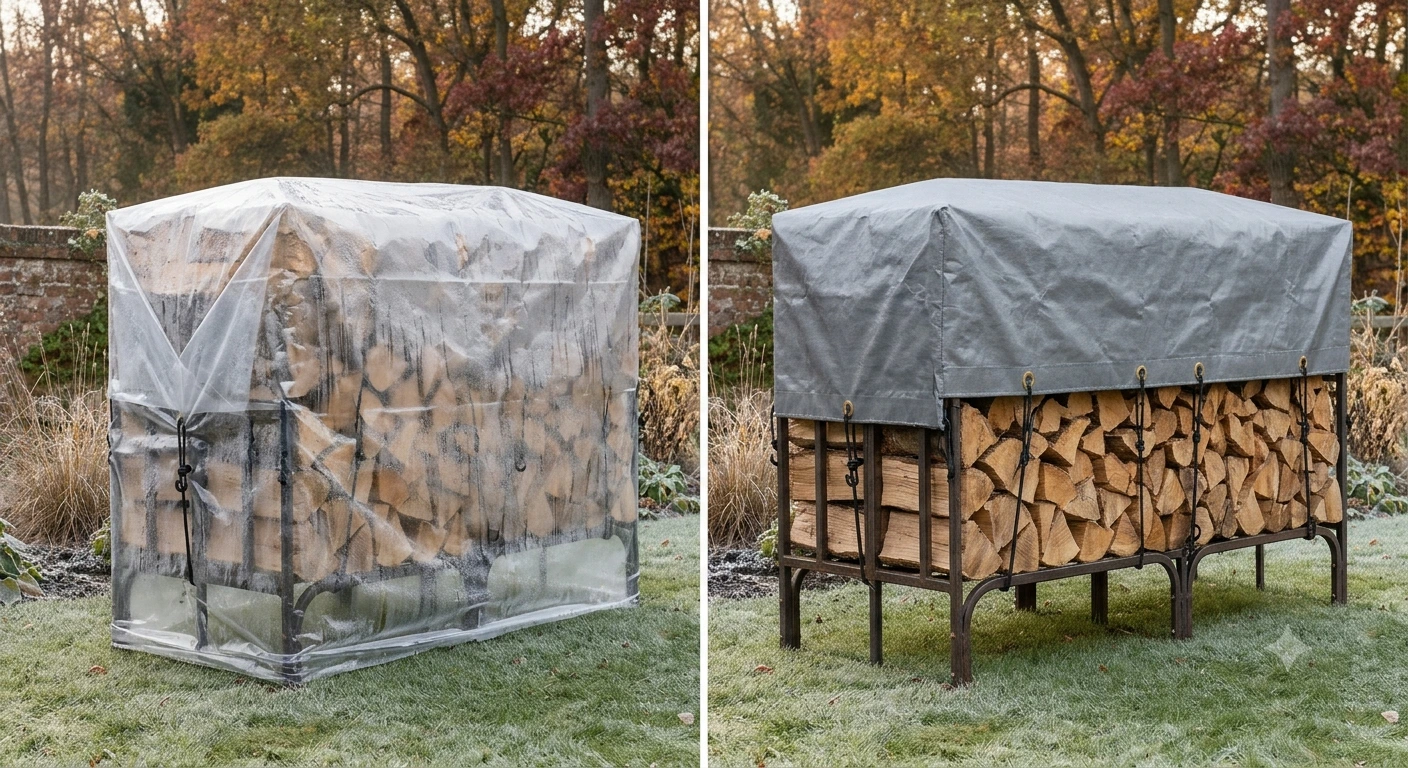
Pick a tarp wide enough. It should cover the full top of the stack and hang about a third of the way down each side. A common pattern is to cover the top and the upper part of the sides, leaving the lower sides open.
Shed water away from the stack. Let the tarp overhang the ends, and if you can, give the top a slight peak or slope so water and snow run off instead of pooling.
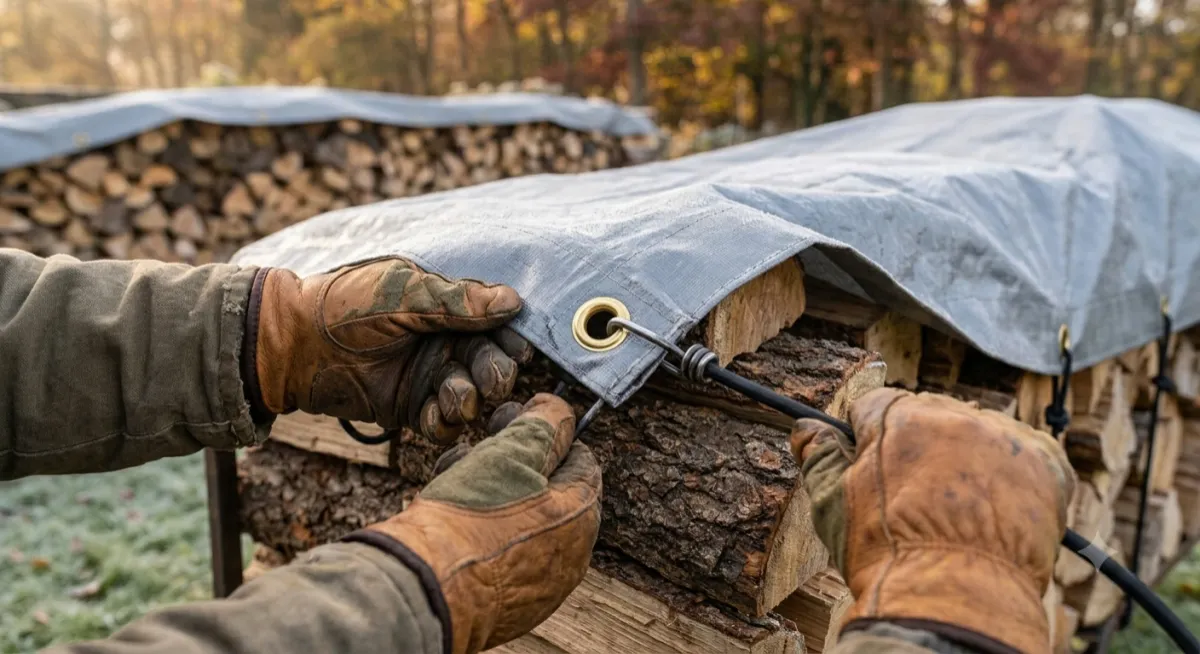
Secure it through the grommets. Tie bungee cords or rope from the grommets to the rack, pallets or ground stakes. Don't rely on loose logs on top; wind gets under a tarp fast.
Check it after storms. Knock off heavy snow, empty any water pockets, and re-tension cords that have loosened.
How far down should the cover go?
Cover the top and roughly the upper third of the sides. That keeps rain and snow off the wood while leaving the lower sides open for air. In very wet or windy spots you can bring the cover lower on the side that faces the weather, but leave the opposite side open.
Stacking tips that help the cover work
Split before stacking. Split wood dries faster than rounds.
Bark side up on the top layer so the top course sheds water.
Face the open side to the prevailing wind so air moves through the stack.
Keep a working supply under a porch or in a shed, and leave the main stack covered outside.
Don't store large stacks against the house. Leave space for airflow and to keep pests away from the walls.
Common mistakes
Wrapping the stack to the ground. It traps moisture and grows mold.
Stacking directly on soil or grass. The bottom row soaks up water and rots.
A tarp that is too small. If it barely covers the top, water runs straight down the sides into the wood.
Light tarps left out all winter. Thin, low-UV tarps can tear or turn brittle after a season of sun, wind and freezing temperatures.
Loose tie-downs. A flapping tarp wears out at the grommets and blows off in the first storm.
Which BCP tarp for firewood
BCP makes three tarp grades. All three are 100% waterproof with grommets for tying down. You can compare them on the BCP tarpaulin page.
BCP tarp | Material | Weight | Grommets | Good for firewood when |
|---|---|---|---|---|
Polyethylene with lamination | 65 to 70 GSM | Metal, every 1 m | You want an economical cover for a backyard stack | |
Heavy-duty PE, multi-layer lamination | 110 to 120 GSM | Brass, every 60 cm | The stack stays out all winter | |
HDPE, cross-laminated, PVC coated | 200 to 240 GSM | High-tensile metal, every 50 cm | Bulk cords, exposed sites, high wind or snow load |
BCP Tarps Standard is designed with jobs like covering firewood in mind. For a stack that sits outside from fall to spring, BCP Tarps Super adds advanced UV protection, mildew resistance and cold-crack resistance down to -20°C (-4°F). For large piles or exposed, windy sites, BCP Tarps Heavy Duty is rated from -40°C to +70°C (-40°F to 158°F) and has the strongest edges and grommets.
Frequently asked questions
Should you cover firewood?
Yes, cover the top. Rain and snow soak into the top of the stack first, so a top cover keeps the wood dry enough to burn well. Leave the sides mostly open so the wood keeps drying.
Is it OK to cover firewood with a tarp?
Yes. A tarp is one of the most common ways to cover firewood. Cover the top and the upper part of the sides, secure it through the grommets, and don't wrap it to the ground.
Should you cover firewood completely?
No. Covering the whole stack traps moisture and can cause mold. Cover the top and leave the lower sides open for airflow.
When should you cover firewood?
Cover split wood before the wet season and keep it covered through winter. Freshly split wood dries faster if the sides stay open to sun and wind.
What size tarp do I need for firewood?
Measure the length and depth of the stack, then add enough to hang about a third of the way down each side and past both ends. If you're unsure, choose the next size up; a tarp that is too small lets water run straight into the wood.
Get the right tarp for your woodpile
Before you order, have ready:
Length, height and depth of your stack or stacks
Whether the wood stays outside all winter
How exposed the site is to wind and snow
How many tarps you need
Send us your stack sizes, and our team will recommend the right tarp grade and size. Or call 877-540-5678.
