Roof Maintenance: How to Make Your Roof Last Longer
Regular roof maintenance, inspecting your roof twice a year, keeping gutters clean, clearing debris, addressing moss and algae, and fixing small problems early, can add years to your roof's life and prevent expensive repairs. Most roof failures do not happen suddenly; they build up from small, ignored issues that had cheap fixes. A well-maintained asphalt roof reaches the top of its lifespan range, while a neglected one wears out early. The good news is that most roof maintenance is simple, low-cost, and something you can stay on top of with a basic seasonal routine.
This guide covers what roof maintenance actually involves, a season-by-season checklist, the tasks worth doing yourself versus hiring out, and how to extend the life of an aging roof.
Why roof maintenance matters
Your roof is one of the most expensive systems on your house to replace, and it takes constant punishment from sun, rain, wind, and temperature swings. Maintenance matters because roof damage compounds. A single lifted shingle lets water reach the deck. That water rots the wood, which spreads to the surrounding area, which eventually shows up as a stain on your ceiling, by which point the repair is far bigger than the original loose shingle.
Catching and fixing small issues early is the entire game. A roof that gets basic regular attention can reach or exceed its full rated lifespan, while the same roof left alone can fail years early. Maintenance is cheap insurance against a very expensive failure.
A seasonal roof maintenance checklist
The simplest way to stay on top of your roof is a seasonal routine. You do not need to do everything every month, just hit the key tasks as the seasons change.
Spring
Inspect the roof after winter for damage from ice, snow, and freeze-thaw cycles.
Check for cracked, curled, or missing shingles.
Clean gutters of winter debris so spring rains drain properly.
Look for granules collecting in gutters, a sign of shingle aging.
Summer
Check for sun and heat damage, especially on south-facing slopes.
Trim back branches that overhang the roof.
Look for signs of moss or algae growth in shaded, damp areas.
Confirm attic ventilation is working and vents are clear.
Fall
Clean gutters thoroughly before winter, this is the most important gutter cleaning of the year.
Clear leaves and debris from the roof surface and valleys.
Inspect and reseal flashing around chimneys, vents, and skylights if needed.
Check that the attic is properly ventilated and insulated ahead of winter.
Winter
Watch for ice dams forming along the eaves.
Safely remove heavy snow buildup if it threatens the structure.
Check the attic for leaks or moisture after storms.
Avoid walking on the roof in icy conditions.
Roof maintenance tasks you can do yourself
Many maintenance tasks are safe and simple for a homeowner comfortable with a ladder and basic care:
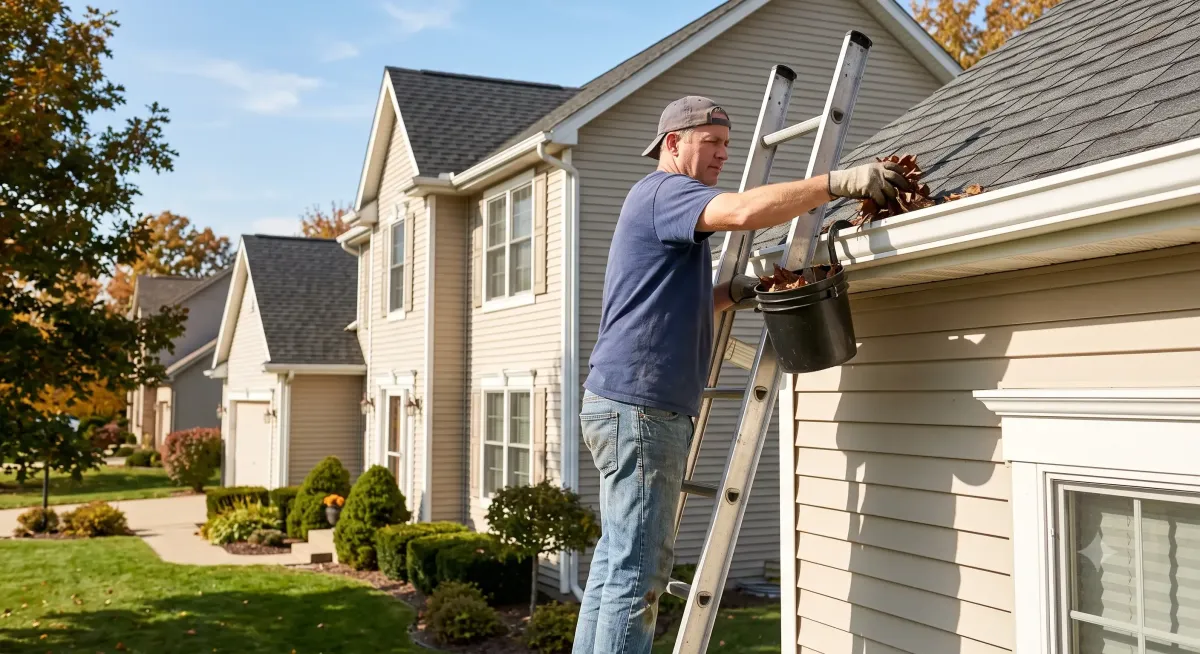
Cleaning gutters. Clogged gutters back water up onto the roof edge and cause rot. Keeping them clear is one of the highest-value tasks.
Clearing debris. Leaves, branches, and dirt trap moisture against the roof. Blowing or gently sweeping them off helps.
Visual inspections from the ground. A pair of binoculars lets you spot missing shingles, sagging, or damage without climbing up.
Trimming branches. Keeping limbs off the roof prevents scraping, debris, and moisture problems.
Watching the attic. Checking the attic for stains, daylight, or moisture catches leaks early from the inside.
For anything involving walking on the roof, steep pitches, or heights you are not comfortable with, hire a professional. A fall is never worth a maintenance task.
Roof maintenance tasks best left to a pro
Some jobs are worth hiring out, both for safety and for quality:
Detailed roof inspections, especially before buying a home or after a major storm.
Repairing or replacing shingles and fixing flashing.
Sealing around penetrations like chimneys and skylights.
Moss and algae treatment on large or steep roofs.
Anything requiring you to walk a steep or high roof.
A professional inspection every few years catches things an untrained eye misses, and it is far cheaper than the damage it prevents.
Dealing with moss, algae, and debris
In damp, shaded areas, moss and algae are common and they are more than cosmetic. Moss holds moisture against the shingles, which speeds up deterioration and can lift shingle edges. Algae (the black streaks you see on many roofs) is less damaging but unsightly and can shorten shingle life over time.
The fix is to have the roof cleaned properly, gently, without high-pressure washing, which damages shingles. Keeping branches trimmed to let more sun reach the roof helps prevent regrowth. Addressing moss and algae early is much easier than dealing with the damage they cause over years.
Maintaining an aging roof: rejuvenation
Maintenance keeps a roof healthy, but even a well-maintained asphalt roof eventually starts to dry out as the sun bakes the oils out of the shingles. When shingles are aging and losing flexibility but are still sound and intact, not yet cracked or leaking, there is a maintenance option many homeowners do not know about: roof rejuvenation.
A rejuvenation treatment restores the oils aging shingles have lost, bringing back flexibility and water resistance and extending the roof's life by several years, for a small fraction of the cost of replacement. It is essentially maintenance for the shingle itself. We explain how it works in our guide on what roof rejuvenation is, and cover the pricing in our roof rejuvenation cost guide.
Done at the right time, as part of a maintenance routine, rejuvenation is one of the most cost-effective ways to squeeze extra years out of a roof that is aging but not yet failing.
Frequently asked questions
How often should I have my roof inspected? At least twice a year, in spring and fall, plus after any major storm. A professional inspection every few years is also worth it to catch issues an untrained eye would miss.
What is the most important roof maintenance task? Keeping gutters clean and catching small problems early. Clogged gutters cause water to back up and rot the roof edge, and a small issue caught early is cheap to fix, while the same issue ignored becomes expensive.
Can roof maintenance really extend my roof's life? Yes, significantly. Good maintenance, ventilation, clean gutters, prompt repairs, and moss control, can help a roof reach or exceed its full rated lifespan, while neglect causes early failure.
Should I pressure wash my roof? No. High-pressure washing strips granules and damages shingles. Moss and algae should be treated with a gentle, roof-safe cleaning method, ideally by a professional for large or steep roofs.
How do I maintain an older roof that is still working? Keep up the standard maintenance, and if the shingles are aging and drying out but still sound, consider a rejuvenation treatment to restore flexibility and extend the roof's life. An inspection confirms whether the roof is a good candidate.
When does maintenance stop being enough? When a roof has widespread damage, active leaks, or structural problems, maintenance and treatments can no longer save it, and replacement is the right call. Maintenance is about extending a sound roof, not rescuing a failed one.
