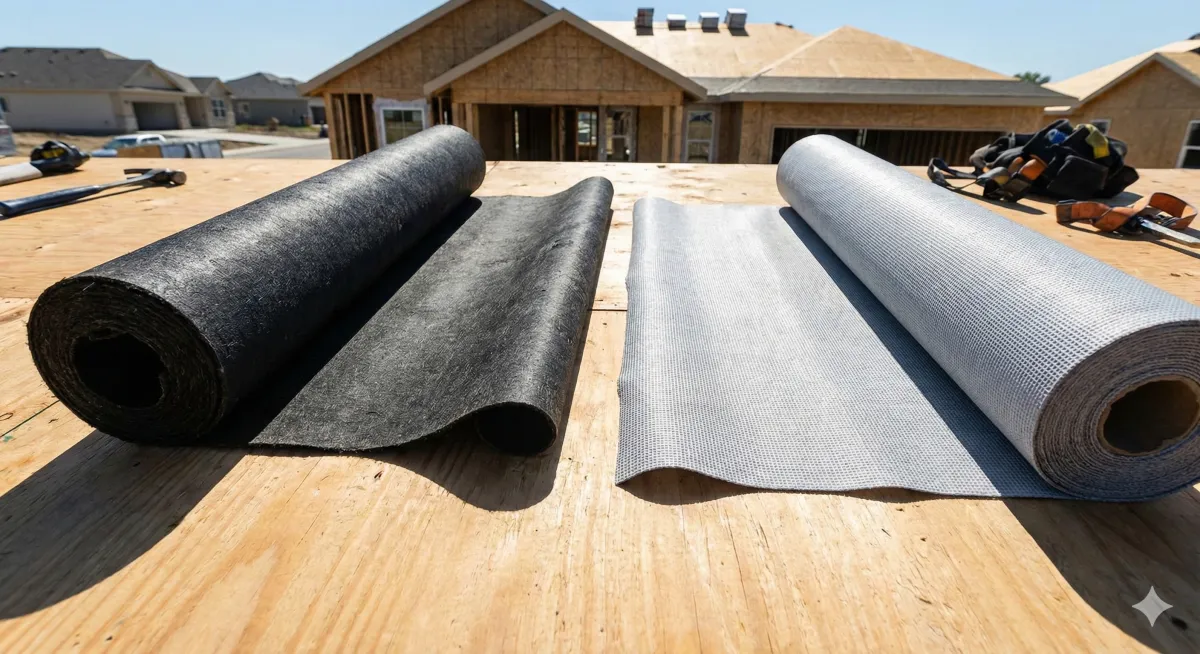
Synthetic vs Felt Roof Underlayment Compared
Synthetic vs. Felt Roof Underlayment: Which One Is Right for Your Roof?
If you are planning a roofing project, one of the first decisions you will face is choosing the right underlayment. For decades, felt paper was the only real option. Today, synthetic roof underlayment has taken over as the preferred choice for most roofers and homeowners.
But does that mean felt is no longer worth using? Not necessarily. Both materials still have their place depending on the project, the budget, and the climate.
In this guide, we will compare synthetic and felt roof underlayment side by side. We will look at how they perform, where each one works best, and help you decide which option makes the most sense for your roof.
What Is Felt Roof Underlayment?
Felt underlayment, also known as tar paper or roofing felt, has been around for over a century. It is made from paper or fiberglass fibers that are saturated with asphalt to create a water resistant sheet.
It comes in two standard weights: 15 pound and 30 pound. The 15 pound version is thinner and lighter, while the 30 pound version is thicker, stronger, and holds up better to foot traffic and weather exposure.
Felt works by absorbing small amounts of water and slowing moisture from reaching the roof deck. It is not fully waterproof, but it provides enough protection for standard roofing conditions in moderate climates.
Roofers have trusted felt for years because it is affordable, widely available, and gets the job done on straightforward residential projects.
What Is Synthetic Roof Underlayment?
Synthetic roof underlayment is made from engineered polymers, usually polypropylene or polyethylene. It is a more modern product designed to address many of the shortcomings of traditional felt.
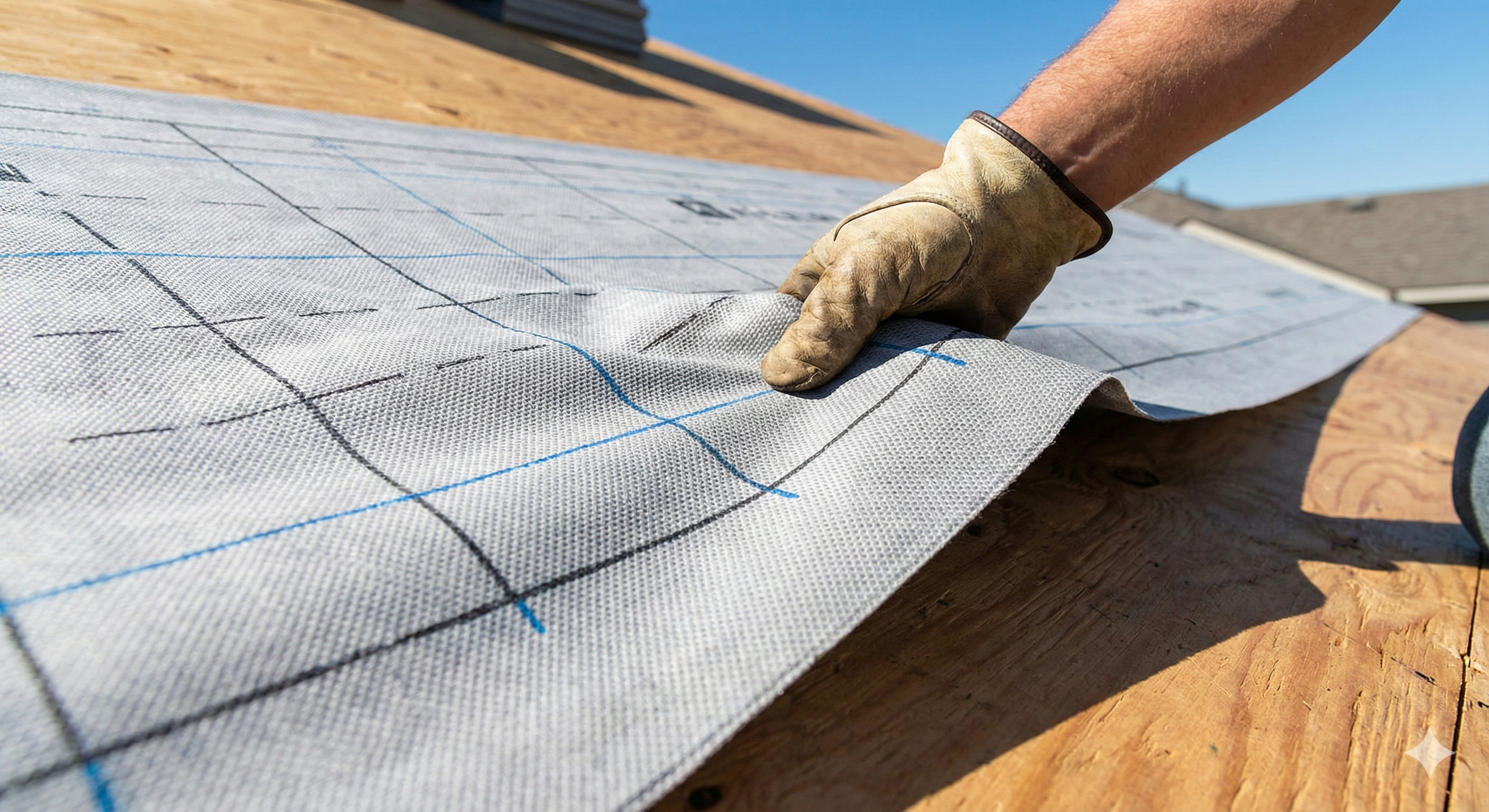
Unlike felt, synthetic underlayment does not absorb water. It sheds moisture on contact, which means it will not wrinkle, swell, or break down when exposed to rain during installation. Most synthetic products also include UV inhibitors that allow the material to sit exposed on the roof deck for 60 to 180 days without losing performance.
Synthetic sheets are lighter per roll but cover more square footage. They lay flat, provide better traction for workers walking on the roof, and resist tearing even under heavy foot traffic or rough handling on the job site.
At BCP Inc., our RoofLayer synthetic underlayment line is built for these exact conditions. From our budget friendly RoofLayer Eco to our high performance RoofLayer Premium, each product delivers reliable water resistance, UV stability, and tear strength that felt simply cannot match.
Head to Head Comparison
Here is how synthetic and felt roof underlayment stack up across the factors that matter most.
Water Resistance Felt absorbs water over time and can wrinkle when wet. Synthetic sheds water immediately and stays flat. If your roof deck gets rained on during construction, synthetic will keep the wood dry. Felt may not.
Tear Strength Felt tears easily, especially the 15 pound version. A strong gust of wind during installation or heavy foot traffic can rip it. Synthetic is significantly stronger and resists tearing even under rough conditions.
Weight and Coverage A roll of 30 pound felt covers about 200 square feet and is heavy to carry up a ladder. A single roll of synthetic can cover 400 to 1,000 square feet depending on the product and is much lighter. That means fewer trips up the ladder and faster installation.
UV Exposure Felt starts to break down within days if left exposed to sunlight. Synthetic can handle UV exposure for weeks or months depending on the brand. If there is any delay between installing the underlayment and laying the shingles, synthetic gives you a much larger safety window.
Installation Speed Because synthetic rolls are wider, longer, and lighter, crews can install them faster with fewer seams. Fewer seams means fewer potential leak points. Felt takes more time to install and requires more overlapping due to shorter roll lengths.
Lifespan Under shingles, felt typically lasts 10 to 20 years before it starts to deteriorate. Synthetic can last 25 to 40 years, often outlasting the shingles above it.
Cost Felt is cheaper per roll upfront. A roll of 15 pound felt might cost around $15 to $25, while synthetic starts around $50 to $75 per roll. However, when you factor in the larger coverage per roll, faster install time, fewer callbacks, and longer lifespan, synthetic often costs less overall.
Warranty Many shingle manufacturers now require synthetic underlayment for their warranty to remain valid. If you use felt and something goes wrong, you might not be covered. Always check the roofing material manufacturer's requirements before choosing your underlayment.
When to Use Felt Underlayment
Felt still makes sense in a few situations.
If you are on a tight budget and working on a small, simple roof in a mild climate, 30 pound felt can do the job. It is also a reasonable choice for temporary repairs or projects where the shingles will be installed the same day the underlayment goes down.
Some roofers also prefer felt under certain types of roofing materials like slate or clay tile, where the thicker cushion of 30 pound felt can help protect the tiles during installation.
That said, felt should be avoided if your roof deck might be exposed to weather for more than a day or two. It should also be avoided in high wind areas where tearing is a real concern.
When to Use Synthetic Roof Underlayment
For most residential and commercial roofing projects, synthetic is the better choice. Here is where it really stands out.
New construction where the roof deck may sit exposed for days or weeks before shingles are installed. Synthetic handles rain and UV without breaking down.
Steep slope roofs where workers need better traction. The slip resistant surface of synthetic makes it safer to walk on.
High wind and storm prone areas where tear resistance matters. Synthetic will not rip off the deck the way felt can.
Metal roofing projects where a moisture barrier is needed without the risk of moisture getting trapped. Synthetic does not absorb water, so it will not create condensation issues under metal panels.
Projects that need to pass inspection and maintain warranty. More building codes and roofing manufacturers are moving toward synthetic as the standard requirement.
If you are unsure which product fits your project, BCP RoofLayer Standard is a strong middle ground. It gives you the water resistance, UV stability, and tear strength of a premium synthetic at a price that works for everyday residential roofing.
Can You Use Both on the Same Roof?
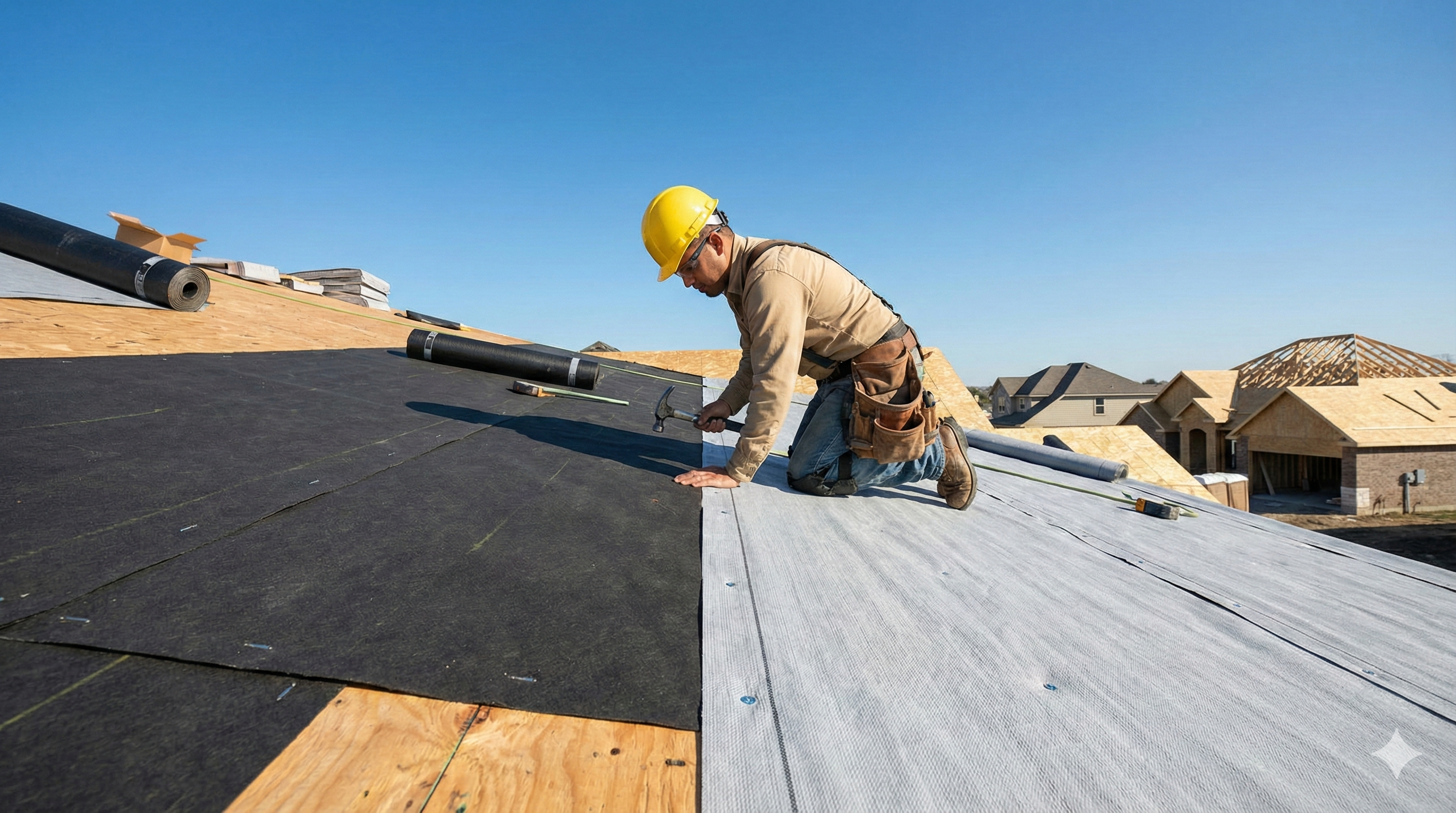
Yes, and many roofers do. A common approach is to use rubberized asphalt (peel and stick) underlayment in the high risk areas like valleys, eaves, and around chimneys, and then cover the rest of the roof with synthetic underlayment.
This combination gives you waterproof protection where water is most likely to pool or back up, and reliable moisture resistance across the full roof deck. It is a smart way to get the best performance without the cost of covering the entire roof in peel and stick material.
Frequently Asked Questions
Is synthetic underlayment worth the extra cost? In most cases, yes. The longer lifespan, faster installation, and better weather performance save money over time. Many contractors say the reduced labor time alone makes up for the price difference.
Can I put synthetic underlayment over old felt? It is not recommended. The old felt should be removed and the deck inspected for damage before new underlayment is installed. Layering materials can trap moisture and cause problems down the road.
Does synthetic underlayment work with all roofing types? Yes. Synthetic works well under asphalt shingles, metal roofing, slate, tile, and cedar shakes. Always check the specific product compatibility with your chosen roofing material.
How do I know if my shingle warranty requires synthetic? Check the installation requirements from your shingle manufacturer. Many brands, including Owens Corning and GAF, now recommend or require synthetic underlayment for full warranty coverage.
Choose the Right Underlayment for Your Next Project
Both felt and synthetic have their place, but for most roofing projects today, synthetic roof underlayment is the smarter long term choice. It is stronger, lasts longer, installs faster, and protects your roof deck better in real world conditions.
For the most vulnerable areas like eaves and valleys, pair your underlayment with ice and water shield.
At BCP Inc., we offer a full range of synthetic roof underlayment products designed for every budget and every project size. Whether you need an affordable option for a basic re-roof or a high performance product for a demanding commercial job, we have you covered.
Ready to order or need help choosing? Call us at 877-540-5678 or visit Best Construction Products to explore our RoofLayer product line and request a quote.
