High-Temp vs Standard Ice and Water Shield
High-Temp vs Standard Ice and Water Shield: Which Do You Need?
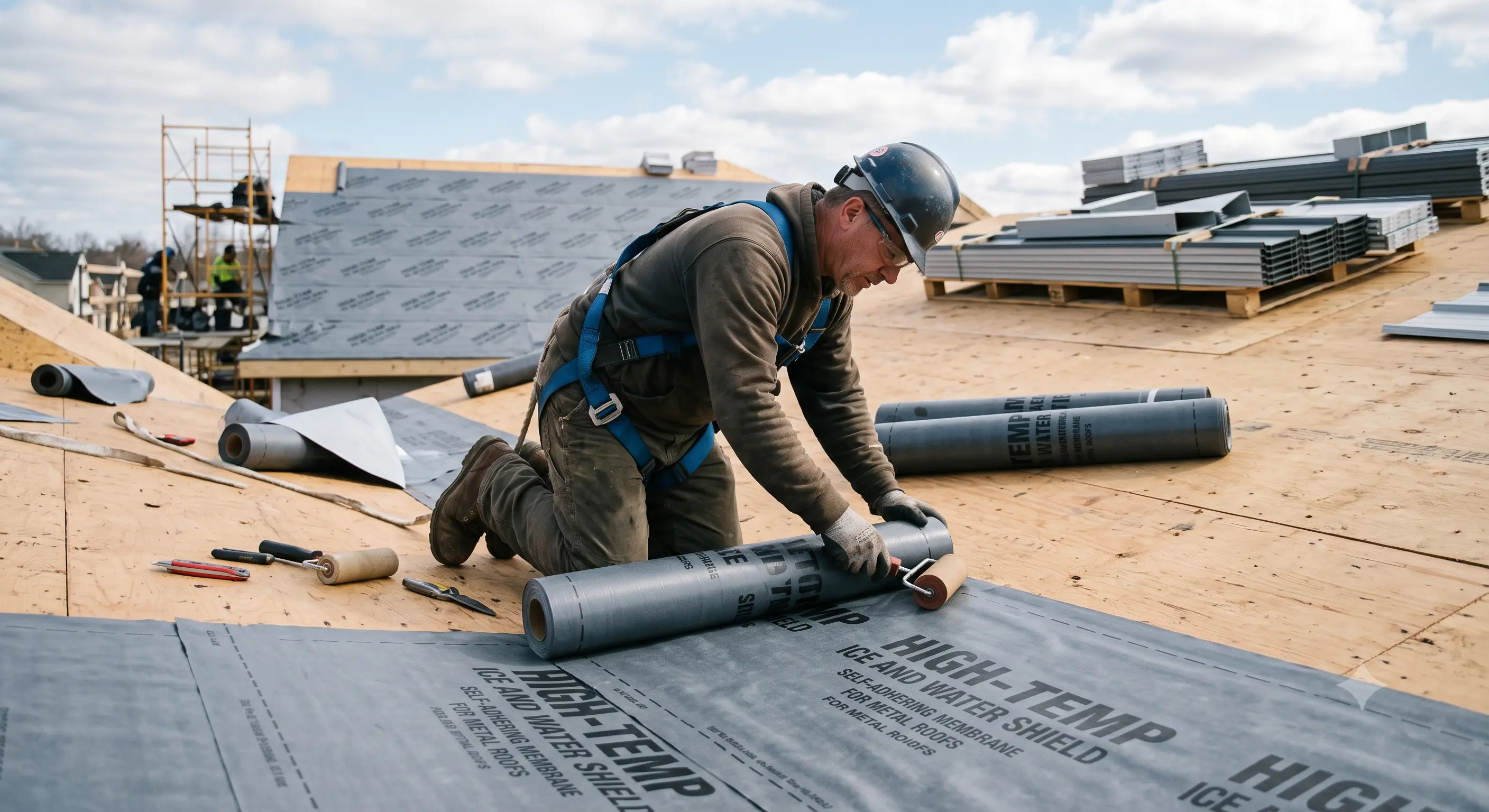
High-temperature ice and water shield is a version of the membrane built to survive the intense heat that builds up under metal and other high-heat roofs, usually rated to at least 240 degrees Fahrenheit, while standard ice and water shield is made for asphalt shingle roofs that run cooler. The simple rule: if you are installing under a metal roof, tile, or any dark or heat-absorbing roofing, you need the high-temp version. Use standard membrane under a metal roof and it can soften, ooze, and fail. Use high-temp under regular shingles and it works fine but costs more than you needed to spend.
That is the short answer. Below we explain why heat matters so much, how the two versions differ, exactly when each is required, and the mistakes that cause membrane failures under hot roofs.
Why roof temperature changes everything
Ice and water shield is made from rubberized asphalt, a material that stays flexible and sticky so it can bond to the deck and seal around nails. That same stickiness is its weakness when it gets too hot. Under the right temperature, the adhesive holds firm. Past its rated limit, it starts to soften, and a softened membrane can lose its grip, slide, ooze adhesive, or stop sealing properly.
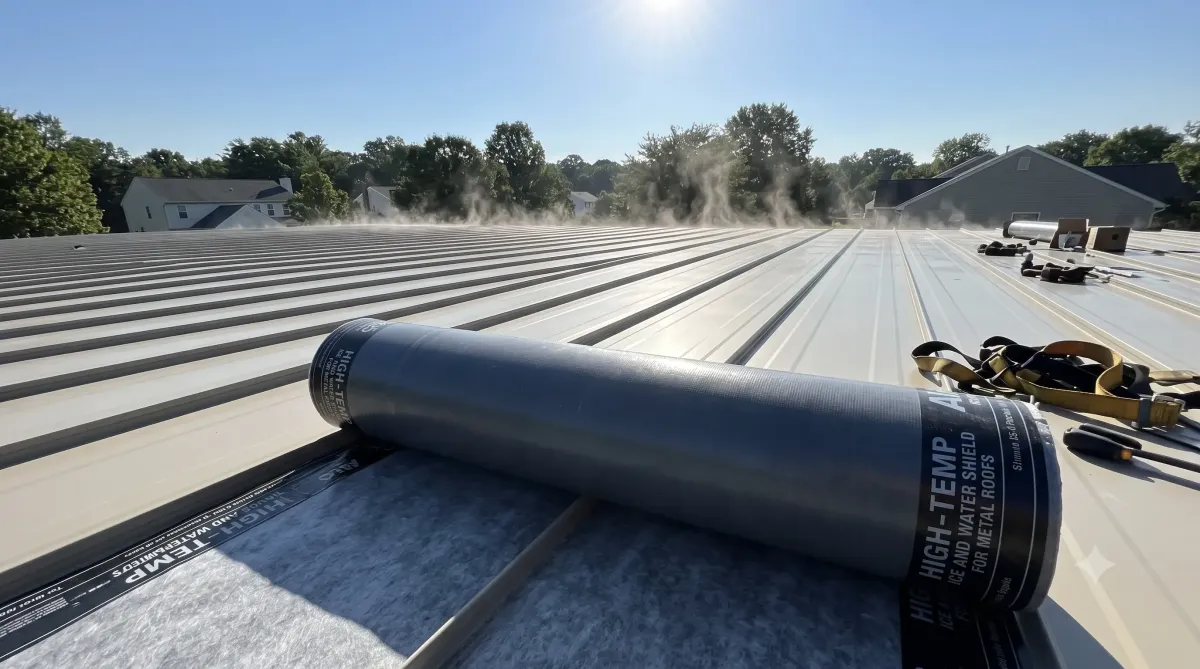
Different roofs run at very different temperatures. An asphalt shingle roof in the sun gets warm, but a metal roof can get much hotter, because metal conducts and holds heat, and the air gap under the panels can turn into an oven. Tile and slate can also drive high deck temperatures. That heat is exactly why a membrane that performs fine under shingles can fail under metal.
This is not a small detail. Using the wrong membrane under a hot roof is one of the more expensive roofing mistakes, because by the time it shows up, the roof is already on top of it.
If you want the full background on the product itself, see our ice and water shield guide.
Standard ice and water shield
Standard ice and water shield is designed for asphalt shingle roofs, which is the large majority of residential roofs. It handles the temperatures a shingle roof reaches, bonds well to the deck, and seals around fasteners exactly as intended.
It goes in the usual high risk areas: eaves, valleys, around penetrations, and on low slope sections. For a normal shingle roof, standard membrane is the right and cost-effective choice. There is no benefit to paying for high-temp membrane on a roof that never gets hot enough to need it.
High-temp ice and water shield
High-temp ice and water shield uses a more heat-stable adhesive and backing, engineered to hold up at the elevated temperatures generated by metal and other high-heat roofing. Most high-temp products are rated to at least 240 degrees Fahrenheit, and some go higher.
It does the same job as standard membrane, waterproof sealing at eaves, valleys, and penetrations, but it keeps that seal intact under the heat that would compromise a standard product. It usually also has a surface designed to handle the higher friction and movement of metal panels being installed over it.
High-temp membrane costs more than standard, which is why you match it to the roof rather than defaulting to it everywhere.
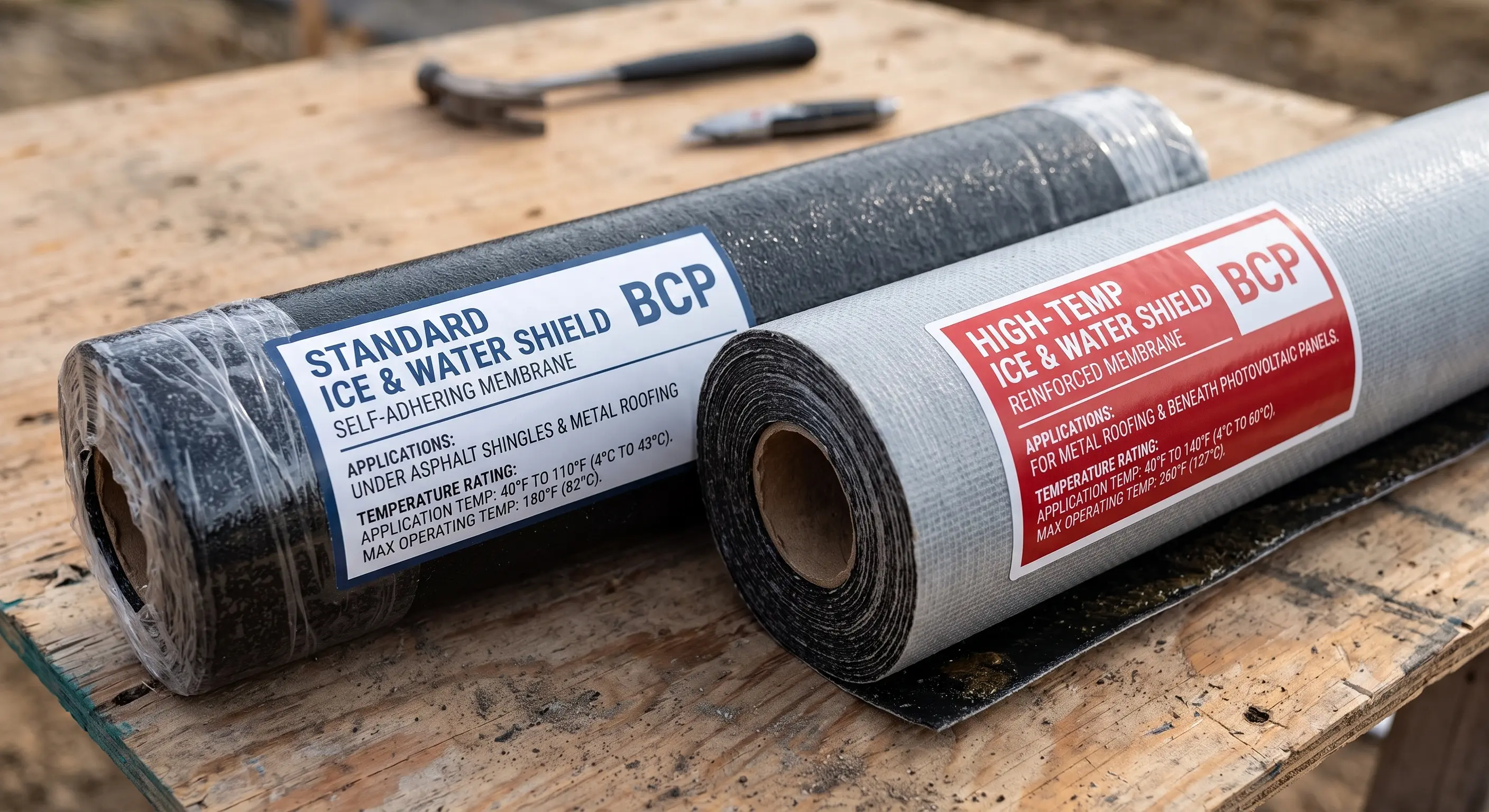
Side by side comparison
When you need high-temp
Reach for high-temp ice and water shield when the roofing above it will drive high deck temperatures:
Metal roofs, standing seam, corrugated, or metal shingles. This is the most common reason to use high-temp.
Tile and slate roofs, which absorb and hold heat.
Very dark roofing in hot, sunny climates, where even shingles can push temperatures up, though this is a judgment call.
Any manufacturer requirement, some metal roofing makers specifically require a high-temp underlayment to keep the warranty valid, so always check.
When in doubt under metal, use high-temp. The cost difference is small compared to tearing off a failed roof.
When standard is fine
Standard ice and water shield is the right call for the typical asphalt shingle roof in a normal climate. It performs exactly as designed at shingle temperatures, and paying for high-temp there is money spent on protection you will not use. Match the membrane to the roof, and you get the right protection without overspending.
Common mistakes with membrane and heat
Using standard membrane under a metal roof. The classic and costly error. The heat softens the adhesive and the seal fails, often invisibly, until a leak shows up later.
Assuming all ice and water shield is the same. The rolls can look nearly identical. Always check the temperature rating printed on the product, not just the category.
Ignoring the roofing manufacturer's spec. Metal roofing warranties often name a required underlayment temperature rating. Using a lower-rated product can void the warranty.
Leaving high-temp membrane exposed too long. Like all membranes, high-temp has a UV exposure limit. Get the roofing on within the rated window.
Forgetting that placement rules do not change. High-temp still goes in the same high risk areas, eaves, valleys, penetrations. The heat rating changes, the placement logic does not.
How it fits with the rest of the roof
High-temp or standard, the membrane is only part of the system. It works alongside synthetic underlayment on the field of the roof and proper flashing at every transition. Under a metal roof, you would use high-temp membrane in the high risk zones and a compatible underlayment across the field. For how the membrane and field underlayment divide the roof between them, see our guide on ice and water shield vs synthetic underlayment.
If you are roofing with metal and want to make sure you have the right high-temp membrane for the job and the warranty, BCP can help you spec it. Call us at 877-540-5678 or visit our roof underlayment page to get started.
Frequently asked questions
What is the difference between high-temp and standard ice and water shield? High-temp ice and water shield uses a heat-stable adhesive rated to survive the high deck temperatures under metal and other hot roofs, usually 240 degrees Fahrenheit or more. Standard membrane is made for cooler asphalt shingle roofs and can fail under metal.
Do I need high-temp ice and water shield for a metal roof? Yes. Metal roofs generate high heat that can soften standard membrane and cause it to fail. Use a high-temp version rated to at least 240 degrees Fahrenheit under metal, and check the roofing manufacturer's requirement.
What happens if I use standard membrane under a metal roof? The heat can soften the adhesive, causing the membrane to lose its bond, slide, ooze, or stop sealing around fasteners. The failure is often hidden until a leak appears, after the roof is already installed.
Is high-temp ice and water shield worth the extra cost? Under a metal, tile, or slate roof, yes, it is essential and the cost difference is small next to a failed roof. Under standard asphalt shingles, it is not necessary and standard membrane is the better value.
What temperature rating do I need? Most high-temp products are rated to at least 240 degrees Fahrenheit. Check the rating printed on the product and match or exceed whatever your roofing manufacturer requires.
Does high-temp membrane go in the same places as standard? Yes. The placement is identical, eaves, valleys, around penetrations, and low slope areas. Only the heat rating of the product changes based on the roof type above it.