Ice & Water Shield vs Synthetic Underlayment
Ice and Water Shield vs Synthetic Underlayment: When to Use Each
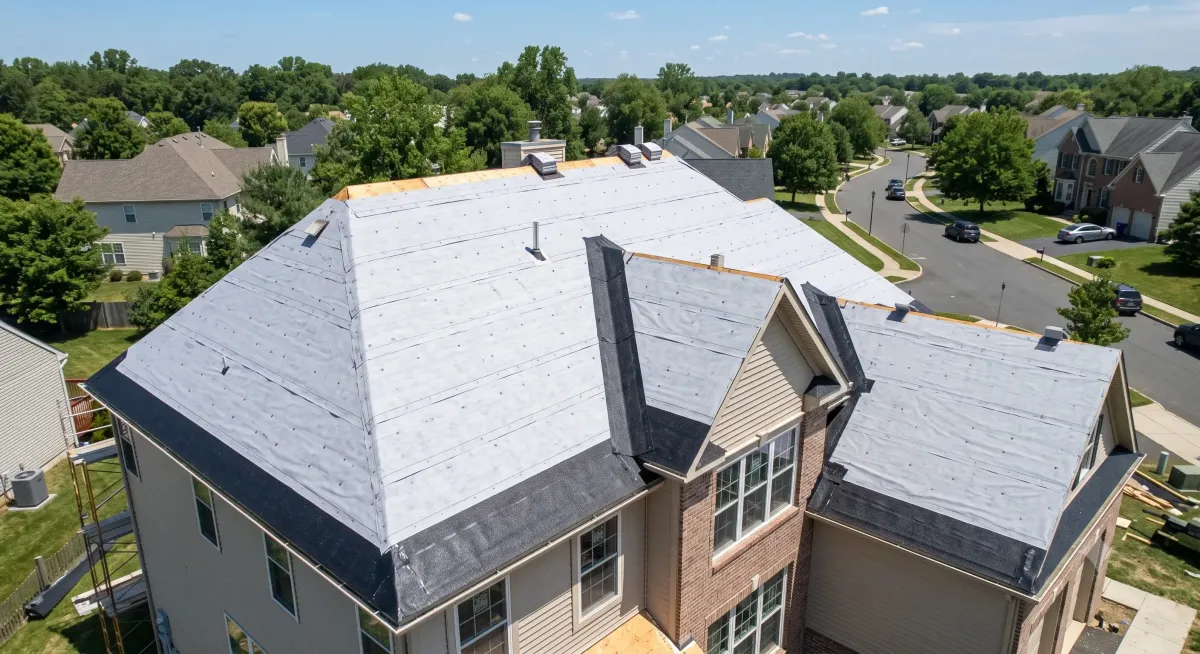
Ice and water shield and synthetic underlayment are not competing products, they do different jobs on the same roof. Ice and water shield is a fully waterproof, self-sealing membrane that goes in the high risk areas where water pools or backs up (eaves, valleys, and around penetrations), while synthetic underlayment is a water resistant, tear resistant sheet that covers the rest of the roof deck. The best roofs use both: ice and water shield where water is most likely to get in, and synthetic underlayment everywhere else. So the real question is not which one to buy, it is where each one goes.
That is the short answer. Below we break down what each product does, how they differ, and exactly where each belongs on your roof.
The key difference: waterproof vs water resistant
The single most important distinction is this:
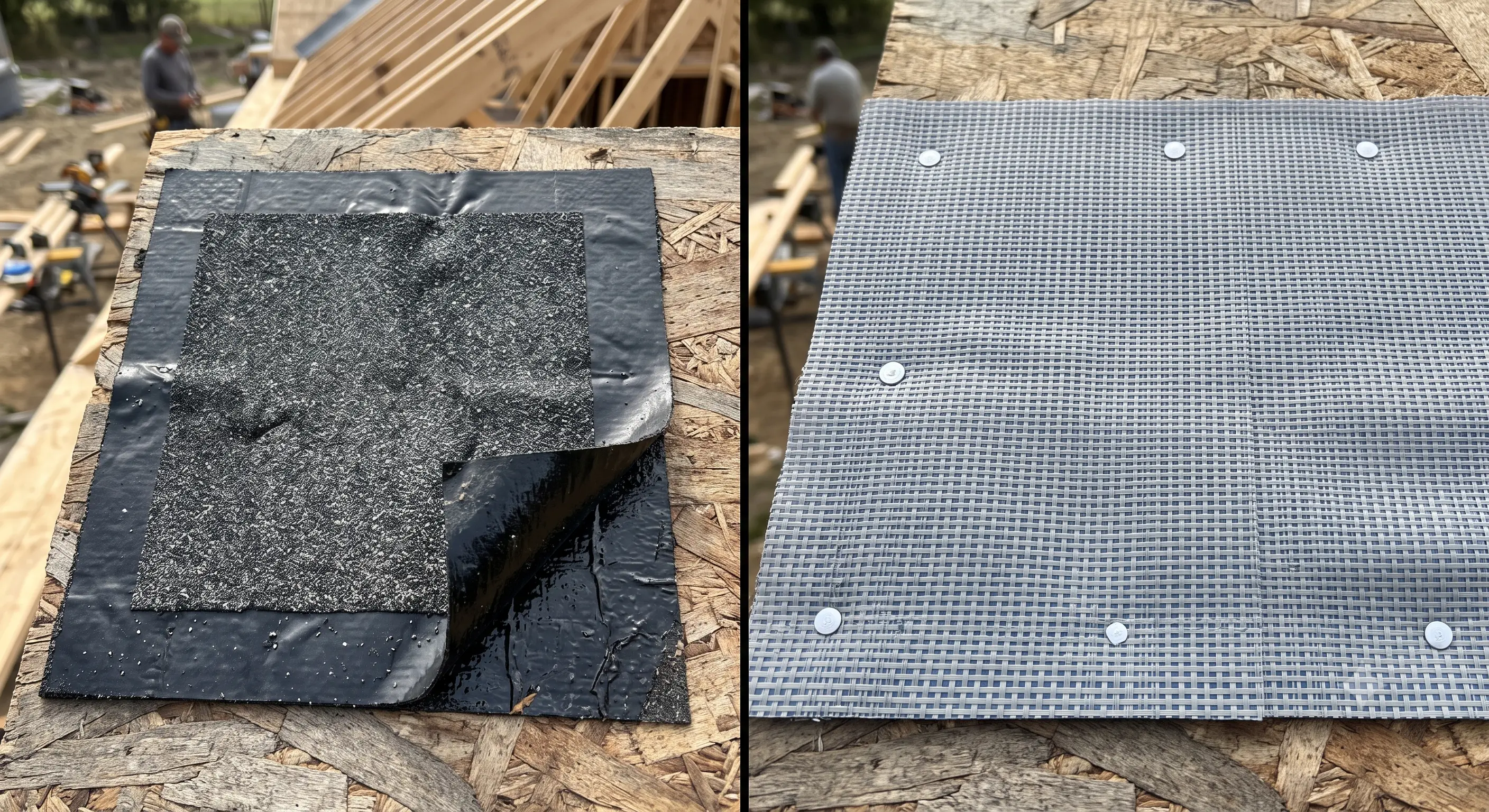
Ice and water shield is fully waterproof. It is a self-adhesive rubberized asphalt membrane that bonds to the deck and seals around every nail driven through it. Water can pool on it, back up against it from an ice dam, or be driven sideways by wind, and it still will not let water reach the deck.
Synthetic underlayment is water resistant. It is a woven or spun plastic sheet that sheds water running normally down the roof and provides a strong secondary barrier under the shingles. It is tough, tear resistant, and UV stable, but it does not seal around fasteners and is not designed to hold back standing or backed-up water.
That one difference, sealed and waterproof versus shedding and water resistant, drives every decision about where each product goes.
For a deeper look at each on its own, see our ice and water shield guide and our roof underlayment options guide.
Side by side comparison
Where ice and water shield goes
Ice and water shield belongs in the spots where water is most likely to pool, back up, or get driven under the roofing:
Eaves, where ice dams form and water backs up. It should extend at least 24 inches past the interior wall line.
Valleys, where two roof planes dump a high volume of water into one channel.
Around chimneys, skylights, and vent pipes, where flashing can fail over time.
At wall intersections and dormers, where water collects at the transition.
On low slope sections (under 4:12), where water moves slowly and has more time to find a way in.
Because it seals around every fastener and cannot be penetrated by standing water, it is the only appropriate choice for these high risk zones.
Where synthetic underlayment goes
Synthetic underlayment covers the main field of the roof, the large open areas between the high risk zones. Here, water flows normally down the slope and off the roof without pooling, so a water resistant, tear resistant sheet is exactly what you need, and it costs far less per square foot than covering the whole roof in membrane.
Synthetic also holds up well to foot traffic during installation, resists tearing in wind, and stays stable under UV longer than felt while the roof is being worked on.
How they work together
On a properly built roof, the two are installed as a system:
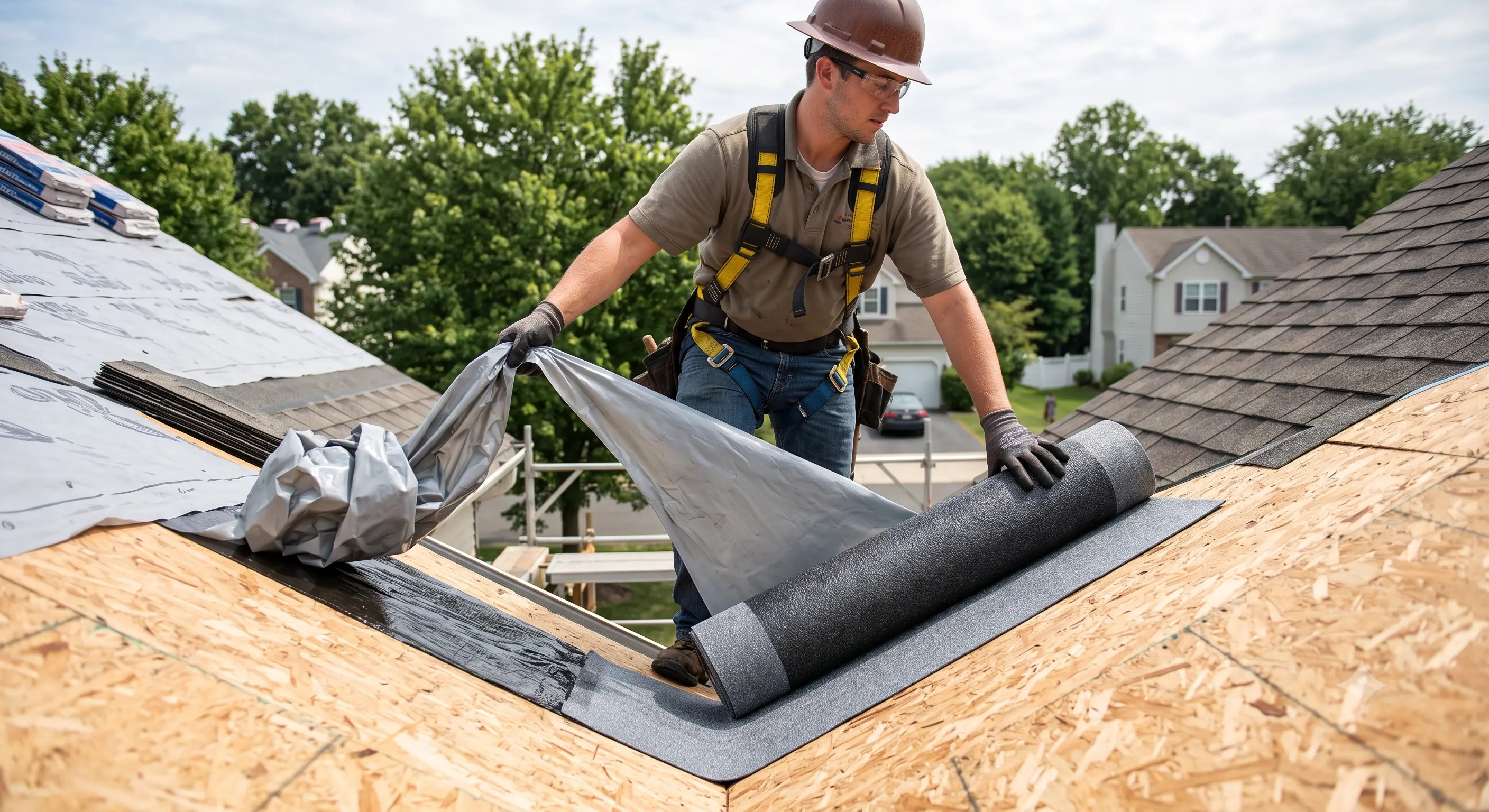
Ice and water shield goes down first in all the high risk areas, directly on the clean deck.
Synthetic underlayment then covers the rest of the deck, overlapping the edges of the ice and water shield by at least 4 inches so there are no gaps.
Shingles or the final roofing go over everything.
This gives you waterproof sealing exactly where water threatens the roof, and cost effective water resistance everywhere else. It is the approach most roofing manufacturers recommend and what building codes expect in most climates.
You do not choose one or the other. You use ice and water shield in the danger zones and synthetic underlayment across the field, together they form a complete barrier.
Common mistakes when combining the two
Even experienced crews slip up on how these two work together. The ones worth avoiding:
Using synthetic in the valleys to save money. Valleys carry the highest water volume on the roof. Synthetic is water resistant, not waterproof, so it is the wrong choice here. Valleys should always get ice and water shield.
Not overlapping the two materials. The synthetic must lap over the edge of the ice and water shield by at least 4 inches. Leave a gap and you have created a seam water can find.
Lapping them the wrong way. Water sheds downhill, so the upper material always laps over the lower one, just like shingles. Reverse it and you funnel water under the barrier.
Skipping membrane around penetrations. Every vent pipe, chimney, and skylight needs ice and water shield wrapped around it. Running synthetic up to the edge of a penetration is not enough.
Installing over a dirty or wet deck. Ice and water shield needs a clean, dry deck to bond. Debris or moisture underneath ruins the seal it is supposed to create.
How much of each do you need?
A rough way to plan a typical sloped roof:
Ice and water shield covers the high risk zones only, so you are measuring linear footage, not the whole roof. Add up your eaves (usually a 3 foot wide strip along the bottom edges), the full length of every valley (a strip about 3 feet wide total), and a collar around each penetration. On most homes this comes to a few rolls.
Synthetic underlayment covers everything else, the open field. Take your total roof area and subtract the areas already covered by membrane, then add about 10 percent for overlaps and waste.
The exact amounts depend on your roof's size, pitch, and how many valleys and penetrations it has. If you send us your roof measurements, we can help you work out how much of each you need so you are not left short or over-ordering.
Which should you use? A quick guide
Cold climate with ice dams? Ice and water shield at the eaves is essential (and usually code), synthetic on the field.
Hot or hurricane climate? Ice and water shield in valleys, around penetrations, and on low slopes for wind driven rain, synthetic on the field. Some hurricane codes require membrane across the whole deck.
Standard sloped roof, mild climate? Ice and water shield in valleys and around penetrations at minimum, synthetic everywhere else.
Low slope section? Ice and water shield, because water moves slowly there.
If you are speccing a roof and want help deciding how much of each you need, BCP supplies both. Call us at 877-540-5678 or visit our roof underlayment page to get started.
Frequently asked questions
Is ice and water shield the same as synthetic underlayment? No. Ice and water shield is a fully waterproof, self-adhesive membrane that seals around nails, used in high risk areas. Synthetic underlayment is a water resistant sheet used across the main field of the roof. They do different jobs.
Do I need both ice and water shield and synthetic underlayment? On most roofs, yes. Ice and water shield goes in the high risk areas (eaves, valleys, penetrations) and synthetic underlayment covers the rest. Using both is the standard, code-friendly approach.
Does ice and water shield go over or under synthetic underlayment? Ice and water shield goes down first, directly on the deck. Synthetic underlayment then overlaps its edges by at least 4 inches. At the eaves, the membrane is the base layer.
Can I just use synthetic underlayment everywhere instead? Not in the high risk areas. Synthetic is water resistant but not waterproof and does not seal around fasteners, so it cannot hold back the standing or backed-up water found at eaves, valleys, and penetrations. Those areas need ice and water shield.
Why not use ice and water shield on the whole roof? You can, and it is done in hurricane zones, but covering the entire deck is expensive and can trap moisture if attic ventilation is poor. For most homes, membrane in the high risk areas plus synthetic on the field is the better balance.
Which is more expensive? Ice and water shield costs more per square foot than synthetic underlayment. That is why it is used only in the areas that truly need waterproof protection, while the cheaper synthetic covers the large open field.
Can you put synthetic underlayment over ice and water shield? Yes. That is exactly how the system works. The membrane goes down first in the high risk areas, then synthetic underlayment laps over its edge by at least 4 inches to continue across the field. The upper material always laps over the lower one so water sheds down and off.
What about felt, is it still an option? Felt is the older underlayment material and still works, but synthetic has largely replaced it because it is lighter, stronger, and more tear and UV resistant. If you are weighing that choice, see our guide on synthetic vs felt roof underlayment. Either way, felt and synthetic are field materials, they do not replace ice and water shield in the high risk zones.
