House Wrap Installation Guide for Homes (2026)
House Wrap Installation: The Complete Guide to Protecting Your Walls
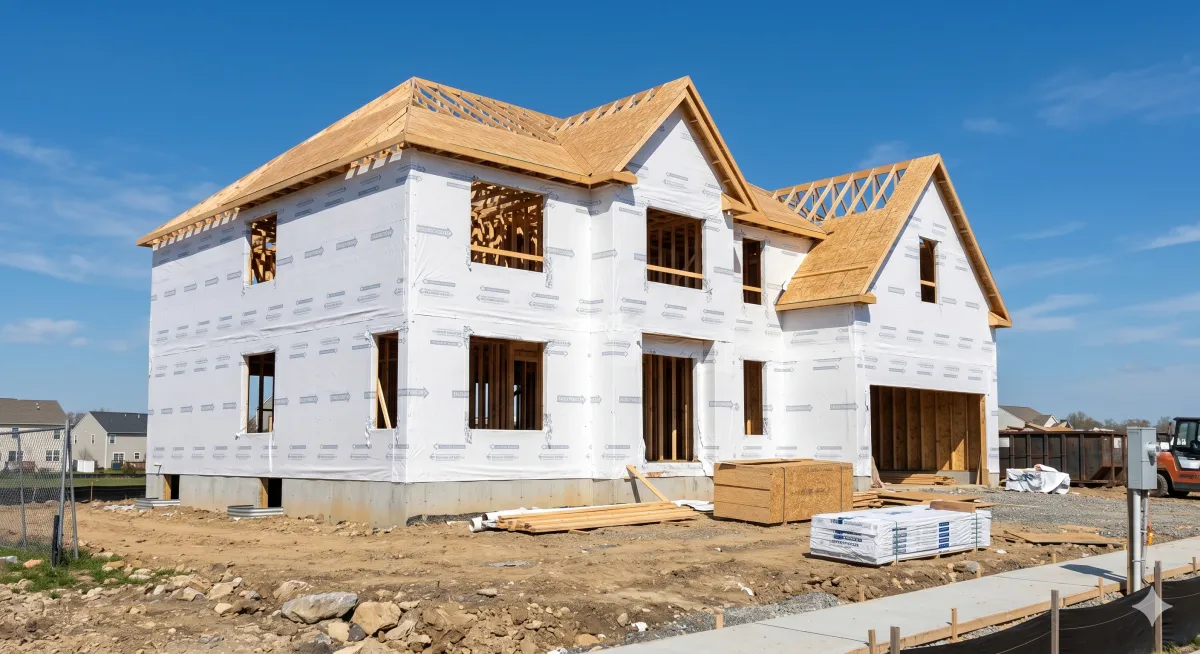
If you have ever driven past a construction site and seen homes covered in a white material before the siding goes on, you have seen house wrap. It is one of those building materials that disappears once the house is finished, but it plays a huge role in how well that home performs for the next 30 to 50 years.
House wrap keeps water out of your walls while letting moisture vapor escape from inside. Without it, your walls are wide open to rain, wind, and air leaks that drive up energy bills and cause hidden damage behind the siding.
Whether you are building new, re-siding, or just trying to understand what your contractor is talking about, this guide explains what house wrap is, how it works, why building codes require it, and how to pick the right product for your home.
What Is House Wrap?
House wrap is a lightweight synthetic fabric that goes over the exterior wall sheathing (the plywood or OSB panels on the outside of your frame) and under the siding. It covers the entire wall surface from the foundation to the roofline, creating a continuous barrier around the home.
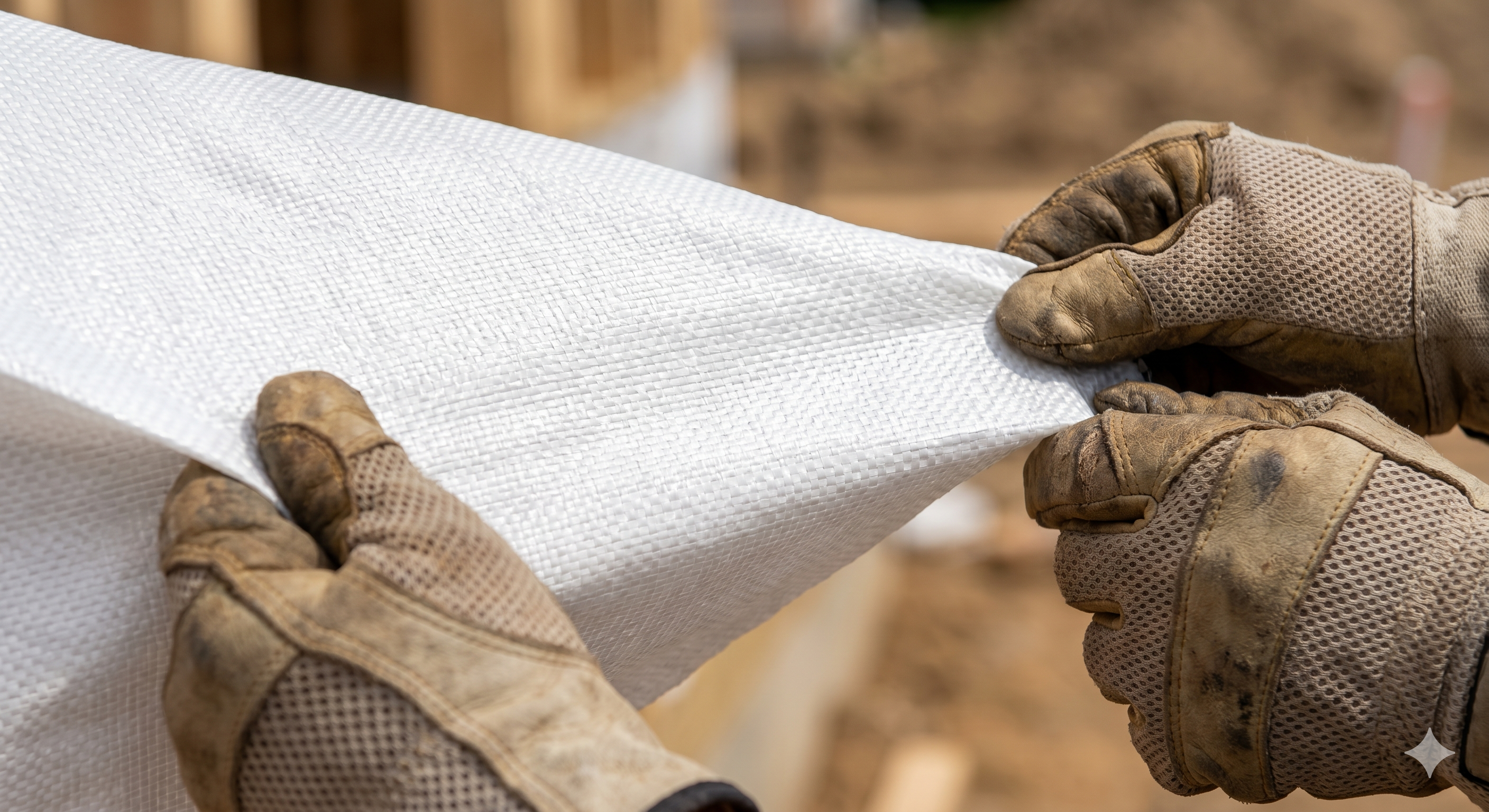
Most house wrap products are made from woven or spun polypropylene or polyethylene. These are the same types of engineered polymers used in synthetic roofing underlayment, which is why the two products look similar. The key difference is where they go. Roofing underlayment protects the roof deck. House wrap protects the wall sheathing.
House wrap does two things at once that seem like they should be contradictory. It blocks liquid water from getting through to the wall sheathing while allowing water vapor to pass through from inside the wall outward. This combination is why house wrap is also called a weather resistant barrier or WRB.
This matters because walls generate moisture from the inside of the home. Cooking, showering, and breathing all release water vapor that moves through the wall assembly toward the exterior. If the wrap blocks that vapor, moisture gets trapped inside the wall and causes mold, rot, and insulation damage. A good house wrap lets that vapor through while stopping rain and wind on the other side.
How House Wrap Works
House wrap protects your home in three ways.
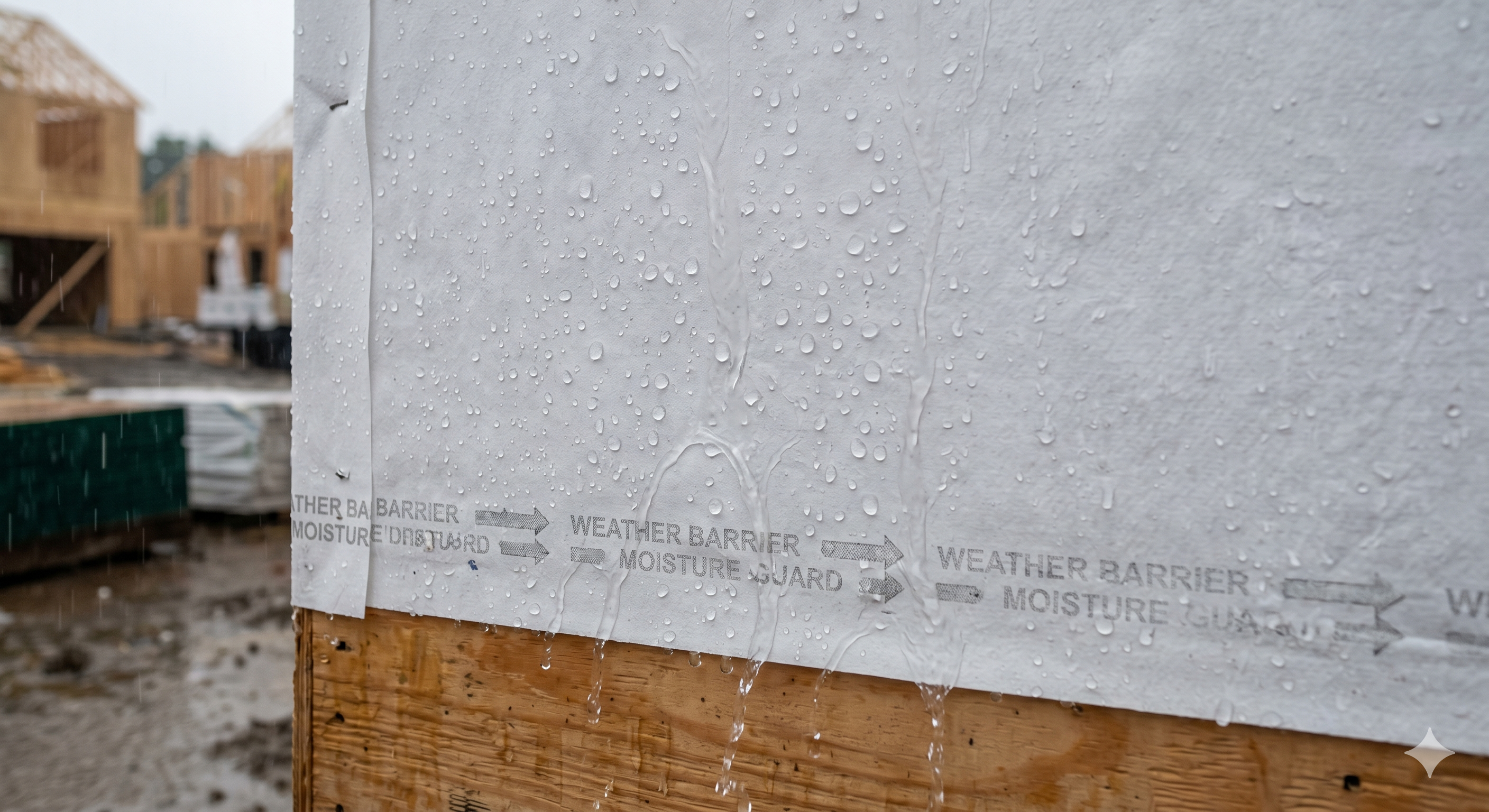
Water resistance. Rain hits your siding, but siding is not watertight. Vinyl siding has gaps at every joint. Wood siding expands and contracts with temperature changes, opening small cracks. Fiber cement develops hairline gaps over time. All of these allow water behind the siding during heavy rain or wind driven storms. House wrap catches that water and directs it downward and out of the wall instead of into the sheathing where it causes damage.
Air barrier. Your walls have dozens of small gaps around electrical penetrations, plumbing pipes, window frames, and where framing members meet. Without house wrap, air moves freely through these gaps, pulling conditioned air out of your home in winter and letting hot air in during summer. House wrap seals these gaps and reduces air infiltration, which directly lowers your heating and cooling costs. Studies show that a properly installed air barrier can reduce energy loss through walls by 10 to 20 percent.
Vapor permeability. This is the feature that separates house wrap from products like plastic sheeting or tar paper. A vapor permeable house wrap has a perm rating high enough to allow water vapor to pass through the material. This means moisture inside the wall can dry outward through the wrap instead of getting trapped. Trapped moisture is the number one cause of mold growth and wood rot inside wall cavities.
When Do You Need House Wrap?
The simple answer is almost always.
The International Residential Code (IRC) requires a weather resistant barrier on the exterior of all wood frame walls. Most state and local building codes follow this requirement. If your project needs a building permit, the inspector will check for a properly installed WRB.
Here are the most common situations where house wrap is required or strongly recommended.
New construction. Every new home with wood frame walls needs house wrap. It goes on after the sheathing is installed and before any siding, brick, or stone veneer.
Re-siding projects. If you are removing old siding and replacing it, this is the time to install house wrap if the home does not already have it, or to replace old, damaged wrap.
Vinyl siding. House wrap is especially important under vinyl siding because vinyl has gaps at every horizontal joint and around trim pieces. Water gets behind vinyl more easily than behind most other siding types. If you are wondering whether to add it under your vinyl siding project, the answer is yes.
Any climate. Wet climates need house wrap for water protection. Cold climates need it for air sealing. Hot and humid climates need it for moisture management. There is no climate where skipping it makes sense.
Types of House Wrap
Not all house wrap products perform the same. Here are the main categories.
Woven polypropylene. This is the most common type for residential construction. It is lightweight, easy to handle, and provides a good balance of water resistance and vapor permeability. Our WrapSecure house wrap is a woven polypropylene product designed for both residential and commercial applications with up to 6 months of UV stability.
Spun bonded polyolefin. Tyvek by DuPont is the most recognized product in this category. It uses a flash spun process to create a very fine fiber structure. It performs well, but it is not the only option that delivers strong results. Many contractors have been switching to Tyvek house wrap alternatives that offer the same level of protection at a lower price point.
Fluid applied WRB. Instead of a sheet product, this is a liquid coating rolled or sprayed directly onto the sheathing. It creates a seamless barrier with no seams or laps. It costs more and takes longer to install, but it eliminates the seam issue entirely. It is most common on commercial projects and high end residential work.
Integrated sheathing wraps. Some manufacturers combine the sheathing panel and house wrap into a single product. This saves an installation step but limits your options and can cost more overall.
For most residential projects, a quality woven polypropylene house wrap gives you the best combination of performance, ease of installation, and value.
House Wrap Installation Basics
Proper installation is what makes house wrap actually work. A poorly installed wrap with gaps, tears, and unsealed seams offers almost no protection.
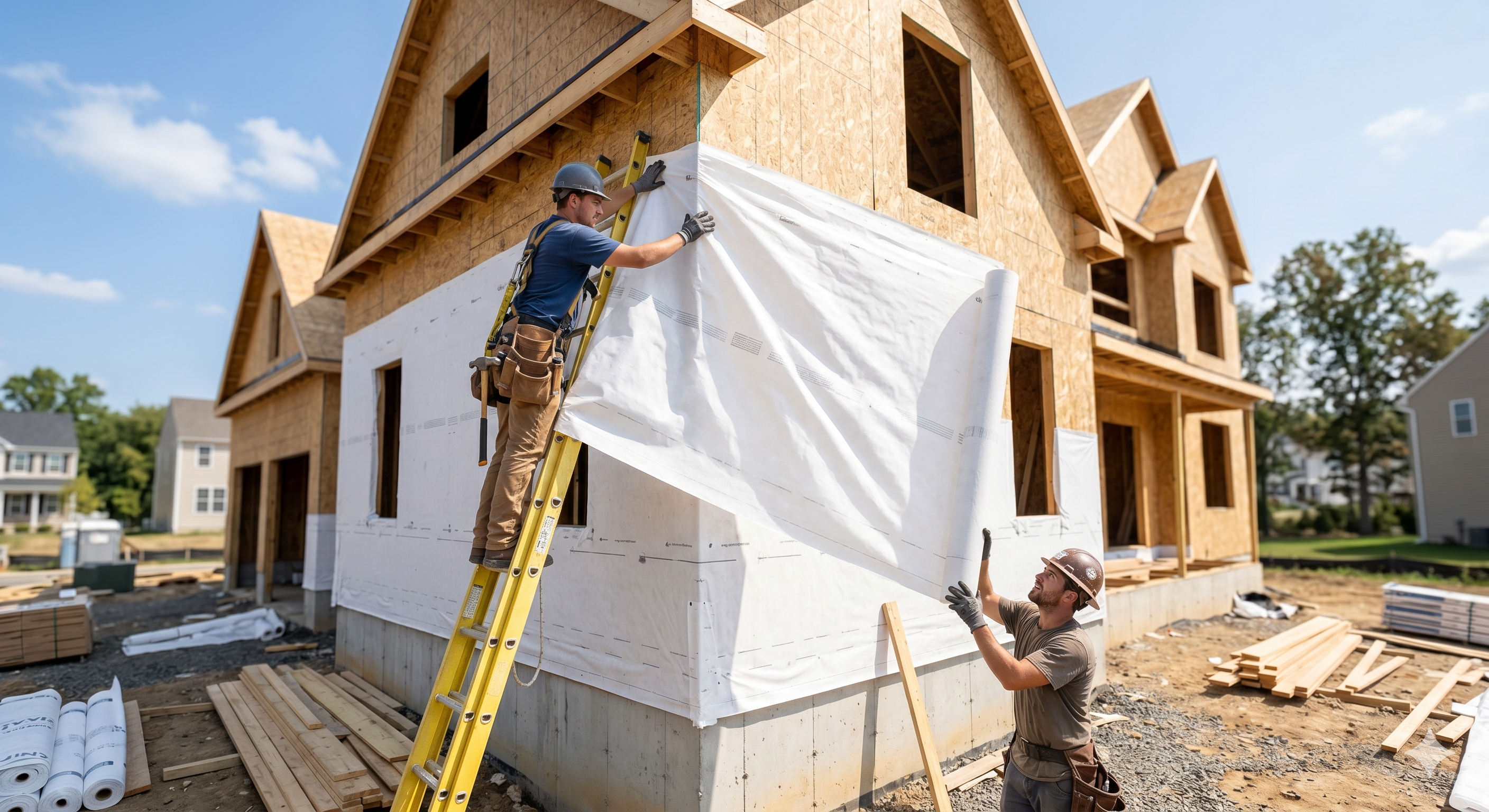
Start at the bottom. House wrap is installed horizontally from the bottom of the wall upward so that each upper row overlaps the row below it. This is just like how shingles work on a roof. Water hitting the wrap runs downward and over the lap instead of behind it.
Overlap seams. Horizontal seams need at least 6 inches of overlap. Vertical seams need at least 12 inches. Every seam should be taped with manufacturer approved seam tape to create a continuous barrier.
Wrap around openings. Windows, doors, and penetrations need special attention. The wrap should extend into the rough opening and be flashed properly so water that reaches the window frame drains outward instead of into the wall cavity.
Fasten correctly. Use cap nails or cap staples, not regular staples. Regular staples create small holes that can let water through. Cap fasteners spread the load and keep the material from tearing at the fastener points.
Leave it exposed for as little time as possible. Most house wrap products are rated for 60 to 120 days of UV exposure. After that, the material starts to degrade. Plan your siding installation to follow the wrap as soon as practical.
How Much Does House Wrap Cost?
House wrap is one of the most affordable protective layers in the entire building envelope. A standard roll of woven polypropylene house wrap costs $100 to $200 and covers 1,000 to 1,500 square feet.
For a typical 2,000 square foot home, the material cost for house wrap is roughly $200 to $400. Add labor and seam tape and the total installed cost is usually $500 to $1,500 depending on the home size and complexity.
Compare that to the cost of repairing water damage inside a wall cavity ($2,000 to $10,000 or more) and the value is obvious. House wrap costs a fraction of one future repair.
House Wrap vs Roof Underlayment
Both products protect the building from water, and both are made from similar synthetic polymer materials. But they serve different parts of the structure.
Roof underlayment goes on the roof deck under the shingles or metal panels. It handles the extreme conditions of the roof surface: direct sun exposure, standing water, ice dams, and constant UV bombardment.
House wrap goes on the wall sheathing under the siding. It deals with wind driven rain, air infiltration, and moisture vapor from inside the home. The performance requirements are different, which is why the products are engineered differently even though the base materials overlap.
Your building needs both for complete protection. One covers the roof. The other covers the walls. Together they create a continuous moisture and air barrier around the entire structure.
Frequently Asked Questions
Do I need house wrap behind vinyl siding? Yes. Vinyl siding has gaps at every joint that allow water behind the surface. House wrap catches that water and protects the wall sheathing. It also reduces air infiltration, which lowers energy costs.
What is the difference between house wrap and Tyvek? Tyvek is a brand name for one type of house wrap made by DuPont. House wrap is the general product category. There are many house wrap products on the market that perform as well as or better than Tyvek at a lower price. Our guide to Tyvek alternatives covers the top options.
Can I install house wrap over old house wrap? It is not recommended. Old house wrap should be removed so you can inspect the sheathing underneath for water damage, mold, or rot before installing new wrap.
Does house wrap go over or under foam board insulation? This depends on the project design. In most cases, house wrap goes directly on the sheathing, with foam board insulation installed over the wrap. Some foam board products have a built in WRB that can replace house wrap, but always verify with the foam manufacturer's installation requirements.
How long does house wrap last? Quality house wrap products last 20 to 30 years or more when properly installed and covered with siding. The material does not rot or absorb moisture, so it maintains its performance for the life of most siding materials.
Protect What You Cannot See
House wrap is one of those building materials that works best when you forget it exists. Once it is installed and covered with siding, it quietly protects your walls, your insulation, and your indoor air quality for decades. But skip it or install it wrong, and you will eventually pay for it in mold, rot, and energy loss.
At BCP Inc., our WrapSecure house wrap is built for contractors and builders who want reliable moisture protection without overpaying. It delivers strong water resistance, high vapor permeability, and UV stability up to 6 months for projects with longer timelines.
Ready to protect your walls the right way? Call us at 877-540-5678 or visit bcpinc.us/house-wrap to learn more and request a quote.
