Silt Fence Cost per Foot: Installed vs Material Prices
Silt Fence Cost per Foot: Material, Installation and How Much You Need
Silt fence is one of the cheapest erosion control measures on a job site, and one of the easiest to under-budget. Published US contractor cost guides commonly put installed silt fence at roughly $3 to $8 per linear foot, with material accounting for only a part of that and labor making up the rest. The bigger budgeting error is usually not the rate. It is the footage: most estimates start from the site perimeter rather than from how much fence the disturbed area actually needs.
This guide covers what silt fence typically costs, how to work out how many feet you need, what moves the price, and the costs that are easy to leave out.
About the figures in this guide: the cost ranges below are indicative figures drawn from published cost guides and public agency documents. They are provided so you can sanity-check a bid or a budget. They are not a BCP price list. For pricing on your own project, request a quote.
Typical silt fence cost per foot
Cost component | Indicative range per linear foot | What it covers |
|---|---|---|
Material | About $1 to $3 | Fabric, stakes or posts, fasteners |
Labor | About $1.50 to $5 | Trenching or slicing, setting posts, backfill and compaction |
Installed total | About $3 to $8 | Standard fence on normal ground with normal access |
Rates vary with region, site access, soil and how much fence is being installed. Large perimeter jobs usually price toward the lower end per foot; short runs, difficult ground and small call-outs price toward the top.
How much silt fence do you need?
The US EPA's silt fence guidance gives a practical rule of thumb: at least 100 feet of silt fence for every 10,000 square feet of disturbed area. It also advises that the drainage area above any fence should usually not exceed a quarter of an acre.
Worked example: a one-acre disturbed area
One acre = 43,560 sq ft
43,560 ÷ 10,000 = 4.36
4.36 × 100 ft = about 436 linear feet of silt fence
At the indicative installed range of $3 to $8 per foot, that puts the installed cost at roughly $1,300 to $3,500 before maintenance and removal. Treat that as an order-of-magnitude budget, not a quote.
Note the method. The EPA rule is based on the disturbed area, not the perimeter, and it is a minimum. Soil type, slope, slope length and rainfall can all mean the site needs more. The EPA's own test is simple: if fences are overflowing after a moderate rain, the site needs more fence.
What drives the price
Fence type. Reinforcement is the biggest single cost multiplier. The EPA notes that a wire- or chain-link-supported fence may double the cost of a silt fence installation, and it leaves more material to dispose of at the end of the job. Our guide to silt fence types covers when reinforcement is genuinely needed.
Installation method. Fence is installed either in a hand or machine-dug trench, or with a static slicing machine that pushes the fabric into a narrow slit. In an EPA-supported evaluation, the best trenching method typically took nearly three times the time and effort to match the results of static slicing. On large jobs, the method can change the labor cost substantially.
Posts and spacing. Closer post spacing means more posts and more labor per foot. Spacing tightens where water will pond against the fence, typically 3 to 4 ft apart in those areas.
Site conditions. Rocky or compacted ground, steep slopes, tree roots and poor access all slow installation.
Run length. Mobilization is a fixed cost. A 100-foot job carries the same trip as a 1,000-foot job, so small runs cost more per foot.
Costs that are easy to leave out
Inspection and maintenance. Silt fence must be inspected routinely and after rain. The ASTM specification referenced by the EPA recommends removing sediment from behind the fence when it reaches half the height of the fence, or installing a second fence.
Repairs. Fence damaged by equipment, undermined by runoff or flattened by sediment has to be repaired to stay compliant.
Replacement on long projects. Fabric has a UV life. A fence rated for 12 months of exposure on an 18-month project will need replacing part way through.
Removal and disposal. At the end of the job, the fabric and damaged posts are removed and disposed of. Steel posts and some wooden posts can be reused.
Material: buying by the roll
For material budgeting, work from roll lengths rather than per-foot figures, and round up so you have spare for joins, J-hooks and repairs.
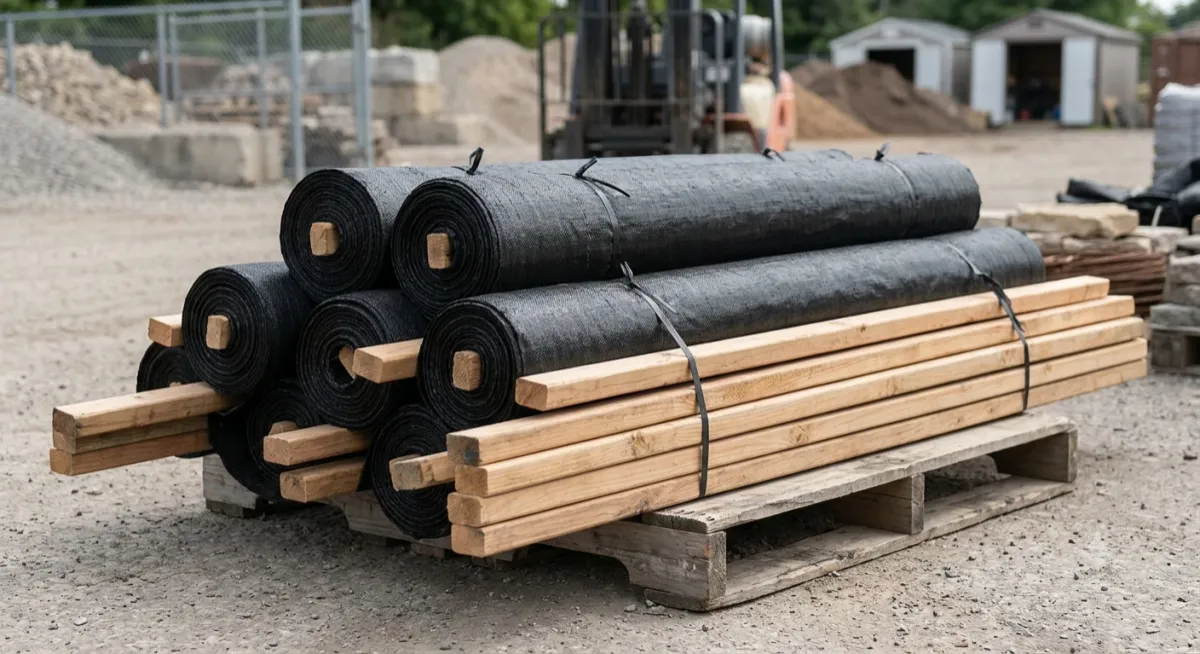
BCP Silt Fence ships in 100, 300 and 500 ft rolls, with woven polypropylene fabric of about 70 g/m², hardwood stakes pre-attached at 36-inch intervals, 24 to 36 inches of fence above ground and UV stabilization for up to 12 months. Pre-attached stakes remove one step from installation, which reduces labor time on site.
For the one-acre example above, 436 ft of fence fits within a single 500 ft roll, with some spare for J-hooks and repairs.
How to get a bid you can compare
Ask every contractor or supplier to quote against the same specification:
Linear feet, and how it was calculated
Fence type and fabric weight
Post material and spacing
Installation method: trenched or sliced
Whether inspection, maintenance and removal are included
Whether the price includes mobilization
Two bids that differ by $2 per foot are often quoting two different scopes.
Frequently asked questions
How much does silt fence cost per foot?
Published cost guides commonly put installed silt fence at around $3 to $8 per linear foot, with material at roughly $1 to $3 of that. Your actual price depends on region, fence type, ground conditions and run length.
How much silt fence do I need for one acre?
The EPA's rule of thumb is at least 100 ft per 10,000 sq ft of disturbed area, which works out to about 436 linear feet for one acre. Treat that as a minimum and adjust for slope and soil.
Is wire-backed silt fence more expensive?
Yes. The EPA notes that wire- or chain-link-supported fence may double the cost of installation. It is worth it where loads are high, but many sites can avoid it with good placement and enough fence.
Does the price include removal?
Not always. Ask whether inspection, maintenance and end-of-project removal are included, because they are frequently priced separately.
Can I install silt fence myself to save money?
On small sites, yes. The fabric must be buried at least 6 inches in a trench, backfilled and compacted, with posts driven firmly at the right spacing. Check whether your permit requires a specific installer or standard.
Get a silt fence quote
Before requesting a quote, have ready:
The size of the disturbed area, or your calculated linear footage
The silt fence type or standard on your plan
Project duration
Delivery location
Send us your footage and plan requirements, and our team will come back with roll quantities and pricing for your project. Or call 877-540-5678.
