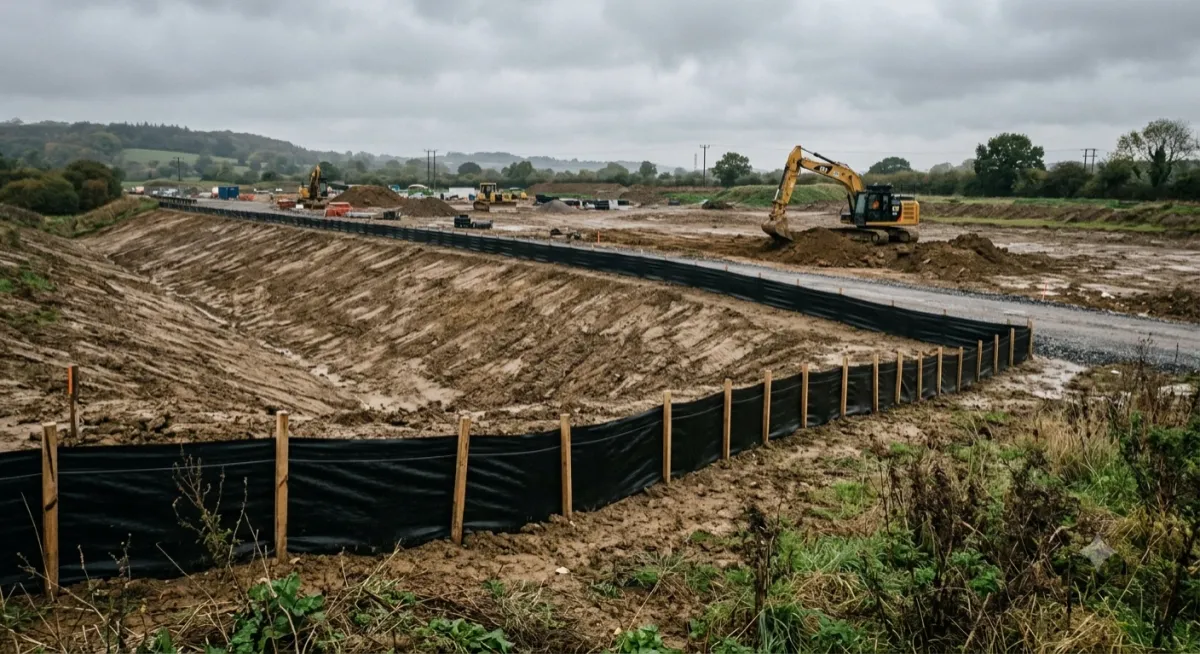
Silt Fence Types: Wire-Backed, Super Silt & Type A vs C
Silt fence looks like one product, but it is specified in several distinct types, and the type on your erosion control plan is not interchangeable with the one next to it on the supplier's list. The difference between them comes down to three things: how wide the fabric is, how closely the posts are spaced, and whether the fence has a wire or chain-link backing to carry the load of water and sediment behind it.
This guide explains the common silt fence types, how state Type A, B and C designations usually differ, when a reinforced fence is actually needed, and what to check before ordering.
If you need the basics first, start with our guide to what a silt fence is.
Why the type matters
A silt fence works by ponding runoff so the sediment settles out behind it. That ponded water is heavy. The US EPA's silt fence guidance notes that a single 100-foot run of silt fence may hold 50 tons of sediment in place, and that a fence should be able to support 24 inches of sediment and water.
Every type of silt fence is a different answer to the same question: how much load can this fence take before the posts lean, the fabric tears or the base washes out?
The main silt fence types
Type | Construction | Typical use |
|---|---|---|
Standard (unsupported) | Woven polypropylene fabric on wooden or steel posts, no backing | Perimeter control on most residential and commercial sites, low to moderate flows |
Pre-staked | Standard fabric with wooden stakes already attached at fixed intervals | Fast perimeter installs where the plan allows the stake spacing supplied |
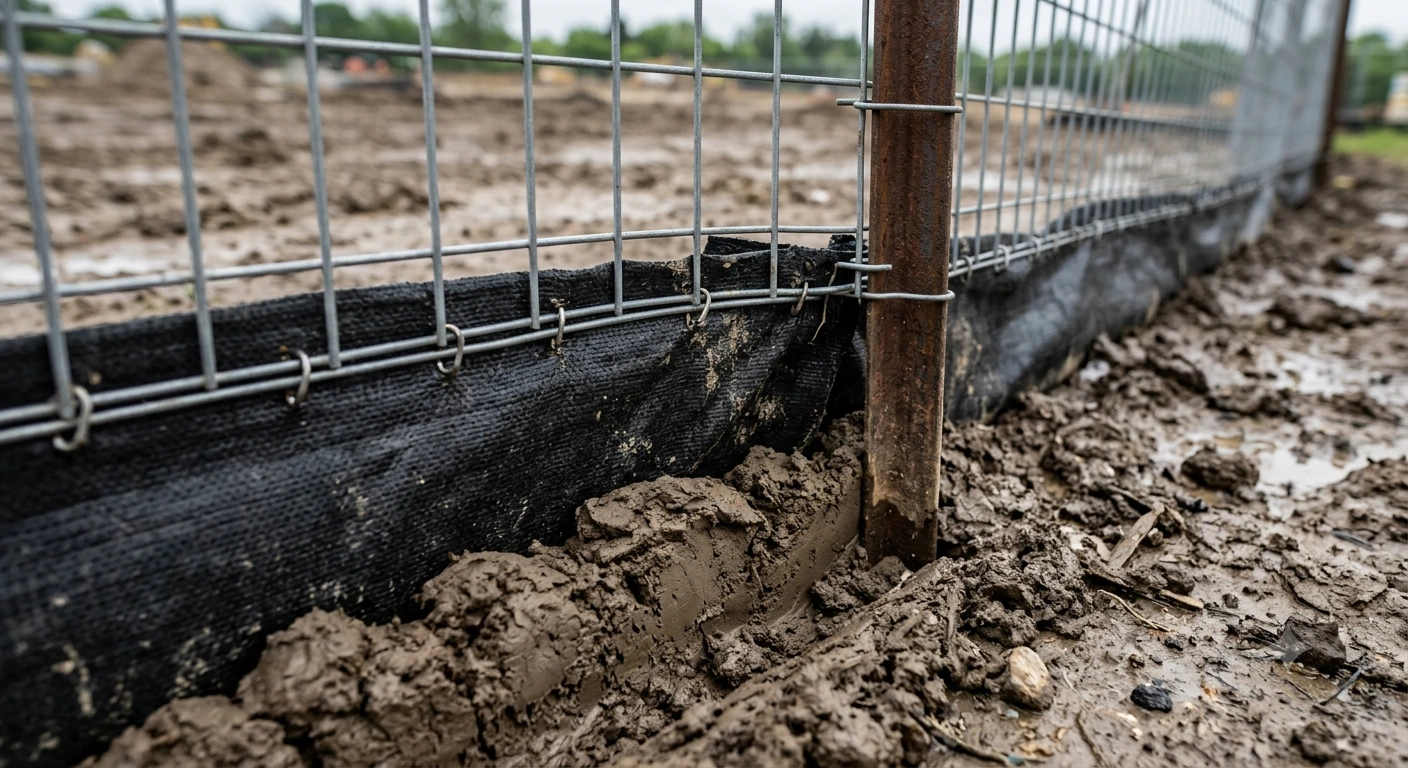
Wire-backed | Fabric attached to welded wire mesh, supported by steel posts | Higher flows, longer slopes, areas where water will pond against the fence |
Super silt fence (chain-link backed) | Fabric attached to chain-link fencing on steel posts | Heavy sediment loads, steep or long slopes, sensitive areas next to waterways |
Heavy-duty / high-strength fabric | Heavier or high-tensile woven fabric, sometimes with closer post spacing | Where a stronger fence is needed without full wire backing |
Reinforcement is not free. The EPA notes that a wire- or chain-link-supported fence may double the cost of a silt fence installation, and it leaves more material to remove and dispose of at the end of the job.
Type A, Type B and Type C silt fence
Many state DOTs and local erosion control manuals use letter designations rather than descriptive names. The definitions vary between states, so your project's own specification always governs, but a common pattern in published state and local manuals runs like this:
Designation | Fabric | Reinforcement | Typical post spacing | Typical use |
|---|---|---|---|---|
Type A | 36 in wide | None | Up to 6 ft | Projects lasting more than six months |
Type B | About 22 in wide | None | Up to 6 ft | Short-term, smaller sites such as single home lots |
Type C | 36 in wide | Wire mesh backing | Up to 4 ft | High flows or velocities, or slopes more than 10 ft high |
Treat this as a guide to what the letters usually mean, not a substitute for the drawing on your plan set. If the plan names a state DOT standard, order to that standard and keep the product data sheet for the inspector.
When a standard fence is enough
The EPA's view is that a reinforced fence is often avoidable. It lists five features that usually remove the need for wire or chain-link backing:
Proper placement based on the site's contours
An adequate amount of fencing, without long continuous runs
Heavy, porous filter fabric
Posts driven to the proper depth and spacing
Tight soil compaction on both sides of the fence
In practice, that means most sites get better results from more fence in shorter runs with J-hooks than from a heavier fence in one long line. Long runs funnel water to a single low point, where it overtops the fence.
When to step up to a reinforced fence
Consider wire-backed or super silt fence when:
Water will regularly pond deeply against the fence
The fence sits at the toe of a long or steep slope
The site drains toward a stream, wetland or storm inlet where a failure would be costly
Your plan, permit or inspector specifies it
Post spacing also tightens with the load. EPA guidance suggests spacing posts 3 to 4 ft apart where water may run over the top of the fence, about 5 ft in most other areas, and 6 to 7 ft only where there is little horizontal load.
Fabric, posts and roll length
Fabric. Most silt fence is woven polypropylene geotextile. Heavier fabric resists tearing at the posts, which the EPA identifies as a common weak point of lightweight fabric.
Posts. Hardwood stakes around 2 × 2 inches suit many installations but are difficult to drive deeper than 6 to 8 inches into hard ground. Steel posts can be driven deeper, which matters when the fence has to hold back a full load. The EPA suggests driving posts about 2 ft into the ground to hold 2 ft of sediment and water.
Roll length. Longer rolls mean fewer joins. Where sections do meet, overlap them so sediment cannot bypass the join.
BCP silt fence specifications
BCP Silt Fence is a standard, pre-staked fence:
Woven polypropylene geotextile, about 70 g/m² (approx. 2 oz/yd²)
Pre-attached hardwood stakes at 36-inch intervals
24 to 36 inches of fence above ground
UV stabilized for up to 12 months of sun exposure
Roll lengths of 100, 300 and 500 ft
Meets most DOT and municipal specifications for perimeter sediment control
The 36-inch stake spacing sits at the closer end of the EPA's recommended range, which suits perimeter runs where water may pond against the fence.
Specifications to confirm before ordering
The silt fence type or standard named on your erosion control plan
Fabric material and weight
Fence height above ground and depth buried
Post material, length and spacing
Whether wire or chain-link backing is required
UV rating against how long the fence will stay in place
Roll lengths, so you can plan joins
Frequently asked questions
What is the difference between Type A and Type C silt fence?
In most state manuals that use the designations, both use 36-inch fabric, but Type C adds wire mesh reinforcement and closer post spacing for high flows, high velocities or tall slopes. Check your state's specification, since definitions vary.
Is wire-backed silt fence required?
Only where your plan, permit or local manual requires it, or where the load justifies it. The EPA notes that good placement, enough fence, heavy fabric, proper posts and compaction can usually avoid the need for reinforcement.
What is super silt fence?
Super silt fence is silt fence fabric attached to chain-link fencing on steel posts. It is used where heavy sediment loads or steep slopes would overwhelm a standard fence.
Can I use pre-staked silt fence on a DOT project?
Often, yes, provided the fabric, height and stake spacing meet the project specification. Confirm against the plan before ordering.
How long does silt fence last?
It depends on the fabric's UV stabilization and site conditions. BCP Silt Fence is rated for up to 12 months of sun exposure. Inspect it routinely and after rain, and remove sediment before it reaches half the height of the fence.
Get the right silt fence for your site
Before requesting a quote, have ready:
The silt fence type or standard on your plan
Total linear feet required
Site conditions: slope, flow and proximity to waterways
How long the fence needs to stay in place
Send us your plan requirements and footage, and our team will confirm whether BCP Silt Fence meets the specification. Or call 877-540-5678.
