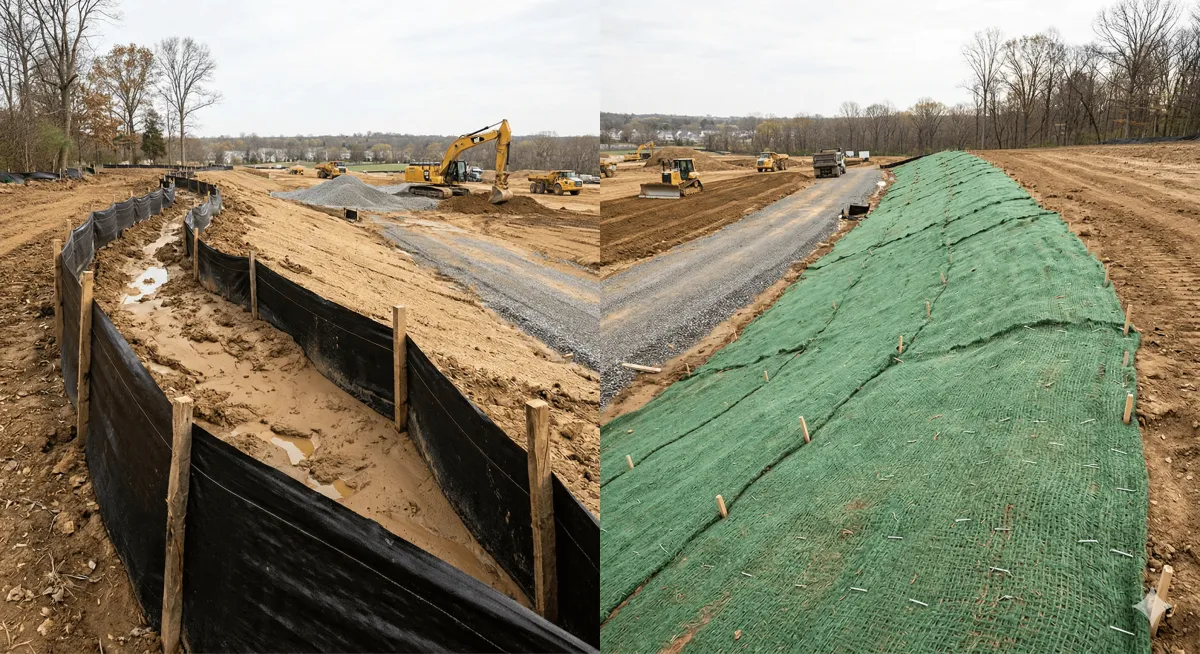
Silt Fence vs Erosion Control Blanket: Which to Use
Silt Fence vs. Erosion Control Blanket: Which One Does Your Site Need?
Every construction site that disturbs soil needs some form of erosion and sediment control. Regulations require it, inspectors enforce it, and skipping it leads to fines, project delays, and environmental damage.
Two of the most common tools for the job are silt fence and erosion control blankets. They are both used on construction sites, but they solve different problems. Using the wrong one, or using only one when you need both, can leave your site exposed.
In this guide, we will explain how each one works, when to use which, and how they work together for full site protection.
Two Different Problems, Two Different Solutions
Before comparing these two products, it helps to understand the two sides of erosion control.
Sediment control means catching soil that has already been picked up by stormwater runoff and stopping it before it leaves the site. This is what silt fence does.
Erosion control means preventing soil from being picked up in the first place. This is what erosion control blankets do.
Both are needed on most sites. Silt fence catches what the blankets miss, and blankets reduce how much sediment the fence has to handle. They work best as a team.
How Silt Fence Works
A silt fence is a temporary barrier made from woven geotextile fabric stretched between stakes driven into the ground. It is installed at the low points of a site where stormwater runoff is most likely to carry sediment off the property.
The fabric lets water seep through slowly while trapping soil particles on the uphill side. Over time, sediment builds up behind the fence while cleaner water filters through to the other side.
Silt fence works best for sheet flow (water spreading evenly across a surface) on gentle to moderate slopes. It is not designed to handle concentrated water flow like channels, ditches, or steep slopes where runoff moves fast and carries heavy loads.
Proper installation is critical. The bottom of the fabric must be buried in a trench and backfilled with compacted soil. If water flows under the fence instead of through it, the fence is doing nothing. We covered the full installation process in our silt fence guide.
The EPA recommends at least 100 feet of silt fence per 10,000 square feet of disturbed area. The fabric typically lasts 6 to 12 months before it needs to be replaced. Accumulated sediment should be removed whenever it reaches one third of the fence height.
How Erosion Control Blankets Work
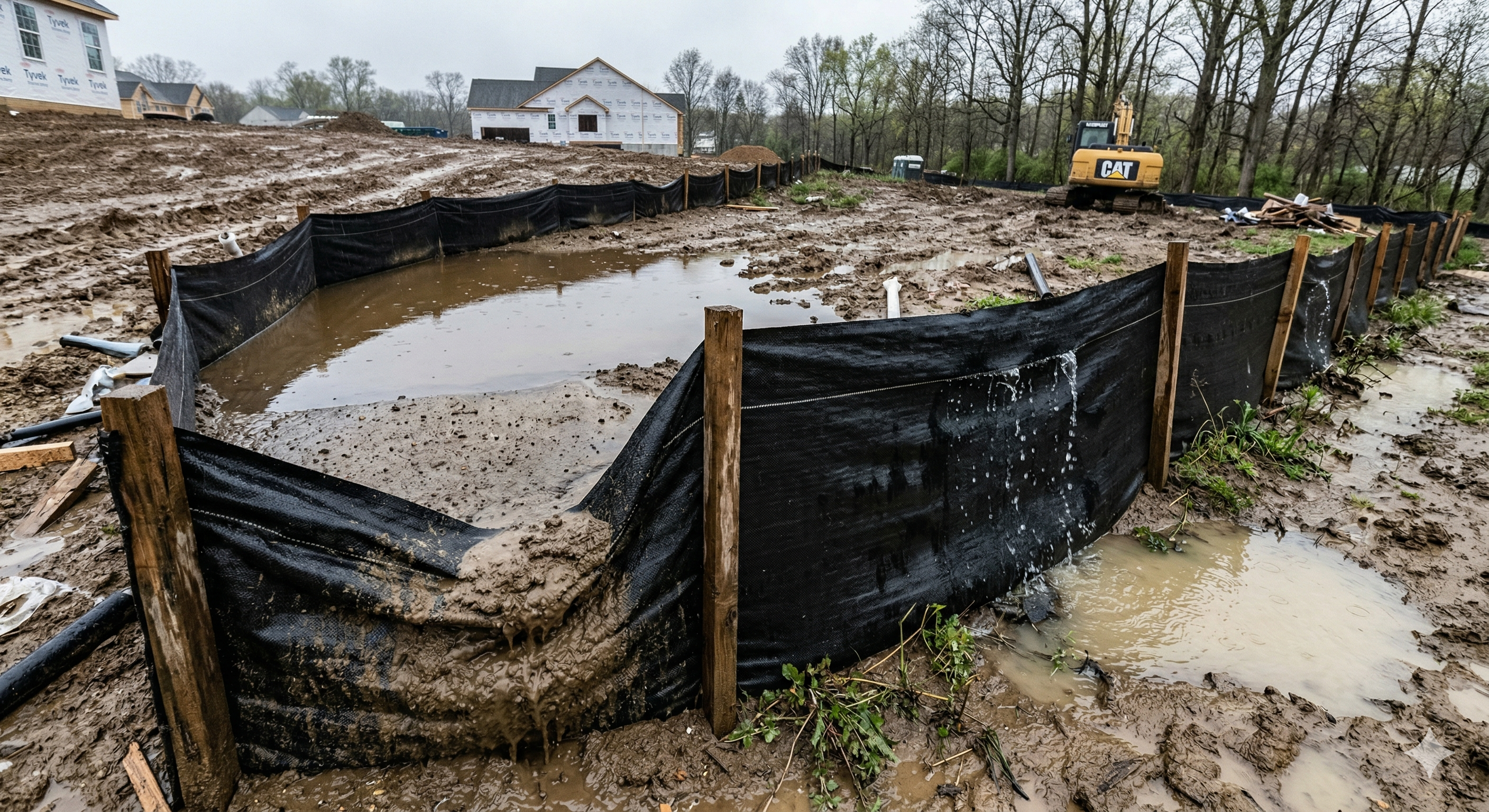
Erosion control blankets (also called erosion control mats or rolled erosion control products) are sheets of biodegradable or synthetic material laid directly on top of exposed soil. They are typically made from straw, coconut fiber (coir), wood excelsior, or a combination of natural fibers held together by biodegradable netting.
The blanket covers bare soil and protects it from the impact of raindrops. This matters more than most people realize. When rain hits bare ground, it dislodges soil particles and turns them into sediment that gets carried away by runoff. The blanket absorbs that impact and keeps the soil in place.
Blankets also slow the movement of water across the surface, reduce evaporation, retain soil moisture, and create a favorable environment for seed germination. Many sites install erosion control blankets over freshly seeded slopes so grass can establish while the blanket holds everything in place.
Over time, biodegradable blankets break down naturally (typically 6 to 24 months depending on the material) and become part of the soil as vegetation takes over the erosion control role permanently.
When to Use Silt Fence
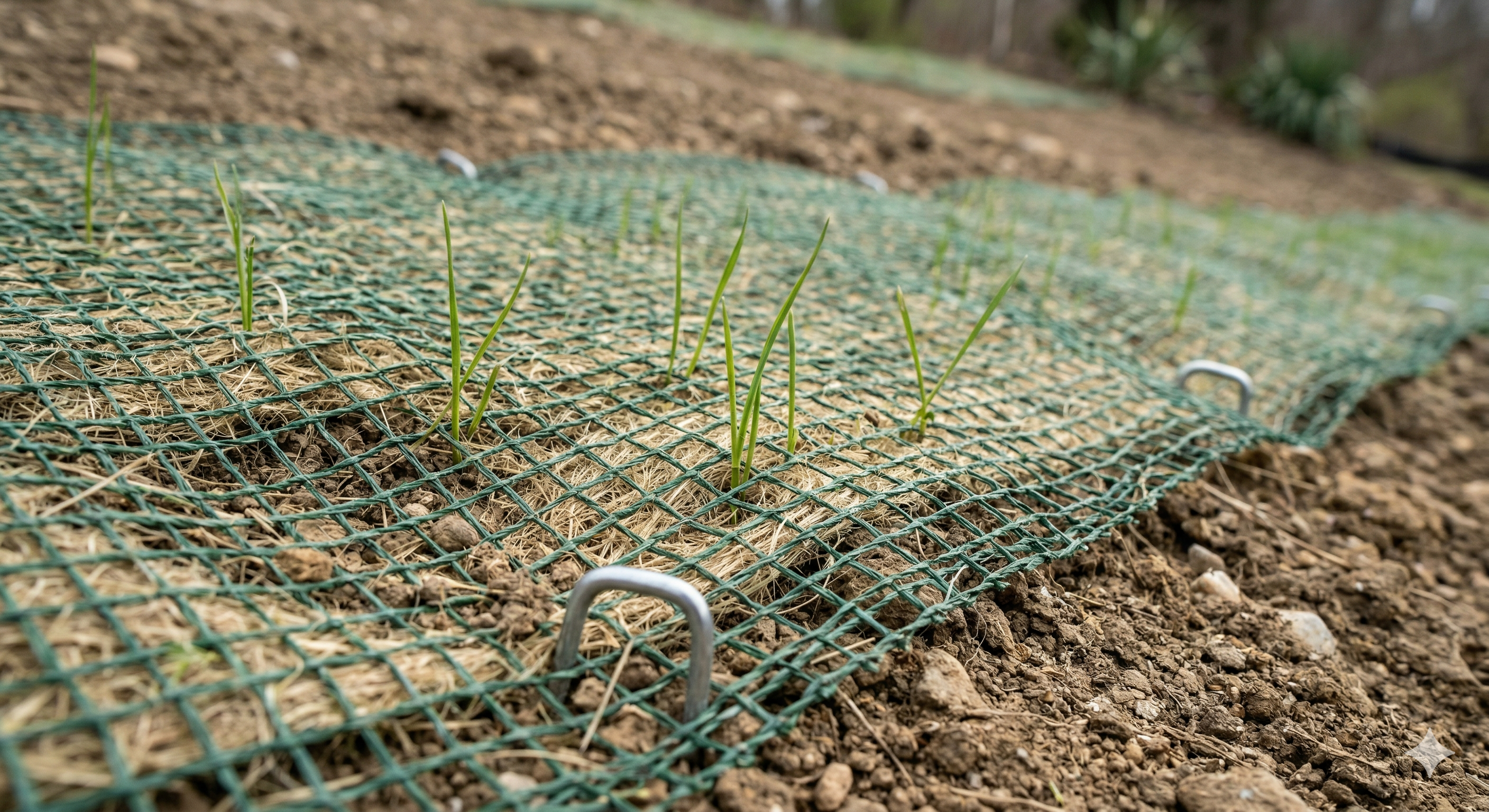
Silt fence is the right choice when you need to catch sediment at the boundary of a disturbed area.
It belongs around the perimeter of active construction sites to prevent sediment from leaving the property. It works well downhill from graded or excavated areas where sheet flow carries loose soil toward roads, storm drains, or neighboring properties. It is commonly placed along property lines adjacent to waterways, wetlands, or protected areas.
Silt fence is also used around stockpiles of soil, sand, or aggregate to contain runoff from those piles during rain events.
At BCP Inc., our Standard Silt Fence comes with pre-attached stakes, UV stabilized polypropylene fabric, and DOT spec compliance for construction site use.
When to Use Erosion Control Blankets
Erosion control blankets are the right choice when you need to stabilize exposed soil and prevent erosion from starting.
They are commonly used on newly graded slopes that will be seeded and need protection until vegetation establishes. They work well on cut and fill slopes along roadways, embankments, and drainage channels. They are required on many projects near waterways where sediment must absolutely not reach the water.
Blankets also work on steeper slopes and in areas with concentrated flow where silt fence alone would be overwhelmed by the volume and speed of the runoff.
Using Both Together
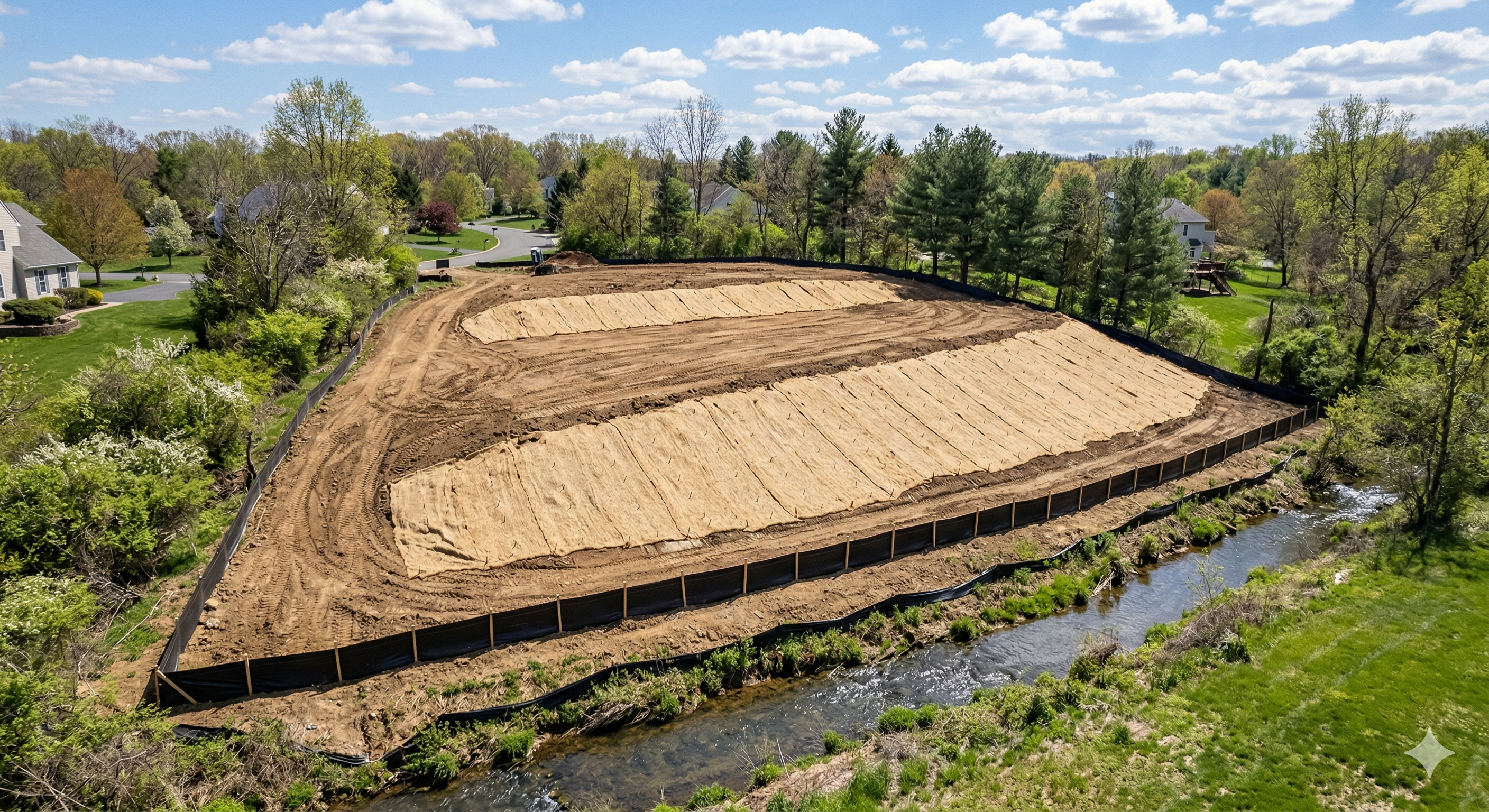
The strongest erosion control plan uses both tools working as a system.
Install erosion control blankets on all disturbed slopes to prevent erosion at the source. This dramatically reduces the amount of sediment that runoff can carry.
Install silt fence at the base of slopes and around the site perimeter to catch any sediment that still makes it past the blankets. The fence serves as the last line of defense before runoff leaves the property.
This layered approach satisfies most SWPPP (Stormwater Pollution Prevention Plan) requirements and gives you the best chance of passing site inspections without issues.
Quick Comparison
Silt fence catches sediment after it is picked up by runoff. It is a perimeter barrier installed at low points. It works best on gentle slopes with sheet flow. It is temporary and typically lasts 6 to 12 months.
Erosion control blankets prevent sediment from being picked up in the first place. They cover and protect bare soil directly. They work on steeper slopes and in channels. They are temporary and biodegrade over 6 to 24 months as vegetation takes over.
Use silt fence when you need to stop sediment from leaving a boundary. Use erosion control blankets when you need to stabilize soil and promote vegetation on slopes. Use both when you want full protection and easy compliance with erosion control regulations.
Frequently Asked Questions
Can silt fence replace erosion control blankets? No. Silt fence catches sediment but does not prevent erosion. On steep slopes or areas with concentrated flow, silt fence alone will be overwhelmed. You need blankets to reduce erosion at the source and fence to catch what gets through.
Do I need both for a small residential site? It depends on the site conditions. If you are grading a flat lot with minimal slope, silt fence alone may be sufficient. If there are any exposed slopes, adding erosion control blankets will reduce sediment buildup against your fence and keep both systems working longer.
How often should I inspect these controls? The EPA and most local codes require inspection after every significant rain event and at least once a week during active construction. Document all inspections and repairs as part of your SWPPP records.
Which one is more expensive? Silt fence is cheaper per linear foot and easier to install. Erosion control blankets cost more per square foot but cover larger areas and provide long term soil stabilization. Most sites budget for both as part of the overall erosion control plan.
What happens if my silt fence fails an inspection? Depending on your jurisdiction, you could face fines, stop work orders, or required corrective action. Keeping your silt fence properly installed, maintained, and documented is the best way to avoid inspection issues.
Keep Your Site Clean and Compliant
Erosion and sediment control is not optional on a construction site. The right combination of silt fence and erosion control blankets keeps soil where it belongs, keeps your site in compliance, and prevents costly fines and delays.
At BCP Inc., we supply construction grade silt fence built for real job site conditions. Need silt fence for your next project? Call us at 877-540-5678 or visit bcpinc.us to learn more and request bulk pricing.
