Snow Tarp Guide: Driveways, Cars & Steps Without Shoveling
Snow Tarp Guide: Driveways, Cars & Steps Without Shoveling
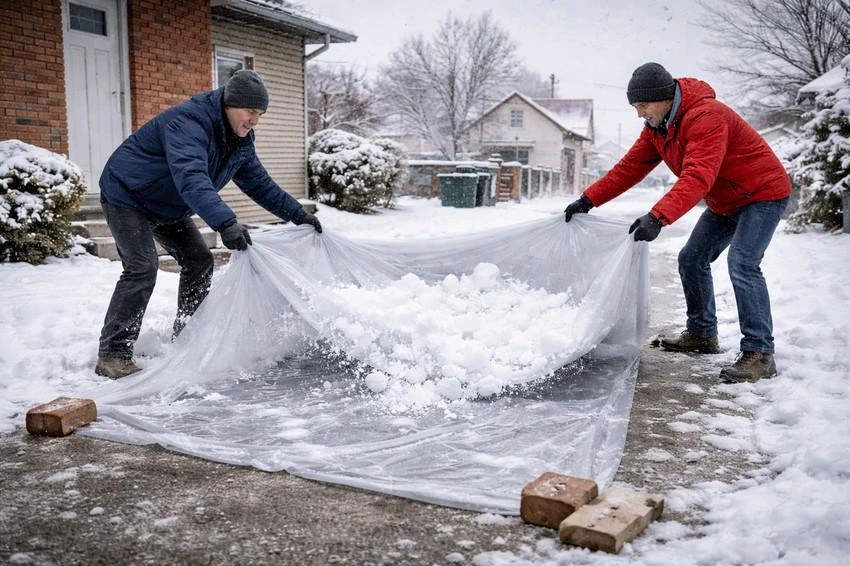
Tired of shoveling the same driveway, steps or windshield after every storm? A snow tarp lets you skip most of it. A snow tarp is a large, waterproof tarp you lay down before the snow falls, then drag or lift away afterward, taking the snow with it.
This guide covers how snow tarps work, where they help most (driveways, cars, steps and decks), how to size and secure one, how to remove a loaded tarp safely, and which tarp grade stands up to freezing weather.
If you're also covering firewood for winter, see our guide to covering firewood.
How a snow tarp works
The idea is simple. The tarp goes down before the storm, the snow lands on the tarp instead of the surface, and when it stops you pull the tarp off to one side. What's left underneath is a clear surface with no packed snow or ice bonded to it.
It works best when:
The snow is light to moderate. A few inches slide off easily. Deep or wet snow gets heavy fast.
You can drag the tarp to a spot where the snow can stay, such as the lawn beside the driveway.
The tarp is tied down so wind doesn't lift it before the snow arrives.
You clear it soon after the storm, before the snow on top freezes into a crust.
Where snow tarps help most
Surface | What the tarp does | Tips |
|---|---|---|
Driveway | Keeps a strip or the whole drive clear for the car | Cover the wheel tracks first if the drive is wide; use several smaller tarps rather than one huge one |
Car or truck | Keeps snow and ice off the windshield and roof | Use soft ties or bungees with covered hooks so you don't scratch the paint; never cover the exhaust of a running vehicle |
Front steps and walkways | Keeps the main path clear and less slippery | Weigh down the edges; remove before anyone walks on it |
Deck or patio | Protects the surface from shovels and ice melt | Pull it off before snow becomes too heavy for the deck |
Equipment and materials | Keeps snow off stored items | Build a slope so meltwater runs off instead of pooling |
How to size a snow tarp
Measure the area you want clear. For a driveway, measure the width and length of the strip you'll drive on. For a car, measure from the front bumper to the back and across the roof and down both sides.
Add a margin on every side. Snow drifts onto the edges, so give yourself extra width beyond the surface you want clear.
Think about weight. A large tarp full of snow can be too heavy to move by hand. Two or three medium tarps that you pull one at a time are easier than one huge sheet.
How to lay and secure a snow tarp
Clear the surface first. Sweep away leaves, grit and any old ice so the tarp lies flat.
Lay the tarp out before the storm, smooth side up, with the grommets along the edges.
Tie down every corner and edge. Run rope or bungee cords through the grommets to stakes, railings or the car's wheels. On pavement, sandbags or water jugs on the edges work well.
Leave a "handle" for removal. Tie a loop of rope to two corners on the side you'll pull from, so you can drag the tarp without kneeling in the snow.
For a car, lay the tarp over the windshield and roof, tuck the edges into the closed doors or tie them to the wheels, and keep it clear of the exhaust.
How to remove a snow-covered tarp
Start soon after the storm. Fresh snow slides; snow that sits for a day can freeze to the top layer.
Untie the edges on all sides except the side you're pulling toward.
Pull slowly from the rope handles, dragging the snow onto the lawn or bank where you want it.
Don't overload yourself. If the tarp won't move, shovel some snow off the top first, or pull a smaller section at a time. Wet snow is heavy, so lift with your legs or get help.
Shake it out and let it dry before folding it away, so it doesn't freeze into a solid bundle.
Common mistakes
One giant tarp. It looks efficient, but once it's covered in snow you may not be able to move it.
Waiting too long. Snow that melts and refreezes on the tarp bonds to it and makes removal much harder.
Thin tarps in deep cold. Lightweight tarps can stiffen and crack in freezing temperatures.
Loose edges. Wind gets under an untied tarp before the snow starts and blows it away.
Covering a running car. Always keep the tailpipe clear.
Which BCP tarp for snow
BCP makes three tarp grades, all 100% waterproof with metal grommets for tying down. Compare them on the BCP tarpaulin page, and see our tarp thickness guide for how tarp weight affects strength.
BCP tarp | Material | Weight | Grommets | Cold rating | Good for snow when |
|---|---|---|---|---|---|
Polyethylene with lamination | 65 to 70 GSM | Metal, every 1 m | Not stated | You want a light tarp for an occasional dusting on steps or a windshield | |
Heavy-duty PE, multi-layer lamination | 110 to 120 GSM | Brass, every 60 cm | Cold-crack resistant to -20°C (-4°F) | You'll use it all winter on a driveway, car or deck | |
HDPE, cross-laminated, PVC coated | 200 to 240 GSM | High-tensile metal, every 50 cm | -40°C to +70°C (-40°F to 158°F) | You get heavy snow, hard freezes or strong wind |
For most homeowners, BCP Tarps Super is the best fit for a winter snow tarp. It stays flexible down to -20°C, resists mildew, and its brass grommets every 60 cm give you plenty of tie-down and pull points. In the coldest regions, or for contractors keeping job sites and material piles clear, BCP Tarps Heavy Duty adds triple-reinforced borders and grommets every 50 cm.
Frequently asked questions
Do snow tarps really work?
Yes, for light to moderate snow. The tarp catches the snow, and you drag it away to leave a clear surface. They are less practical for deep, wet snow, which gets too heavy to pull.
Can you use a regular tarp as a snow tarp?
Yes. Any waterproof tarp with strong grommets can work. A heavier tarp that stays flexible in the cold lasts longer and is easier to pull when it's loaded.
How do you keep a snow tarp from blowing away?
Tie every grommet to stakes, railings or the car's wheels, and add sandbags or water jugs along the edges on pavement. Lay it out shortly before the storm rather than days ahead.
Is it safe to put a tarp over my car in the snow?
Yes, on a parked car. Use soft ties or covered hooks so you don't scratch the paint, and never cover the exhaust of a running vehicle.
What size snow tarp do I need for a driveway?
Measure the strip you drive on and add a margin on each side. For long or wide driveways, several smaller tarps are easier to remove than one large one.
Get the right tarp for winter
Before you order, have ready:
The area you want to keep clear (driveway, car, steps or deck) and its size
How much snow you usually get in a storm
How cold your winters get
How many tarps you'd like to split the area into
Tell us what you're covering and our team will recommend the right grade and size. Or call 877-540-5678.
