Underlayment for Concrete Floors: Laminate, LVP & Wood
Underlayment for Concrete Floors: Laminate, LVP & Wood
Putting laminate, vinyl plank or engineered wood over a concrete slab? The underlayment matters more on concrete than anywhere else. Over a concrete floor, the underlayment's most important job is to stop moisture rising from the slab, so choose one with a built-in vapor barrier.
This guide covers why concrete needs a different underlayment, how to check a slab for moisture, what to look for in an underlayment for concrete, how to install it, and the mistakes that cause problems later.
Choosing for a specific floor? See our guides to underlayment for vinyl plank flooring and underlayment for engineered hardwood.
Why concrete floors need a different underlayment
Concrete looks dry, but slabs can release moisture vapor for a long time, especially slabs on grade and basement floors. That moisture moves up into whatever sits on top. Over time it can:
Cause mold and mildew under the flooring
Make laminate and wood swell or cup at the edges
Weaken click-lock joints and leave gaps
Void a flooring warranty if the maker's moisture rules weren't followed
Concrete is also hard and cold. A good underlayment adds a little cushion, softens footfall noise and smooths over minor surface flaws.
How to check a concrete slab for moisture
Look for signs first. White powdery deposits, dark patches or a musty smell point to moisture.
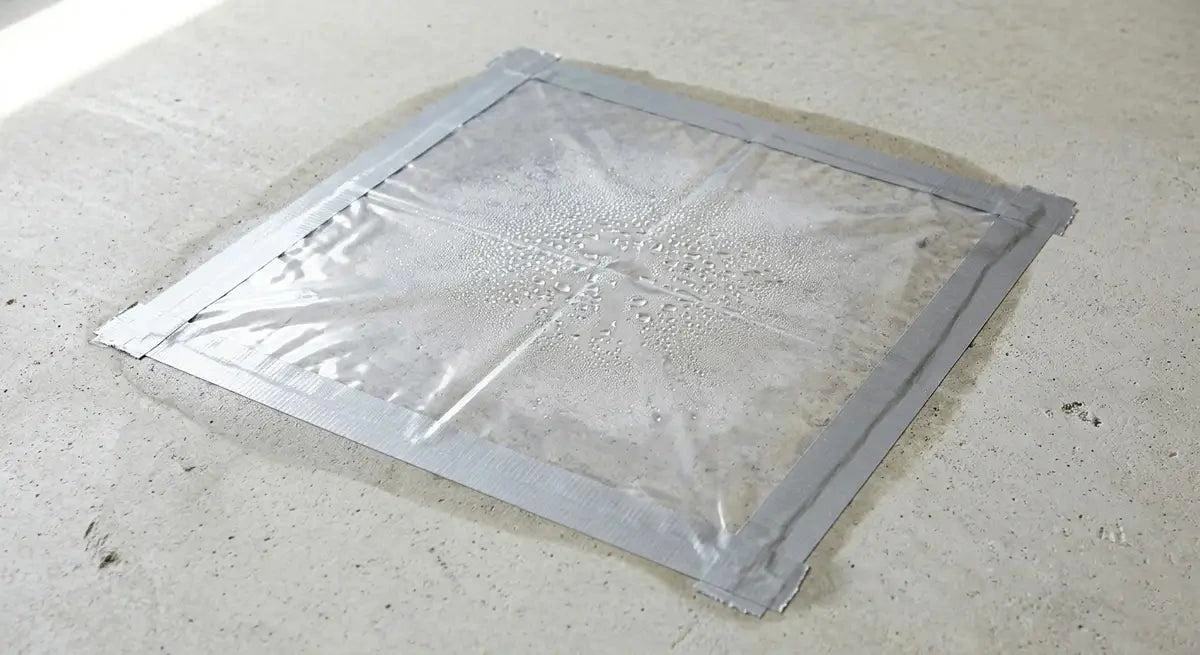
Do a simple plastic-sheet test. Tape a square of clear plastic sheet tightly to the slab on all four edges and leave it for a day or two. Condensation under the plastic, or a darker patch of concrete, means moisture is coming up.
Follow your flooring maker's limits. Most flooring makers set moisture limits for concrete and name the test they accept. For a new slab or a basement with known damp, a professional moisture test is worth it.
Fix water problems first. An underlayment's vapor barrier stops vapor. It won't fix standing water, leaks or a slab that floods.
What to look for in an underlayment for concrete
Feature | Why it matters on concrete |
|---|---|
Integrated vapor barrier | Stops slab moisture reaching the flooring; the single most important feature |
Mold and mildew resistance | Protects the space between the slab and the floor |
Sound reduction | Concrete reflects impact noise; underlayment softens it |
Thin, dense profile | Supports click-lock joints without making the floor feel bouncy |
Radiant heat compatibility | Needed if the slab has underfloor heating |
Floor-type match | Must suit your flooring: laminate, LVP or engineered wood |
What an underlayment won't do
It won't level a slab. Dips and humps need grinding or a leveling compound before the underlayment goes down. That leveling step is part of slab prep, not the underlayment.
It isn't for tile. Ceramic and porcelain tile over concrete use different systems. The underlayment in this guide is for floating floors.
It isn't for glue-down floors. Glue-down vinyl and wood are bonded to the slab and follow the adhesive maker's moisture system instead.
How to install underlayment on a concrete floor
Clean the slab. Sweep and vacuum. Remove paint drips, adhesive and anything that sticks up.
Check that it's flat and dry. Fill cracks and low spots, grind high spots, and let any patching dry fully.
Roll out the underlayment with the vapor barrier side facing up, or as the product instructions say.
Overlap or butt the seams as directed and tape them with moisture-resistant tape so there are no gaps for vapor to pass.
Run it slightly up the walls if the product calls for it, and trim after the floor is down.
Don't puncture the vapor barrier while you work. Keep sharp tools and heavy boxes off it.
Install the flooring as a floating floor on top, leaving the expansion gap your flooring maker specifies around the edges.
Basements and slabs on grade
Basements and ground-level slabs are where moisture problems show up most. In these rooms:
Use an underlayment with a built-in vapor barrier, not plain foam.
Choose a flooring type the maker rates for below-grade use. Many laminates and LVP products are; some solid wood is not.
Keep the room's humidity under control with good ventilation or a dehumidifier.
Common mistakes
Plain foam on concrete. Foam without a vapor barrier does nothing to stop slab moisture.
Untaped seams. Every gap in the barrier is a path for vapor.
Skipping the moisture check. A floor that fails from moisture usually fails slowly, and the warranty may not cover it.
Expecting the underlayment to fix an uneven slab. Level first.
Doubling up. If your flooring has an attached pad, check the maker's rules before adding another underlayment.
BCP SilentShield for concrete floors
BCP SilentShield Floor Underlay is made for floating floors over concrete or wood subfloors. Its integrated vapor barrier film blocks vapor rising through concrete slabs or damp subfloors, and its built-in antimicrobial properties resist mold and mildew under the floor.
Feature | BCP SilentShield Floor Underlay |
|---|---|
Material | High-density foam or cross-linked polyethylene |
Thickness | 2 mm to 3 mm |
Moisture barrier | Yes, integrated vapor barrier film |
Sound rating | IIC ≥ 70, STC ≥ 65 (varies by floor type) |
Floor compatibility | Laminate, LVP/LVT, engineered hardwood, floating floors |
Radiant heat | Compatible with underfloor heating |
Roll sizes | 3' x 30' (90 sq ft) and 4' x 100' (400 sq ft) |
To install it, roll it out with the vapor barrier side facing up, overlap the seams 2 to 4 inches, and seal them with moisture-resistant tape. Then float the flooring directly on top.
Frequently asked questions
Do you need underlayment on a concrete floor?
For laminate, vinyl plank and engineered wood floating floors, yes. On concrete, an underlayment with a vapor barrier protects the floor from slab moisture and adds cushion and sound reduction. Some LVP has an attached pad; check the maker's rules before adding another layer.
What is the best underlayment for a concrete floor?
One with an integrated vapor barrier, mold resistance and a thin, dense build that suits your flooring type. If the slab has radiant heat, make sure the underlayment is rated for it.
Do I need a separate vapor barrier under underlayment on concrete?
Not if the underlayment has a built-in vapor barrier and you tape the seams. If yours doesn't, you need a separate vapor barrier film or a different underlayment. Always follow your flooring maker's instructions.
Which side of the underlayment faces up on concrete?
For SilentShield, the vapor barrier side faces up. Other products may differ, so follow the instructions printed on the roll.
Can I put underlayment over a concrete basement floor?
Yes, as long as the slab passes a moisture check and there's no standing water or leaks. Use an underlayment with a vapor barrier and a flooring type rated for below-grade rooms.
Get the right underlayment for your slab
Before you order, have ready:
The room's square footage
Your flooring type (laminate, LVP or engineered wood)
Whether the slab is in a basement, on grade or upstairs
Whether the slab has radiant heating
Request a floor underlay quote
Send us your room size and flooring type and our team will work out how many rolls you need. Or call 877-540-5678.
