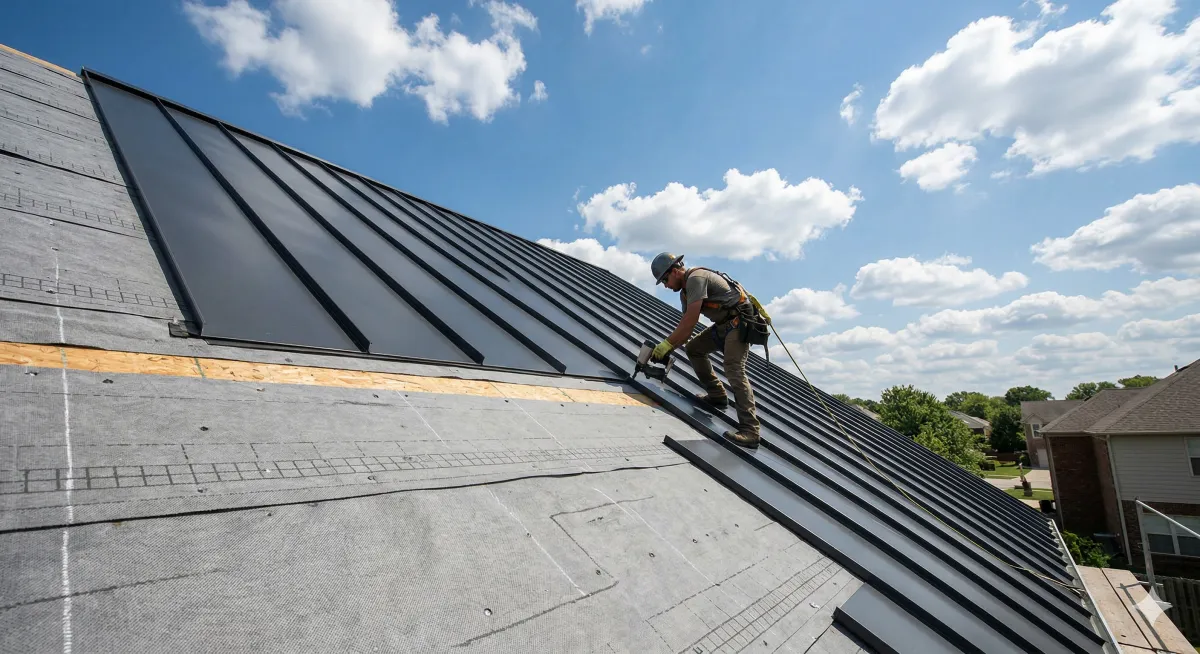
Synthetic Underlayment for Metal Roofing Explained
Do You Need Synthetic Underlayment for a Metal Roof? What Every Contractor Should Know
Metal roofing is built to last 50 years or more. It handles wind, resists fire, and stands up to weather that would destroy asphalt shingles. But all of that long term performance depends on one hidden layer: the underlayment.
Choosing the wrong underlayment under a metal roof creates problems that are invisible from the outside but expensive to fix. Condensation buildup, heat damage to the barrier material, and trapped moisture against the deck all happen silently under those metal panels.
We covered this topic at a high level in our best underlayment for metal roofs guide. This blog goes deeper into why synthetic is the right answer for metal roofing and what specific specs contractors and homeowners should look for.
Why Metal Roofs Are Different
Metal roofing creates conditions that no other roofing material produces. Understanding these conditions is the key to choosing the right underlayment.
Extreme heat transfer. Metal conducts heat far more efficiently than asphalt, tile, or slate. On a hot day, the surface of a metal roof can exceed 160 degrees Fahrenheit. That heat transfers directly through the panel to the underlayment below. Any barrier material that softens, sticks, or breaks down under heat will fail faster under metal than under any other roofing type.
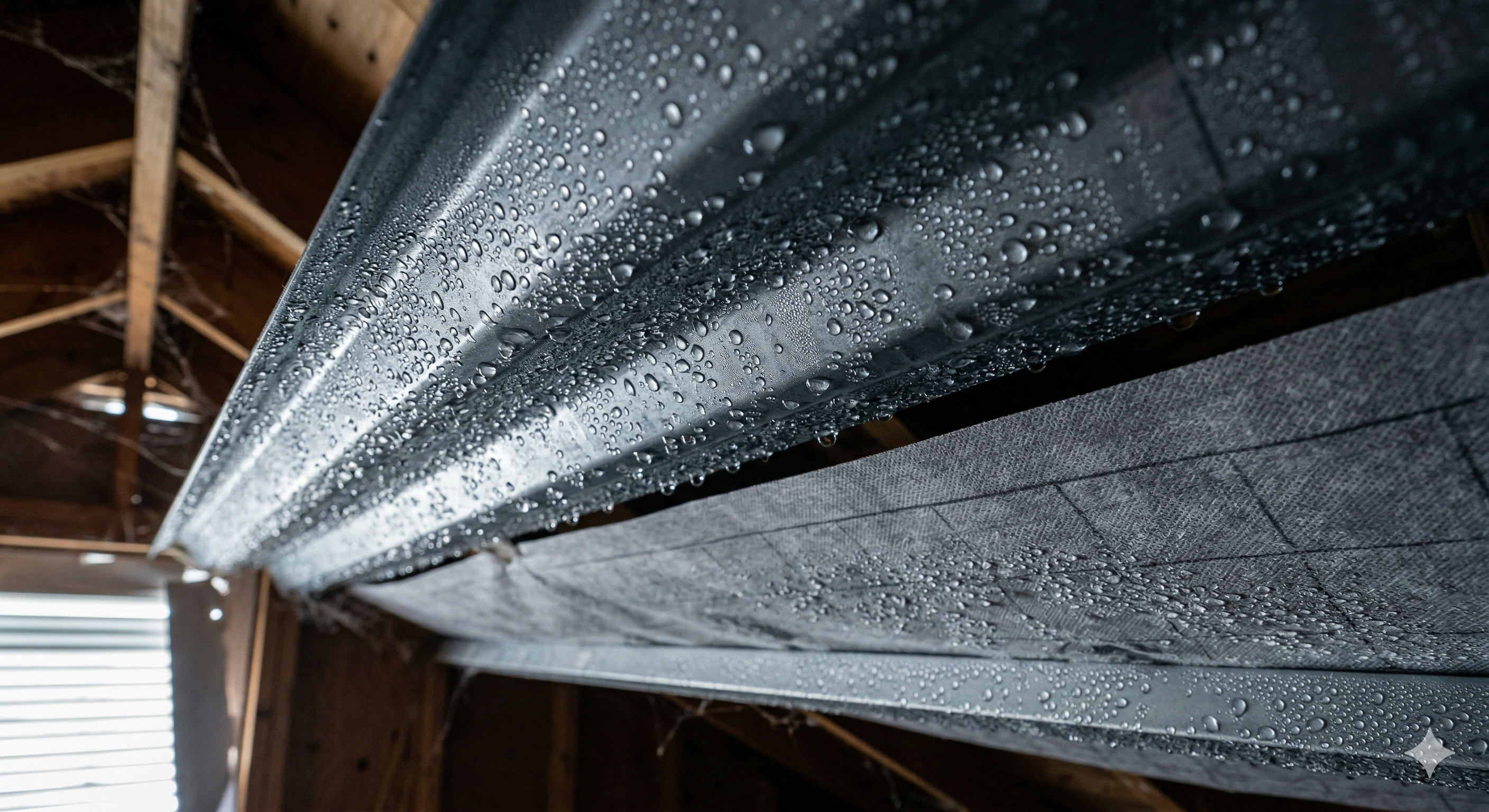
Condensation risk. When warm, humid air from inside the building meets the cold underside of a metal panel, moisture condenses on the surface. This is especially common in the early morning when temperatures shift. If the underlayment traps that moisture against the deck instead of letting it evaporate, you get wood rot and mold growth that nobody sees until it is too late.
Thermal cycling. Metal panels expand when they heat up during the day and contract when they cool down at night. This constant movement creates stress on any underlayment that is bonded to the panel. If the barrier sticks to the metal (which happens with asphalt based products in heat), it gets pulled and torn with each expansion cycle.
Water entry points. Metal roofing systems have fastener penetrations, panel overlaps, and seam connections where wind driven rain can find its way underneath. The underlayment needs to manage water that enters at multiple points and moves laterally across the deck before draining out.
Why Felt Fails Under Metal
Felt paper has been used as roof underlayment for decades, and it still works acceptably under asphalt shingles in moderate conditions. But under metal roofing, it creates real problems.
The asphalt in felt softens at the temperatures metal roofs regularly produce. When hot felt sticks to the underside of metal panels, it tears apart during thermal expansion. This creates gaps in the moisture barrier that are completely hidden once the roof is finished.
Felt absorbs moisture. Under a metal roof where condensation is already a daily concern, an underlayment that holds water against the deck is the opposite of what you need.
Felt also degrades quickly in UV if left exposed during installation. Metal roof projects take longer than shingle jobs because of the precision required for panel alignment, flashing, and trim work. Extended exposure destroys felt before the metal even goes on.
Most metal roofing manufacturers do not recommend felt for their products. Some explicitly warn that using felt will void the warranty. This alone should settle the debate for most projects.
Why Synthetic Is the Right Choice
Synthetic underlayment is made from engineered polypropylene or polyethylene. It was built to solve every problem that felt creates, and it performs especially well under metal roofing.
Heat resistance. Synthetic contains no asphalt, so it will not soften or bond to metal panels at high temperatures. Quality synthetic products are rated for temperatures well above what metal roofs generate, even in the hottest climates.
Zero moisture absorption. Synthetic does not soak up water. Morning condensation on the underside of metal panels will not get absorbed into the underlayment and trapped against the deck. The moisture evaporates naturally as the roof heats up during the day.
Lifespan that matches metal. A good synthetic underlayment lasts 40 years or more, which matches the expected lifespan of a metal roof. Felt lasts 15 to 20 years at best, meaning it will fail decades before the metal above it.
Tear and puncture resistance. Metal roof installations involve significant foot traffic, tool handling, and panel maneuvering on the underlayment surface. Synthetic resists tearing from all of this far better than felt.
Non slip surface. Metal roof work often happens on steeper pitches. The textured surface of synthetic underlayment gives workers better footing during installation, which is both a productivity and safety advantage.
What Specs Matter for Metal Roof Underlayment
Not all synthetic underlayments are the same, and metal roofs demand specific performance characteristics. Here is what to check before buying.
Temperature rating. This is the most important spec for metal roofing. Look for underlayment rated to at least 220 degrees Fahrenheit. For standing seam metal roofs, exposed fastener panels, or dark colored metal in hot climates, 240 degrees or higher is the safer choice.
UV exposure rating. Metal roof installations take longer than shingle jobs. Your underlayment may sit exposed on the deck for weeks or months before all the panels are in place. Choose a product rated for at least 90 days of UV exposure. For extended timelines, 180 days is better.
Vapor permeability. The underlayment must allow moisture vapor to pass through so condensation can escape from the deck. This is critical under metal where condensation is a daily occurrence. Check that the product's perm rating meets your local building code.
Tear resistance. Look for products with ASTM D4533 tear resistance of at least 15 pounds. For heavy duty metal roof applications, 25 pounds or higher is preferred.
Coverage per roll. Synthetic rolls cover 4 to 10 times more area than felt. More coverage per roll means fewer seams, faster installation, and less labor cost. On a large metal roof project, this difference adds up quickly.
At BCP Inc., our RoofLayer Premium is designed for demanding applications like metal roofing. It offers high temperature tolerance, extended UV resistance, and the tear strength needed for real job site conditions. For standard metal roof projects where extreme heat is not a major factor, RoofLayer Standard delivers reliable performance at a lower price point.
Combining Synthetic and Peel and Stick for Metal Roofs
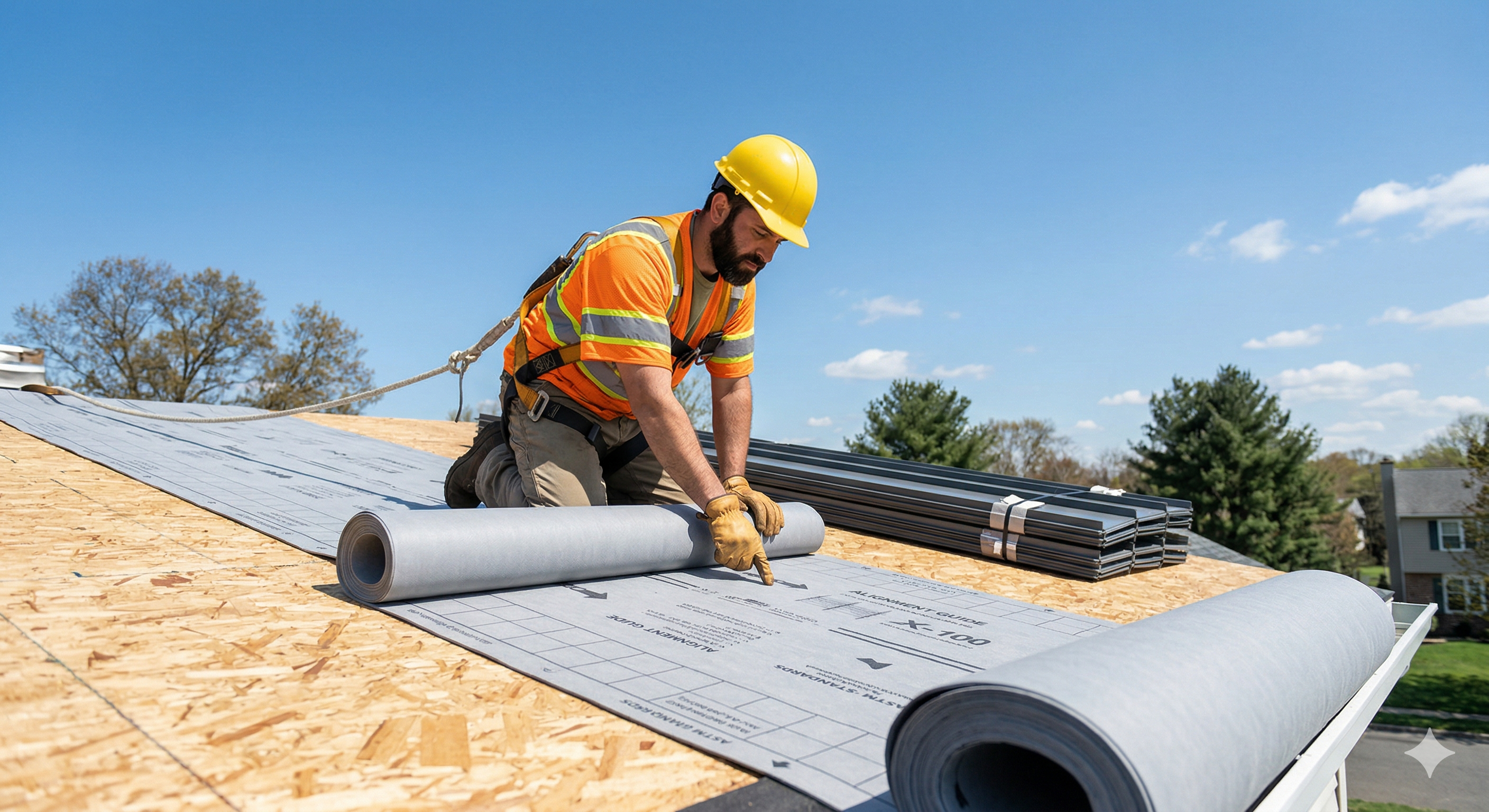
The most effective underlayment strategy for metal roofing uses two products working together.
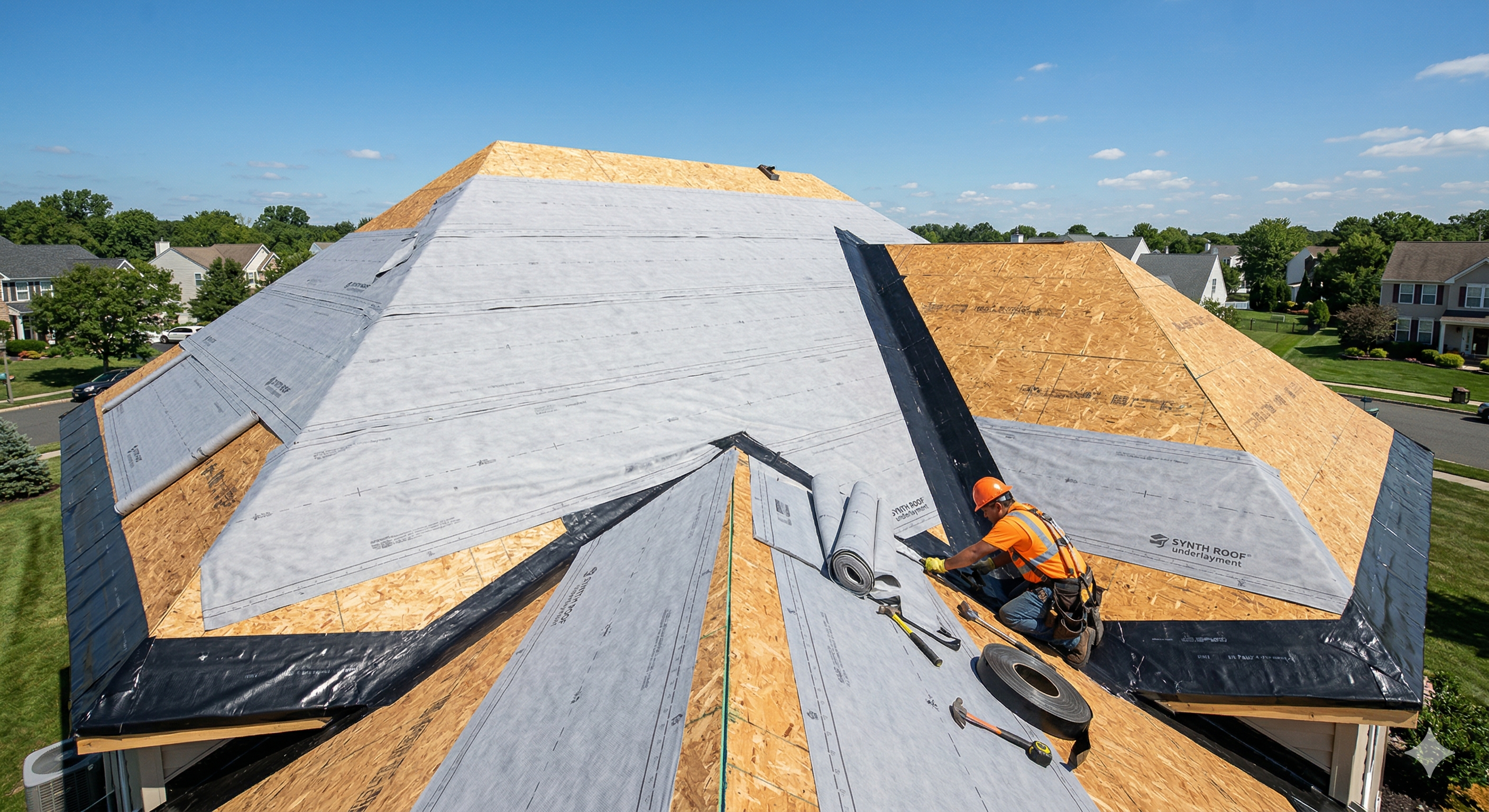
Peel and stick (ice and water shield) goes at the eaves, in valleys, and around all penetrations like chimneys, skylights, and vent pipes. Its self adhesive backing bonds to the deck and creates a fully waterproof seal that holds tight around screw and nail penetrations.
This is especially important on exposed fastener metal roofs where the rubber gaskets on screws can degrade over time. The peel and stick beneath seals around the fastener shaft even if the gasket above eventually fails.
Critical note: If you use peel and stick under a metal roof, it must be a "high temperature" product rated to at least 240 degrees Fahrenheit. Standard temperature peel and stick can soften and fail under the heat that metal generates. Always check the product spec sheet before purchasing.
Synthetic underlayment covers the rest of the deck, overlapping the edges of the peel and stick sections. This gives you waterproof protection in the high risk zones and moisture resistant coverage across the full roof area.
What About Existing Metal Roof Replacements?
If you are replacing an old metal roof, the underlayment decision is just as important as on a new build.
Remove the old metal panels and inspect the existing underlayment and deck thoroughly. If the old underlayment is felt (which it often is on older metal roofs), remove it completely. Check the deck for rot, mold, soft spots, and moisture damage. Replace any damaged sections before installing new underlayment.
Do not install new metal over old, degraded felt. The problems that the failed felt caused will continue and get worse under the new roof.
Install fresh synthetic underlayment on the clean deck, add peel and stick in the eaves, valleys, and around penetrations, and then install the new metal panels. This gives your replacement roof the same quality foundation as a brand new build.
Frequently Asked Questions
Is synthetic underlayment required for a metal roof? Most metal roofing manufacturers recommend or require synthetic underlayment for their warranty to be valid. Even where felt is technically allowed by building code, synthetic is the smarter choice for the long term performance of a metal roof.
Can I use regular peel and stick under metal? Only if it is rated for high temperatures (240 degrees Fahrenheit or higher). Standard peel and stick will soften under the heat that metal roofs produce and can fail. Always use a product specifically labeled as "high temp" for metal roofing.
How much does synthetic underlayment add to a metal roof project? Synthetic underlayment typically costs $0.15 to $0.25 per square foot. On a 2,000 square foot roof, that is roughly $300 to $500 for materials. Given that a metal roof costs $15,000 to $30,000 or more, the underlayment is a small fraction of the total investment.
Does the underlayment color matter under metal? Gray synthetic absorbs less heat than black felt, which is a minor advantage during installation. Once the metal panels are on, the underlayment color has no functional impact.
How long can synthetic underlayment be exposed before metal panels go on? Most synthetic products handle 90 to 180 days of UV exposure. Metal roof installations can take weeks or months, so check the UV rating and plan accordingly. If the timeline exceeds the rating, cover exposed sections with temporary tarps until panels are ready.
Build Your Metal Roof on the Right Foundation
A metal roof is a premium investment that should last a lifetime. The underlayment beneath it needs to match that commitment. Synthetic underlayment gives you the heat resistance, moisture management, and durability that metal roofing demands, while felt falls short in every category that matters.
At BCP Inc., our synthetic roof underlayment products are built for the toughest roofing applications, including metal. From RoofLayer Standard for everyday metal roof projects to RoofLayer Premium for high performance installations, we have the right product for your job.
Need help choosing? Call us at 877-540-5678 or visit bcpinc.us to compare products and request a quote.
