Tile Roof Underlayment: Felt vs Synthetic & Replacement
Tile Roof Underlayment: Felt vs Synthetic & Replacement
Clay and concrete tiles are some of the longest-lasting roofing materials you can buy, but the tile isn't what keeps water out of the house on its own. On a tile roof, the underlayment is the real waterproofing layer: the tiles shed most of the rain and block the sun, and the underlayment beneath them catches the water that gets past.
This guide covers what tile roof underlayment does, felt vs synthetic options, what to look for on clay and concrete tile, signs the underlayment needs replacing, what drives replacement cost, and how ventilation fits in.
If you're comparing underlayment types in general, start with our synthetic vs felt roof underlayment guide.
Why underlayment matters more on a tile roof
Tile roofs work as a two-layer system.
The tiles shed most of the rain, take the UV and protect the layers below from impact.
The underlayment handles the water that blows under the tiles, runs through gaps at overlaps, or backs up at valleys and penetrations.
Tiles overlap, but they don't seal to each other the way shingles do. Wind-driven rain and debris can get under them, so the underlayment works harder on a tile roof than on many other roof types. It is also the layer that tends to wear out first, which is why tile roofs are often re-laid on new underlayment while the original tiles are reused.
Felt vs synthetic underlayment for tile roofs
Asphalt felt | Synthetic underlayment | |
|---|---|---|
Weight | Heavy rolls | Lightweight rolls |
Tear resistance | Can tear under foot traffic and tile loading | High tear strength |
Behavior in heat | Can dry out and get brittle under hot tiles | Polymer-based, made for heat and UV |
Exposure before tiling | Short | Rated by the maker, often weeks to months |
Walkability | Can be slick when wet | Many have slip-resistant surfaces |
Felt has a long history on tile roofs. Synthetic underlayment has become a common choice because tile installs put extra stress on the underlayment: heavy tiles are loaded onto the roof and walked over, and the underlayment may sit exposed for a while before the tile goes on.
What to look for in tile roof underlayment
Tear strength. Tile is heavy, and crews walk the roof while loading it. A tear-resistant underlayment survives the install.
UV exposure rating. Tiles often go on days or weeks after the underlayment. Check how long the product can stay exposed.
Heat resistance. The space under tile gets hot in sunny climates. Choose a product built for heat.
Slip resistance. Steep tile roofs need a surface crews can walk on safely.
Sealing around fasteners. Tile roofs often have battens and many fasteners. Underlayment that seals around them reduces leak paths.
Manufacturer and code requirements. Always check what the tile maker and your local building code require for underlayment type and number of layers.
Clay tile vs concrete tile
Both are installed over underlayment, and the underlayment priorities are similar. The main differences:
Concrete tile is usually heavier, so tear strength during loading and foot traffic matters even more.
Clay tile is often used in hot, sunny climates, so heat and UV resistance under the tile are key.
In both cases the underlayment, flashing at valleys and penetrations, and ventilation do most of the long-term waterproofing work.
Signs your tile roof underlayment needs replacing
Leaks or water stains inside, even though no tiles look broken
Damp or stained decking visible from the attic
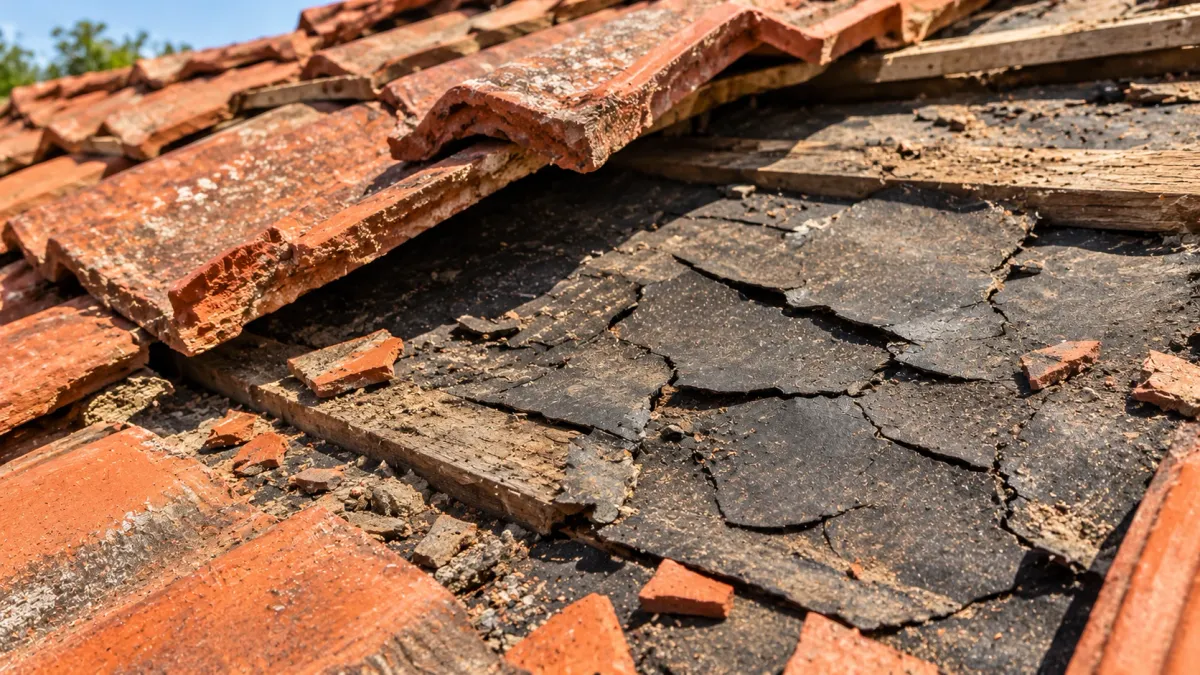
Brittle, cracked or crumbling underlayment where a tile has slipped or been lifted
Sagging or uneven tile lines, which can point to battens or decking damaged by water
Previous patch repairs that keep failing in the same area
A roofer can lift a few tiles to check the underlayment's condition without removing the whole roof.
What drives the cost to replace tile roof underlayment
Replacing underlayment on a tile roof usually means removing the tiles, replacing the underlayment (and any damaged battens or decking), then re-laying the tiles. The main cost drivers are:
Roof size and pitch. Bigger and steeper roofs take more labor and safety setup.
Tile handling. Removing, stacking and re-setting tiles is labor-intensive, and some tiles break.
Decking and batten repairs found once the old underlayment comes off.
Underlayment choice. Premium synthetic costs more per roll than felt, but adds tear strength and longer exposure time.
Flashing and ventilation upgrades done at the same time.
Because tile removal is the biggest labor cost, it pays to choose an underlayment you won't need to replace again soon.
Ventilation under tile
Heat and moisture trapped under a tile roof shorten the life of the underlayment and the decking. Good attic ventilation, plus airflow under the tiles where the roof design allows, helps keep the underlayment dry and cooler. Our high-temp vs standard ice and water shield guide covers where a heat-rated membrane makes sense on a roof.
BCP products for tile roofs
The BCP roof underlayment range is made from high-strength synthetic materials and is compatible with asphalt shingles, metal roofing and clay tiles.
BCP RoofLayer | Weight | UV exposure | Tear strength | Application |
|---|---|---|---|---|
Lightweight | 60 days | Moderate | Residential | |
Medium | 90 days | High | All roofing types | |
Medium-heavy | 120 days | Extra high | Steep-slope and commercial | |
Heavy | 180 days | Maximum | High-end applications |
For tile roofs, the heavier grades fit the job best. RoofLayer Standard Plus adds a high-traction surface for steep slopes, impact resistance during construction and self-sealing around fasteners, in 4 ft x 250 ft rolls (1,000 sq ft). RoofLayer Premium adds maximum tear strength, a premium grip surface, self-healing around penetrations and up to 180 days of UV exposure, also in 4 ft x 250 ft rolls.
For ventilation, BCP Batten Vent is made from UV-stabilized copolymer for roofs including tile, metal, cedar shake and architectural shingles. It provides 14 square inches of net free area per linear foot in 3 ft sections, can be set up for intake, exhaust or cross-ventilation, and carries a 25-year limited warranty.
Frequently asked questions
What underlayment is used under tile roofs?
Both asphalt felt and synthetic underlayment are used. Synthetic is a common choice because it resists tearing during tile loading, handles heat under the tiles and can stay exposed longer before the tile goes on. Check your tile maker's and local code requirements.
Is synthetic underlayment good for tile roofs?
Yes. Look for high tear strength, a long UV exposure rating, slip resistance and good heat resistance. BCP's RoofLayer underlayments are compatible with clay tile roofs.
Can you replace underlayment without replacing the tiles?
Often, yes. Roofers can remove the tiles, replace the underlayment and any damaged battens or decking, and then re-lay the original tiles, replacing any that break.
Why does tile roof underlayment fail before the tiles?
The tiles take the sun and impact, but the underlayment handles the water that gets past them and sits in the heat beneath. Over time it can dry out, crack or tear, while the tiles above still look fine.
Do tile roofs need ventilation?
Yes. Ventilation keeps heat and moisture from building up under the roof deck, which helps the underlayment and decking last longer.
Get the right underlayment for your tile roof
Before you order, have ready:
Roof area in square feet and the roof pitch
Tile type (clay or concrete)
How long the underlayment will stay exposed before tiling
Your local climate and any code or tile maker requirements
Whether you also need ventilation products
Request a roof underlayment quote
Send us your project details and our team will recommend the right RoofLayer grade and quantity. Or call 877-540-5678.
