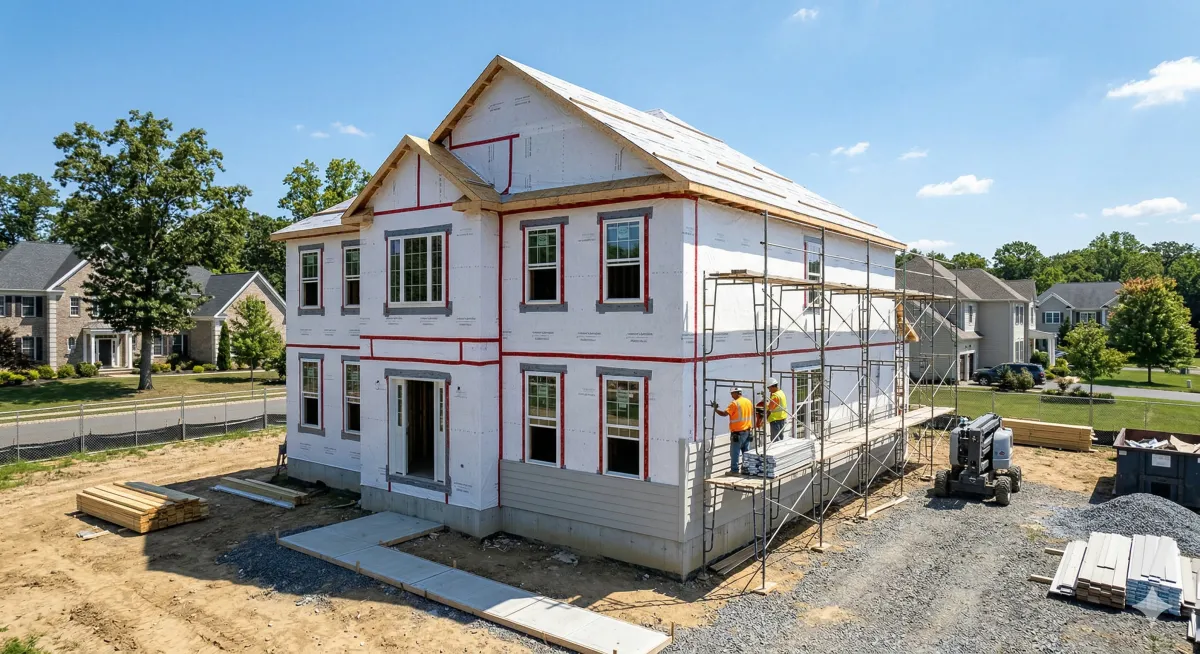
Weather Resistant Barriers: What Every Building Needs
Weather Resistant Barriers: What They Are and Why Every Building Needs One
Behind every finished exterior wall, there is a hidden layer doing critical work. It stops rain from soaking into the wood framing. It blocks air from leaking through the wall cavity. And it lets moisture vapor escape so mold cannot take hold inside.
That layer is called a weather resistant barrier, and it is one of the most important parts of any building's exterior envelope. If you are building, renovating, or re-siding a home or commercial structure, understanding what a weather resistant barrier does and which type to use can mean the difference between a wall that lasts decades and one that rots from the inside out.
What Is a Weather Resistant Barrier?
A weather resistant barrier (WRB) is a material installed on the outside of wall sheathing, between the structural panels (plywood or OSB) and the exterior cladding (siding, brick, stone, or stucco). Its job is to protect the wall assembly from water infiltration and air leaks while still allowing moisture vapor to escape from inside the wall.
The term "weather resistant barrier" is the official building code language for this layer. In everyday construction, people most often call it house wrap, which is the most common type of WRB used in residential construction.
But house wrap is just one form of weather resistant barrier. There are several types, and the right choice depends on your building type, cladding material, climate, and project requirements.
A properly installed WRB does three things at once.
Blocks liquid water. Wind driven rain is the primary threat to exterior walls. Rain hits the siding and finds its way through joints, fastener holes, and cladding connections. The WRB catches that water and directs it downward and out of the wall system before it reaches the sheathing.
Reduces air infiltration. Tiny gaps in sheathing panels and around framing connections allow outside air to flow into the wall cavity. In winter, that means cold drafts. In summer, that means hot, humid air pushing into the building. A sealed WRB closes those gaps and improves the building's overall energy efficiency.
Allows vapor to escape. Moisture from cooking, bathing, and everyday living migrates outward through walls. A WRB must be vapor permeable, meaning it lets that moisture vapor pass through to the outside. If the barrier traps vapor inside the wall, condensation forms on the sheathing and leads to mold, rot, and structural damage.
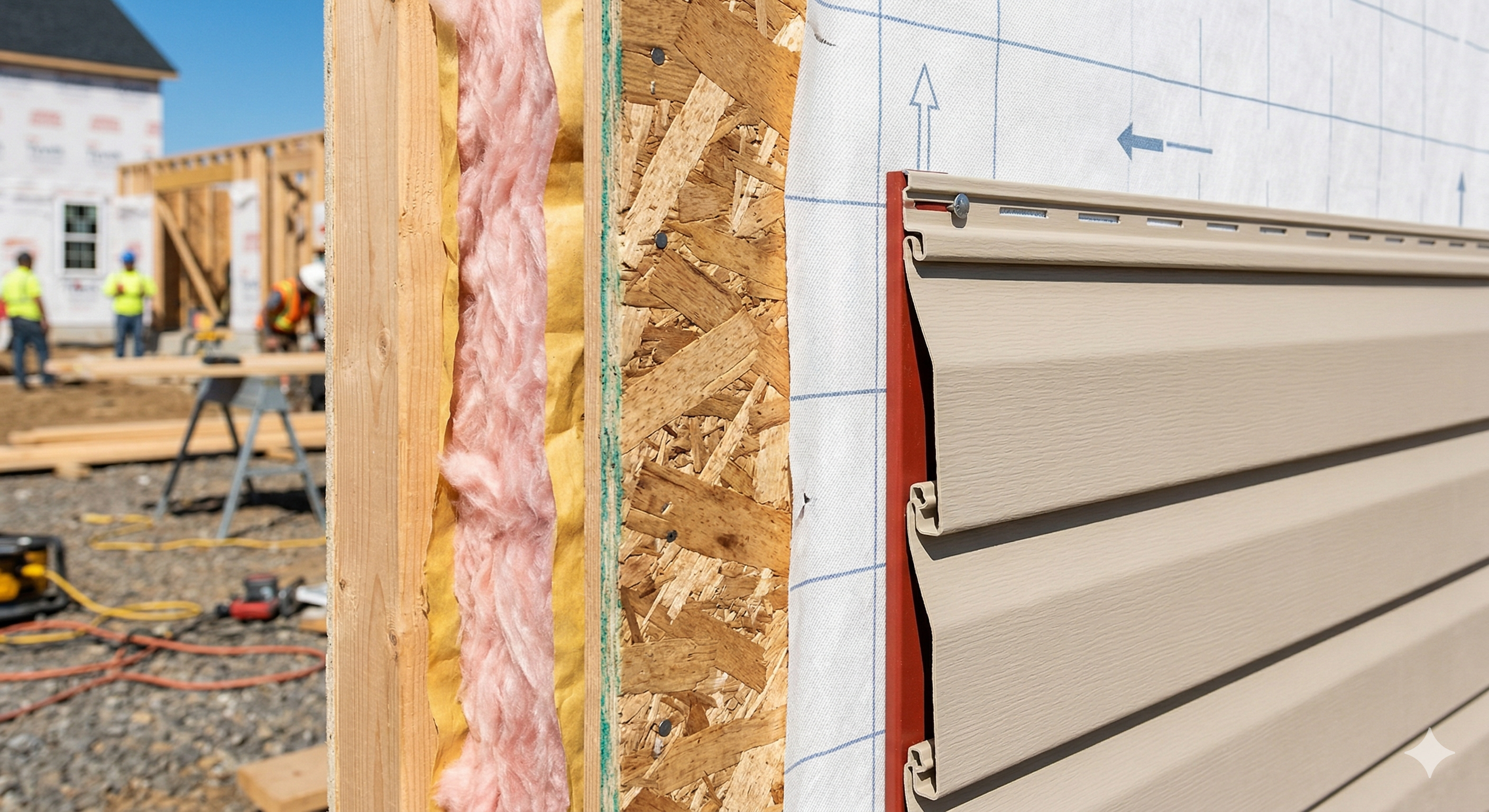
Types of Weather Resistant Barriers
There are four main types of WRB used in construction today.
Synthetic House Wrap
This is the most widely used WRB in residential and light commercial construction. It is a sheet material made from woven or spun polypropylene or polyethylene that is wrapped around the exterior of the building over the sheathing.
Synthetic house wrap is lightweight, tear resistant, vapor permeable, and easy to install. It comes in large rolls that cover more wall area with fewer seams. Seams are taped with manufacturer approved tape to create a continuous sealed barrier.
At BCP Inc., our WrapSecure house wrap is built for this exact application. It delivers reliable water holdout, strong tear resistance, and good vapor permeability for both residential and commercial projects.
Asphalt Saturated Felt (Building Paper)
Building paper is the traditional WRB that was used before synthetic house wrap was available. It is made from paper or fiberglass saturated with asphalt to create a water resistant sheet, similar to the felt underlayment used on roofs.
Building paper still meets code requirements in many areas, but it has significant drawbacks compared to modern synthetics. It tears easily, absorbs moisture, wrinkles when wet, and degrades in UV if left exposed. Most builders have moved away from building paper in favor of synthetic house wrap for better performance and easier installation.
Liquid Applied WRB
Liquid applied barriers are sprayed or rolled onto the sheathing surface as a coating. They cure to form a seamless, continuous membrane with no joints, seams, or laps to worry about.
Liquid applied WRBs work especially well on complex wall geometries where sheet products are difficult to install cleanly. They are popular on commercial buildings and high performance residential projects. The main drawbacks are higher material and labor costs compared to sheet wraps.
Self Adhered Sheet Membrane
Self adhered membranes are peel and stick sheets similar to the ice and water shield used on roofs. They bond directly to the sheathing and create a fully waterproof seal.
These are used in high performance building assemblies and in areas with extreme weather exposure. They cost more than house wrap but provide the highest level of water and air resistance. They are often used on below grade walls, behind stone and stucco cladding, and in flood zones.
Why the Building Envelope Matters
The building envelope is the complete boundary between the inside of a building and the outside environment. It includes the roof, walls, foundation, windows, and doors. The weather resistant barrier is one of the most critical components of the wall portion of this envelope.
A tight, well sealed building envelope keeps conditioned air inside (saving energy), keeps unconditioned air outside (improving comfort), and prevents moisture from entering the wall assembly (protecting the structure).
When the WRB fails or is installed incorrectly, the consequences show up slowly but are expensive to fix. Water damage behind walls can go undetected for years. Mold grows in the dark, damp wall cavity. Framing members weaken as wood rot progresses. By the time visible signs appear (bubbling paint, musty odors, soft drywall), the damage is often extensive.
This is why proper material selection and installation of the WRB is so important. It is not a place to cut costs.
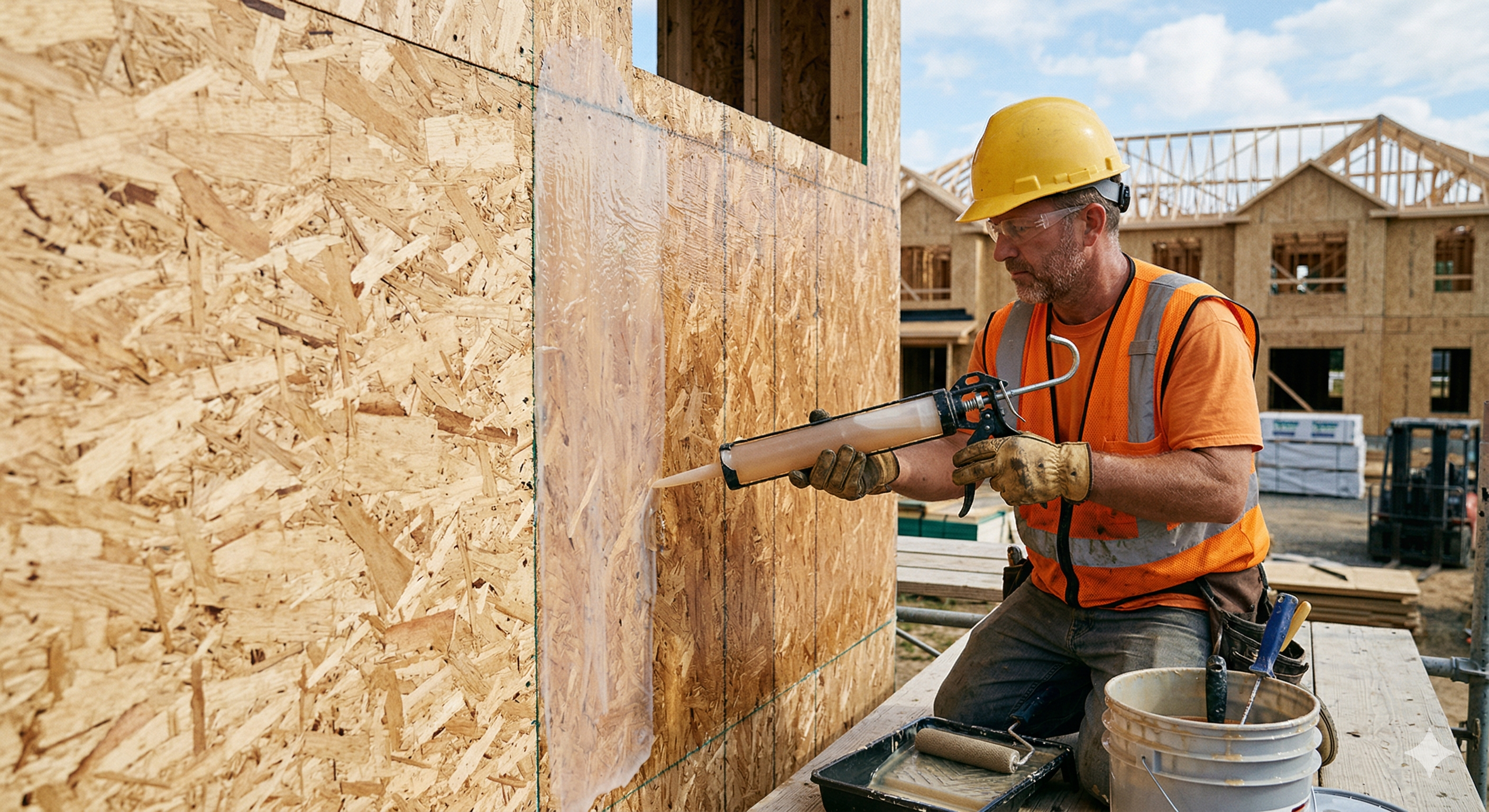
How Weather Resistant Barriers Work With Different Cladding
Different exterior cladding materials interact with the WRB in different ways.
Vinyl siding is the most forgiving pairing. Vinyl's profile naturally creates a small air gap between the siding and the WRB, allowing some drainage and drying. A standard synthetic house wrap provides all the protection most vinyl siding installations need.
Fiber cement siding is installed with tighter joints and face nailed fasteners. The WRB is the primary backup moisture barrier since fiber cement does not allow much drainage behind it. A quality house wrap with strong water holdout is essential.
Wood siding needs a WRB with high vapor permeability because wood traps and releases moisture more than other cladding types. Trapped moisture behind wood siding causes paint failure and rot faster than with any other material.
Stucco is applied directly against the WRB in many assemblies, which means the barrier is in constant contact with a damp material during curing. A drainage mat or rain screen between the WRB and the stucco is recommended to prevent moisture from being trapped against the barrier.
Brick and stone veneer are heavy claddings that require a drainage plane behind them. Most brick veneer assemblies include a 1 inch air space between the veneer and the WRB to allow water to drain and air to circulate.
Building Code Requirements
The International Residential Code (IRC) requires a weather resistant barrier behind exterior cladding on all wood framed residential buildings. The WRB must be water resistant and allow moisture vapor to pass through.
Most local building codes follow the IRC or have their own version of this requirement. Some states and municipalities have additional requirements, especially in hurricane zones, flood zones, and high moisture regions.
The IRC does not specify a particular product. It requires the WRB to meet performance standards for water resistance and vapor permeability. Synthetic house wrap, building paper, liquid applied coatings, and self adhered membranes can all meet these requirements when installed according to manufacturer instructions.
Building inspectors check WRB installation during the framing inspection, before siding goes on. They look for proper overlap direction, sealed seams, correct window and door flashing, and no gaps or tears in the barrier.
Getting the WRB right the first time avoids failed inspections, costly rework, and the headaches that come with tearing off siding to fix a barrier that was installed wrong.
Common WRB Installation Mistakes
Even the best WRB product fails if it is installed wrong. These are the mistakes that cause the most problems.
Reversed overlap. Every horizontal seam must have the upper layer overlapping the lower layer. If the overlap is reversed, water runs behind the barrier instead of over it. This is the single most common installation error. For a detailed walkthrough on proper overlap technique, see our house wrap installation guide.
Untaped seams. Every seam, joint, and patch in the barrier must be sealed with approved tape. Untaped seams are direct entry points for wind driven rain and air leaks.
Wrong flashing at windows and doors. Window and door openings are the highest risk areas for water entry. Flashing must be applied in the correct order (sill, jambs, head) and integrated properly with the WRB. Mistakes here cause the majority of wall water damage claims.
Using the wrong material behind certain cladding. Not every WRB works with every cladding type. Stucco, stone, and adhered masonry veneer can trap moisture against a barrier that is not designed for direct contact. Always verify compatibility between your WRB and your cladding system.
Leaving the WRB exposed too long. Most house wraps have UV exposure limits (30 to 120 days depending on the product). If siding installation is delayed beyond that window, the barrier can degrade and lose its protective properties.
Frequently Asked Questions
Is house wrap the same as a weather resistant barrier? House wrap is the most common type of weather resistant barrier, but WRB is a broader category that also includes building paper, liquid applied coatings, and self adhered membranes. When building codes reference a "weather resistant barrier," house wrap is the most common way to meet that requirement.
Do commercial buildings need weather resistant barriers? Yes. Commercial building codes (IBC) have their own requirements for air and moisture barriers on exterior walls. The specific product and installation details depend on the building type, height, and cladding system.
Can I use plastic sheeting as a WRB? No. Plastic sheeting (like Visqueen) blocks both liquid water and vapor. Trapping vapor inside the wall leads to condensation, mold, and rot. A proper WRB must be vapor permeable to allow moisture to escape outward.
How much does a weather resistant barrier cost? Synthetic house wrap typically costs $0.10 to $0.20 per square foot of wall area. Liquid applied and self adhered options cost more. For most residential projects, house wrap is the most cost effective choice.
Does a WRB replace insulation? No. A WRB manages water and air. Insulation manages heat transfer. They serve different functions and work together as part of the building envelope. Some products combine both functions (like insulated sheathing with an integrated WRB), but most assemblies use separate layers.
Protect Your Building From the Outside In
A weather resistant barrier is not glamorous. Nobody sees it once the siding goes on. But it is working every day to keep your walls dry, your energy bills low, and your building free from hidden moisture damage.
At BCP Inc., our WrapSecure house wrap provides the water resistance, air sealing, and vapor permeability that modern buildings demand. It is trusted by contractors and builders across the country for reliable, code compliant performance.
Ready to order? Call us at 877-540-5678 or visit bcpinc.us to learn more about WrapSecure and request pricing.
