
House Wrap for Vinyl Siding: Why You Need It
House Wrap for Vinyl Siding: Why It Matters and What to Look For
Vinyl siding is the most popular exterior cladding in the United States. It is affordable, low maintenance, and comes in a wide range of colors and styles. But there is something many homeowners do not realize: vinyl siding is not waterproof.
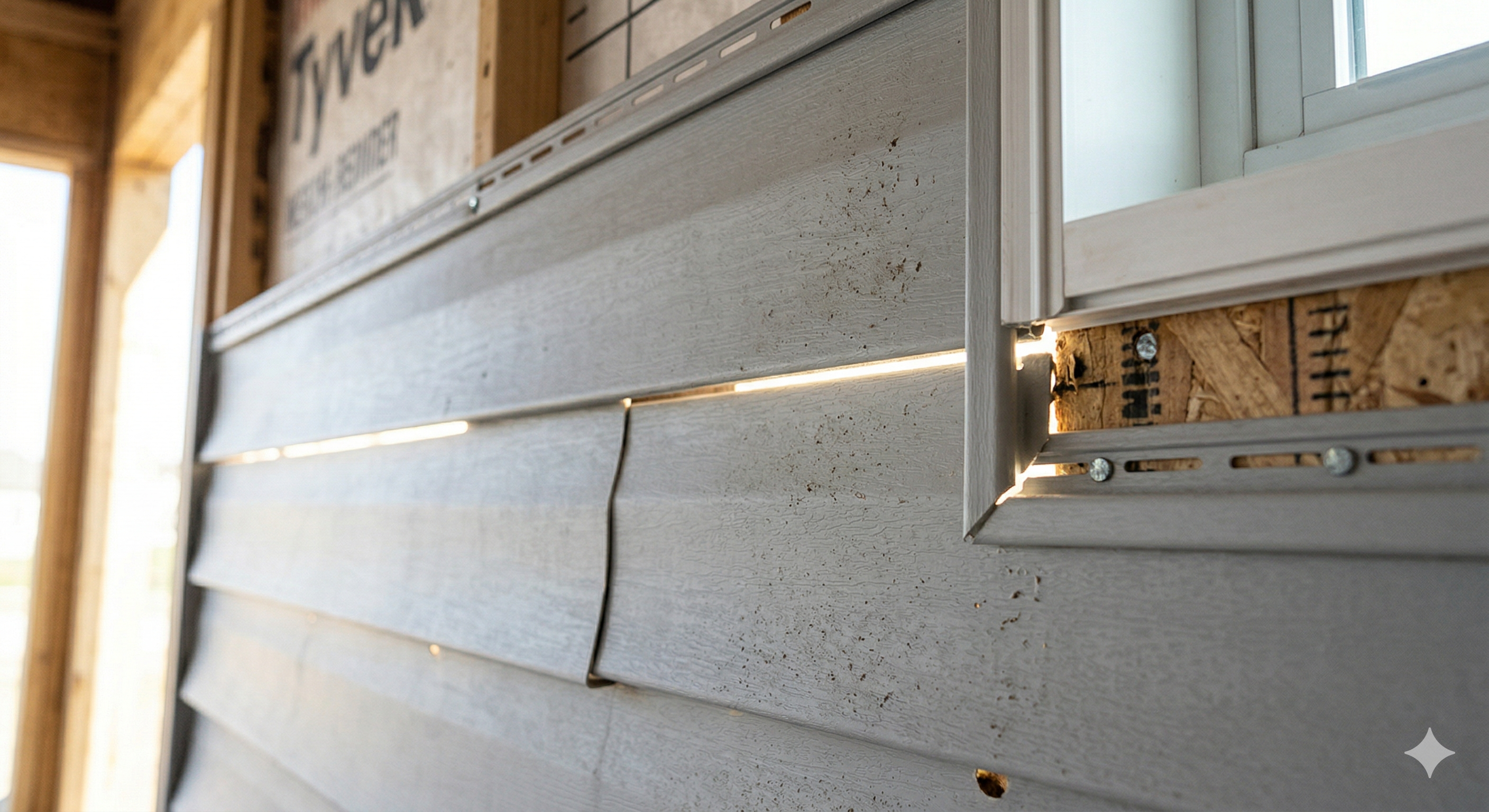
Vinyl is designed to shed most rain and protect the wall from direct weather exposure. But it is not a sealed system. Water gets behind it through overlapping joints, J channels around windows, nail slots, and panel connections. That is completely normal and expected by the siding manufacturer.
The real question is: what happens to that water once it gets behind the siding? If there is no house wrap behind it, the water hits the bare wall sheathing. Over time, this leads to wood rot, mold, and structural damage that you will not see until it is too late.
In this guide, we will explain why every vinyl siding installation needs house wrap, what features matter most in a house wrap product, and the mistakes that lead to hidden moisture problems behind the wall.
Why Vinyl Siding Needs House Wrap
Vinyl siding is installed with deliberate gaps and loose fastening to allow the panels to expand and contract with temperature changes. Those same gaps that let the panels move also let water and air in. Here is what house wrap does behind vinyl siding.
It stops water from reaching the sheathing. Wind driven rain pushes water through the joints and nail holes in vinyl panels. House wrap catches that water and redirects it downward and out at the bottom of the wall before it can soak into the wood.
It blocks air leaks. The gaps in vinyl siding let outside air flow freely behind the panels. Without a sealed air barrier, cold air in winter and hot air in summer infiltrates the wall cavity, making your HVAC system work harder. House wrap seals those gaps and improves energy efficiency.
It lets moisture vapor escape. Cooking, showering, and everyday living create moisture inside your home. That moisture migrates outward through the walls. House wrap is vapor permeable, meaning it lets that moisture pass through to the outside instead of trapping it in the wall cavity where it would cause mold.
Building codes require it. Most residential building codes mandate a weather resistant barrier (WRB) behind exterior cladding. House wrap is the most common and cost effective way to meet this requirement under vinyl siding.
What Happens Without House Wrap
When vinyl siding is installed without house wrap, the consequences do not show up right away. That is what makes it so dangerous.
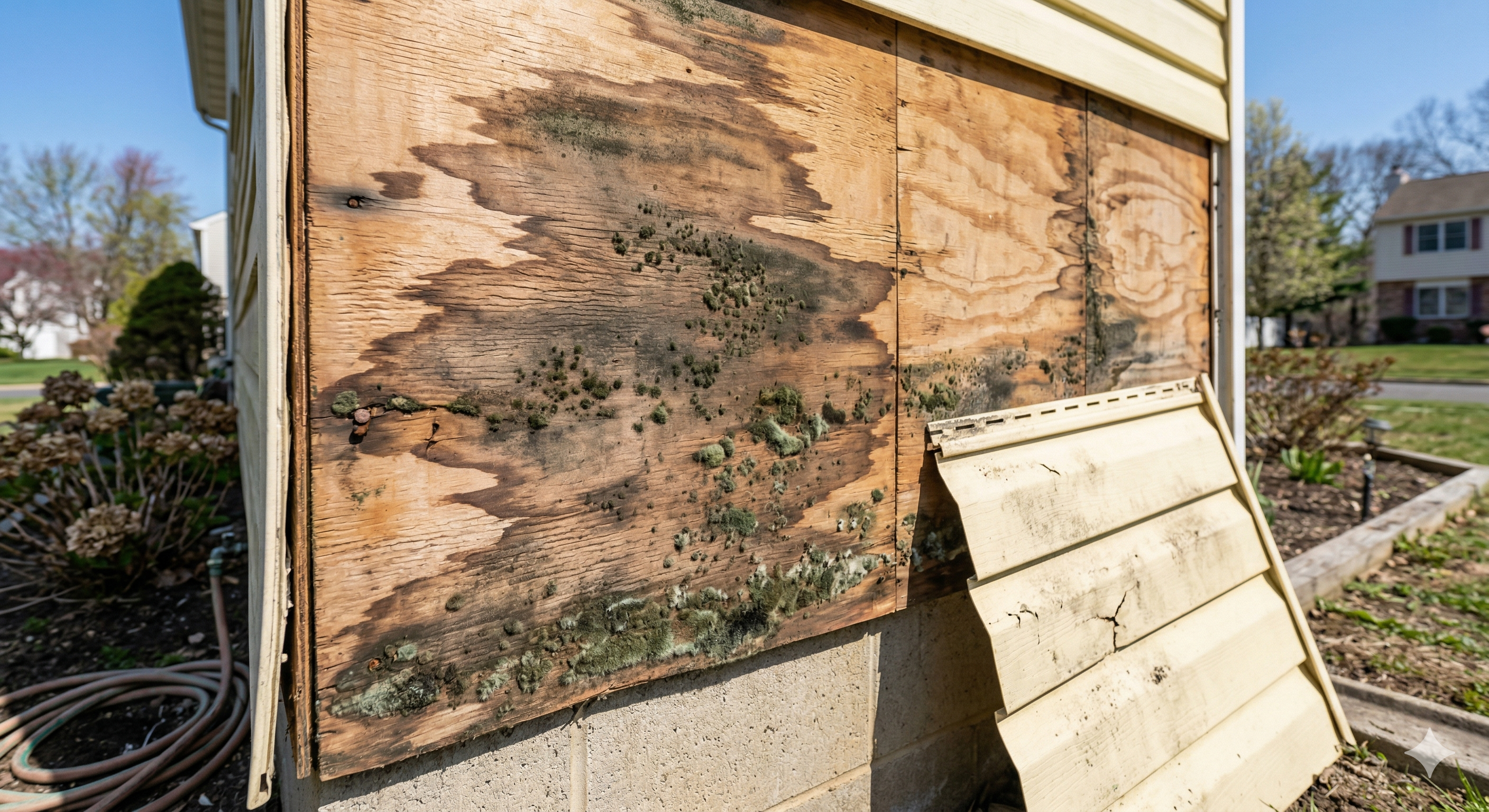
Water that gets behind the siding soaks into the plywood or OSB sheathing. At first, nothing looks wrong from the outside. But inside the wall, the wood stays wet for extended periods. Over months and years, this creates the perfect conditions for mold growth and wood rot.
By the time the damage becomes visible (peeling paint inside the home, soft spots in the wall, musty smells, or siding panels that are buckling), the sheathing and possibly the framing behind it are already compromised. Repairing this kind of hidden water damage means tearing off the siding, replacing the sheathing, treating or replacing the framing, and re-siding the wall. That is a $5,000 to $20,000 repair that could have been prevented with a $200 roll of house wrap.
What to Look for in House Wrap for Vinyl Siding
Not all house wraps perform the same under vinyl siding. Here are the specs that matter most.
Water holdout. The wrap must block liquid water from reaching the sheathing. Look for products tested to recognized water resistance standards. The wrap should shed water on contact, not absorb it.
Vapor permeability. A perm rating of 10 or higher means the wrap breathes well and will not trap moisture inside the wall. This is especially important in humid climates where moisture buildup behind siding is a common problem.
Tear strength. During siding installation, the house wrap takes a beating from ladders, tools, nail guns, and worker traffic. A wrap that tears easily means gaps in your moisture barrier that will let water through for the life of the building.
UV resistance. There is always a gap between when the wrap goes up and when the siding crew finishes. If the wrap is exposed to sunlight for days or weeks, it needs UV protection to maintain its integrity. Most quality wraps handle 30 to 90 days of exposure.
Tape compatibility. The seams between rows of house wrap must be taped for a continuous seal. Make sure the tape you use is approved by the wrap manufacturer. Wrong tape leads to failed adhesion and open seams that let water through.
BCP WrapSecure checks all of these boxes. It is a woven synthetic house wrap built for residential and light commercial construction, with strong tear resistance, good vapor permeability, and reliable water holdout. It is trusted by contractors who install vinyl siding regularly.
How House Wrap Is Installed Under Vinyl Siding
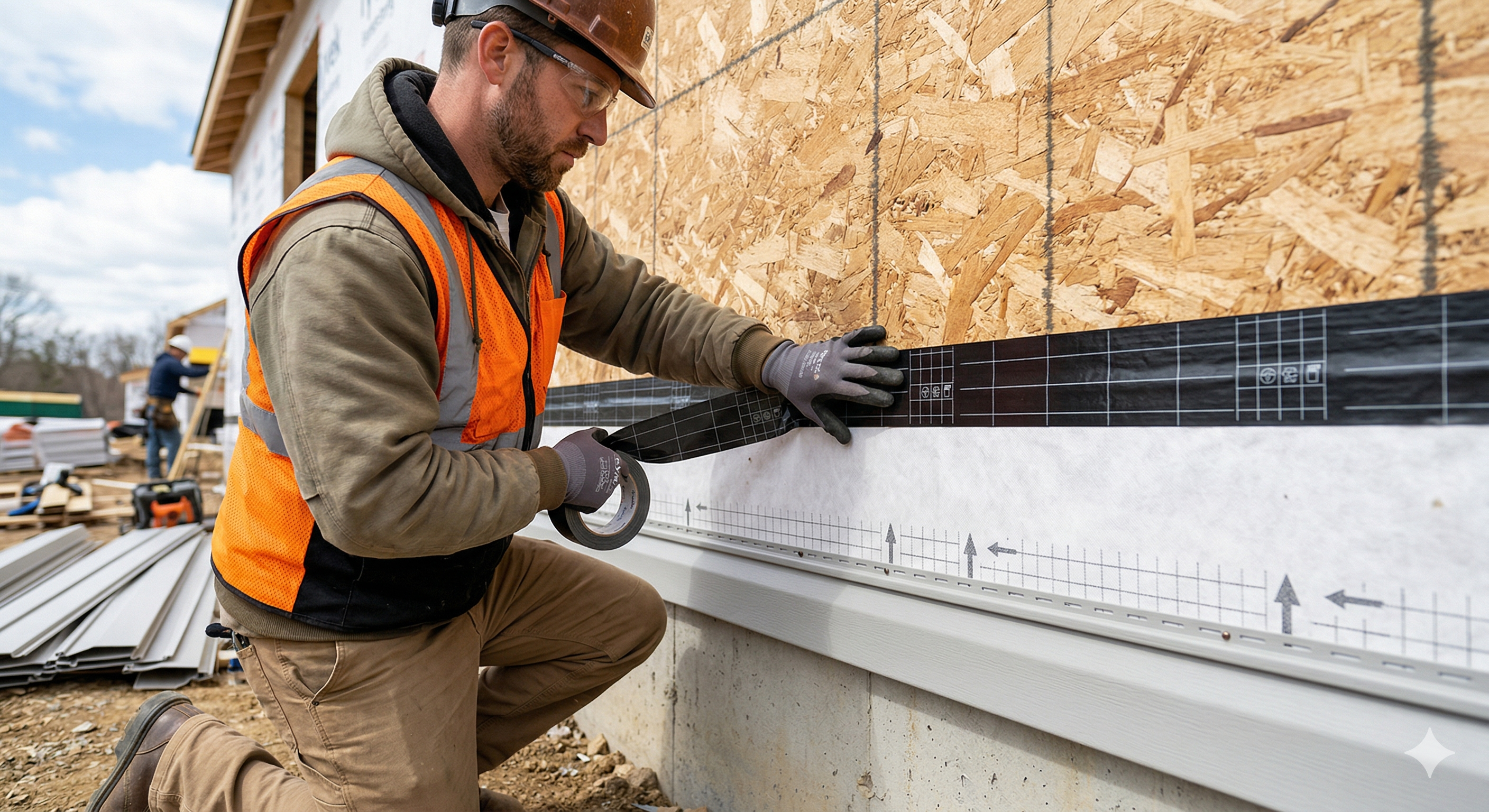
The house wrap goes on after the wall sheathing is complete and before the siding is installed. Here is the basic process. For a detailed step by step walkthrough, check out our house wrap installation guide.
Start at the bottom of the wall and work upward. Each upper row overlaps the lower row by at least 6 inches so water always flows down and over the seam, never behind it.
Fasten with cap nails or cap staples every 12 to 18 inches. Regular staples punch holes that can let water through over time. Capped fasteners spread the holding force and seal better around the puncture point.
Tape all horizontal and vertical seams with manufacturer approved tape. Every untaped seam is a potential entry point for wind driven rain.
Around windows and doors, integrate the house wrap with proper flashing tape in the correct order: sill first, then jambs, then head. This creates a shingle effect that directs water outward and downward at every transition point. Window and door areas are where most moisture problems start, so getting the flashing right is critical.
Once the house wrap is complete and all seams and openings are sealed, the vinyl siding is installed over the top.
Does Vinyl Siding Need a Rain Screen Too?
In most standard vinyl siding installations, house wrap alone provides adequate protection. Vinyl siding naturally creates a small air gap between the siding and the wrap due to its profile shape. This gap allows some drainage and drying to happen naturally.
However, in very wet climates or on walls with heavy rain exposure (like walls facing the prevailing wind direction), adding a rain screen (a thin drainage mat between the house wrap and the siding) can improve drying performance. This creates a more defined air gap that allows water to drain freely and air to circulate behind the siding.
Rain screens are more commonly used with fiber cement and wood siding, but they are gaining popularity with vinyl in high moisture regions along the Pacific Northwest, Gulf Coast, and coastal Southeast.
For most residential projects in moderate to typical climates, a quality house wrap like BCP WrapSecure provides all the protection you need under vinyl siding without the added cost of a rain screen.
Common Mistakes with House Wrap Under Vinyl Siding
No house wrap at all. Some builders skip it to save a few hundred dollars. This is a code violation in most areas and creates a ticking time bomb of hidden moisture damage behind the wall.
Using plastic sheeting instead of house wrap. Plastic (like Visqueen) blocks water but also traps moisture vapor inside the wall. This creates a mold problem that is worse than having no barrier at all. House wrap is specifically designed to block liquid water while letting vapor escape. Plastic does not do this.
Not taping the seams. Untaped seams are open paths for wind driven rain. Every single seam needs to be taped, even the ones that look tight. If it is not taped, it is not sealed.
Wrong overlap direction. If the bottom piece overlaps the top piece at a horizontal seam, water runs behind the wrap instead of over it. Always work from the bottom up with upper rows overlapping lower rows. This is the same principle as shingles on a roof.
Leaving the wrap exposed too long. If your siding crew is delayed, check the UV rating on your house wrap. Most wraps degrade if left in direct sunlight beyond their rated exposure period. Plan your scheduling so the siding goes on within the wrap's UV window.
Poor window flashing. The area around windows is where most wall leaks originate. If the flashing tape is applied in the wrong order or if gaps are left between the wrap and the window frame, water finds its way into the wall cavity. Follow the sill, jambs, head sequence every time.
House Wrap and Other Siding Types
While this guide focuses on vinyl siding, house wrap is equally important under other cladding types.
Fiber cement siding (like HardiePlank) requires house wrap underneath. Because fiber cement is installed with tight joints and face nailed, the wrap acts as the primary backup moisture barrier and air seal.
Wood siding needs house wrap with a high perm rating to allow moisture vapor to escape from behind the wood. Trapped moisture behind wood siding leads to paint failure and rot faster than with any other siding type.
Stucco and stone veneer typically need a drainage layer or rain screen in addition to house wrap. The heavy cladding can trap moisture against the wrap, so an air gap is important for drying.
If you are comparing house wrap options across different siding types, our Tyvek alternatives guide covers how different wraps perform under various cladding materials.
Frequently Asked Questions
Can I install vinyl siding without house wrap? Most building codes require a weather resistant barrier behind vinyl siding. Even if your local code somehow allows it, skipping house wrap exposes your walls to moisture damage and air leaks that will cost far more to fix than the wrap costs to install.
What is the best house wrap for vinyl siding? A woven synthetic house wrap with strong water holdout, high vapor permeability, and good tear resistance is the best fit for vinyl siding. BCP WrapSecure is designed for this exact application.
Does house wrap go over or under foam board insulation? In most wall assemblies, house wrap goes directly on the sheathing, then foam board over the wrap, then siding over the foam. Some builders place the wrap over the foam depending on the wall design. Check your local code and the insulation manufacturer's recommendations for your specific assembly.
How long does house wrap last under vinyl siding? When properly installed, house wrap lasts as long as the siding above it, typically 20 to 40 years or more. It does not need to be replaced unless the siding is removed and the wrap is found to be damaged.
Is house wrap the same as a vapor barrier? No. A vapor barrier blocks all moisture from passing through. House wrap is vapor permeable, meaning it blocks liquid water but allows water vapor to escape outward. This is an important distinction because trapping vapor inside walls leads to mold and rot.
Protect What You Cannot See
The wall behind your vinyl siding is doing more work than you think. House wrap keeps it dry, blocks drafts, and lets moisture escape so your home stays comfortable and damage free for decades.
At BCP Inc., our WrapSecure house wrap is built for clean installation and lasting performance under vinyl and all other siding types. It is trusted by contractors who want reliable protection without overcomplicating the job.
Ready to order? Call us at 877-540-5678 or visit bcpinc.us to learn more and request pricing.
