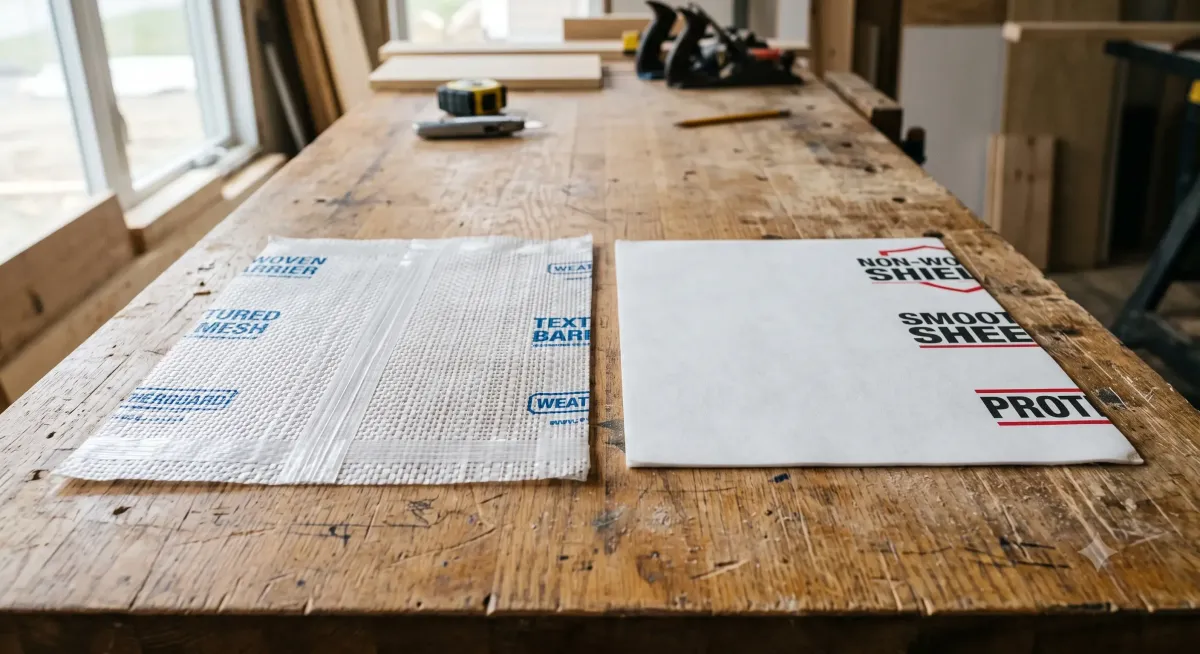
Woven vs Non-Woven House Wrap: The Difference
Woven vs Non-Woven House Wrap: What's the Difference?
Woven house wrap is made from tightly woven plastic strips that give it high tear strength, which makes it a favorite for commercial jobs and windy sites, while non-woven house wrap is made from bonded or spun fibers that usually let more moisture vapor escape, which helps walls dry out. The short version: woven trades a little breathability for toughness, and non-woven trades a little toughness for better drying. The right pick depends on your climate, your siding, and how rough the job site is.
That is the quick answer. Below we break down how each one is made, how they compare on the things that actually matter (tear strength, breathability, water resistance, and air sealing), and how to choose the right one for your build.
What house wrap does, and why the material matters
House wrap, also called a weather resistant barrier, is the layer that goes over your sheathing and behind your siding. Its job is to block liquid water and air from getting into the wall while still letting water vapor escape from inside so the wall can dry. Every house wrap has to balance those two goals, keep bulk water out, but let vapor pass through.
The way a wrap is manufactured is what sets that balance. Woven and non-woven are the two main construction methods, and they land in slightly different places on the toughness-versus-breathability scale. Neither is simply "better", they are built for different priorities.
If you are choosing between specific brands rather than material types, our guide on Tyvek house wrap alternatives covers that side, and our overview of what house wrap is covers the basics.
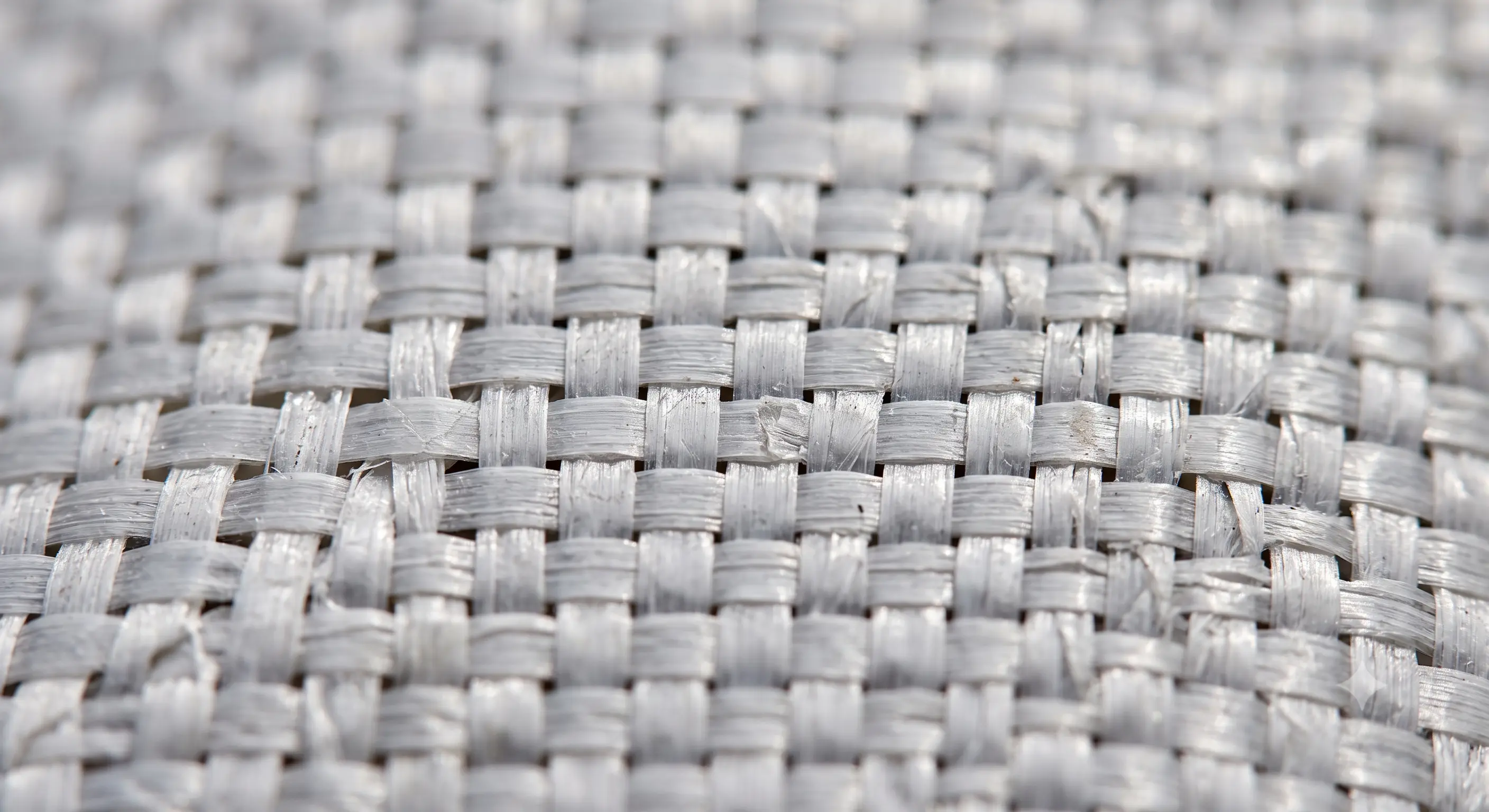
How woven house wrap is made
Woven house wrap is manufactured by weaving thin strips of polyethylene or polypropylene together, much like fabric is woven on a loom. This crisscross structure gives the material real mechanical strength. It resists tearing, stands up to being pulled taut over a wall, and holds up to wind and rough handling on the job site.
Because the woven structure has small gaps, many woven wraps are coated or laminated with a film to control how much water and air passes through. That coating is what determines the wrap's final water resistance and breathability, so two woven wraps can perform quite differently depending on how they are finished.
Woven wraps are common on commercial buildings, larger projects, and windy or exposed sites where tear strength is the top concern.
How non-woven house wrap is made
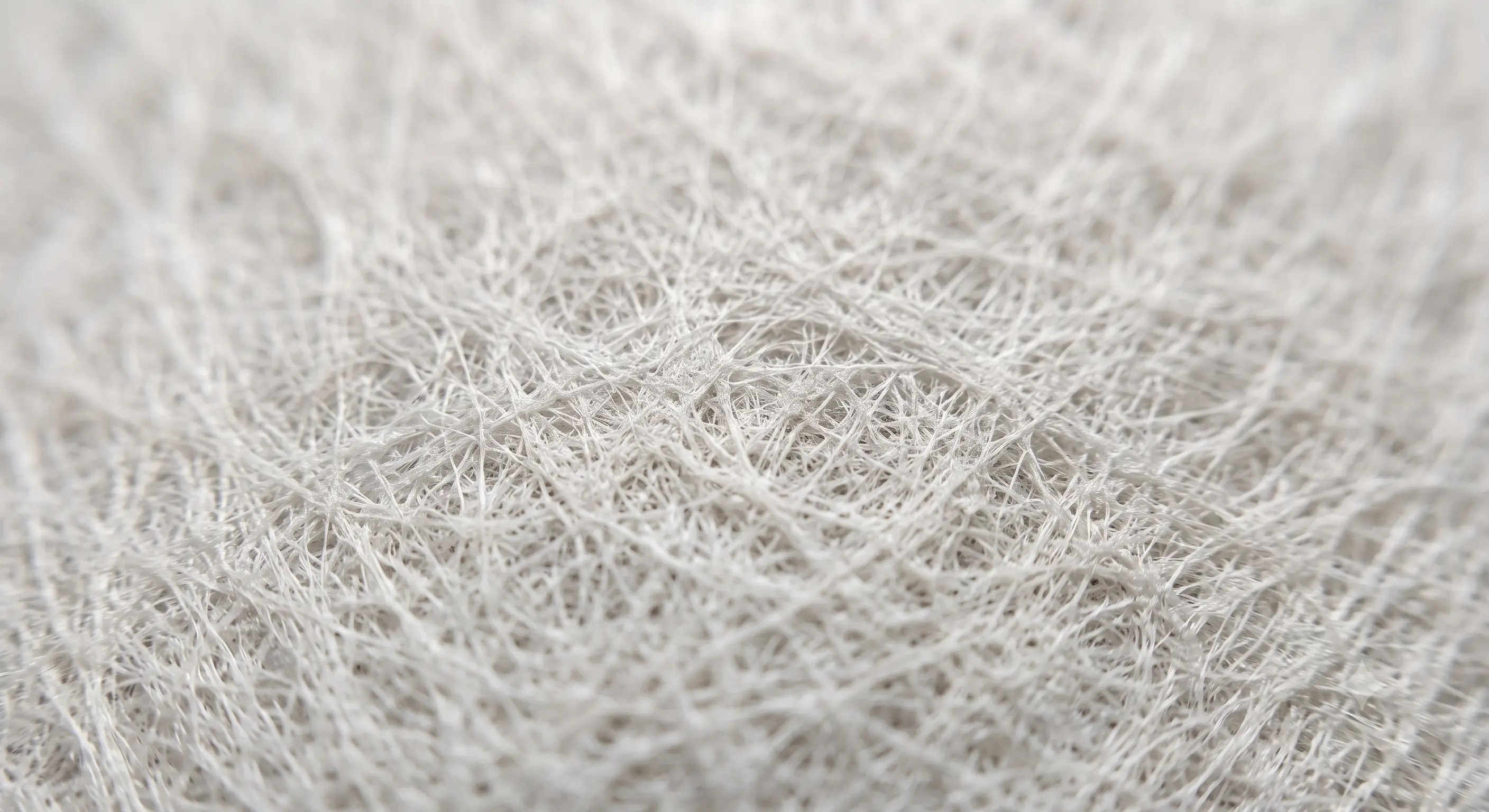
Non-woven house wrap is made by bonding or spinning fibers together into a sheet, rather than weaving strips. The fibers are pressed and fused so the material forms a continuous surface with microscopic pores. Those pores are the key: they are small enough to block liquid water droplets but large enough to let water vapor molecules pass through.
This structure tends to give non-woven wraps strong breathability, they let walls dry out efficiently, which matters a lot in humid climates or wall assemblies that need to release moisture. The trade-off is that many non-woven wraps are not quite as tear resistant as a woven wrap of similar weight, though quality products are still plenty durable for normal residential use.
Non-woven wraps are the most common choice on typical residential homes.
Woven vs non-woven: side by side
The key trade-off: breathability vs tear strength
If you boil the whole comparison down, it comes to two properties pulling against each other.
Breathability is measured by a wrap's perm rating, higher perms mean more vapor can escape and the wall dries faster. Non-woven wraps often lead here. This matters most in humid climates, and in wall assemblies where moisture needs a path out. A wall that cannot dry traps moisture, and trapped moisture leads to mold and rot.
Tear strength is how well the wrap survives installation and weather before the siding goes on. Woven wraps generally lead here. This matters most on windy sites, tall walls, commercial jobs, and anywhere the wrap will be exposed or handled roughly for a while.
Most quality wraps of either type will keep bulk water out and provide an air barrier when installed correctly. So the choice usually comes down to which of these two properties your project needs more.
How to choose the right house wrap
Here is a simple way to decide:
Typical residential home, mixed or humid climate: a good non-woven wrap is usually the right call, the breathability helps the wall dry.
Windy or exposed site, tall walls, or commercial work: lean toward a woven wrap for the extra tear strength.
Long gap before siding goes on: woven's toughness holds up better to extended UV and weather exposure (though every wrap has a UV limit, so cover it within the rated window).
Behind stucco or stone veneer: breathability and a proper drainage gap matter a lot, so a breathable non-woven wrap plus a rain screen is often preferred.
Whatever you choose, installation is what makes or breaks performance, upper courses lapping over lower, taped seams, and proper flashing at openings. Our guide on how to install house wrap walks through that.
If you are not sure which house wrap suits your project, BCP can help you match the right barrier to your climate, siding, and site conditions. Call us at 877-540-5678 or visit our house wrap page to get started.
Frequently asked questions
What is the difference between woven and non-woven house wrap? Woven house wrap is made from woven plastic strips and offers higher tear strength, while non-woven house wrap is made from bonded fibers and usually offers better breathability so walls dry faster. Woven favors toughness, non-woven favors drying.
Which is better, woven or non-woven house wrap? Neither is universally better. Woven is better for windy sites, commercial jobs, and rough handling because of its tear strength. Non-woven is better for most residential homes and humid climates because it lets walls dry more easily.
Is non-woven house wrap more breathable? Generally yes. Non-woven wraps often have higher perm ratings, meaning more water vapor can pass through and the wall dries faster. Woven wraps vary depending on their coating.
Is woven house wrap stronger? Usually yes. The woven strip construction gives woven wraps higher tear strength, which is why they are common on commercial buildings and windy or exposed sites.
Which house wrap should I use for a normal house? For a typical residential home, a quality non-woven wrap is usually the right choice because its breathability helps the wall dry. On windy sites or tall walls, a woven wrap's extra strength can be worth it.
Does the type of house wrap affect installation? The installation steps are the same for both: start at the bottom, lap upper courses over lower, tape the seams, and flash the openings. Woven wraps are a bit stiffer to handle, while non-woven wraps are softer and more flexible.
