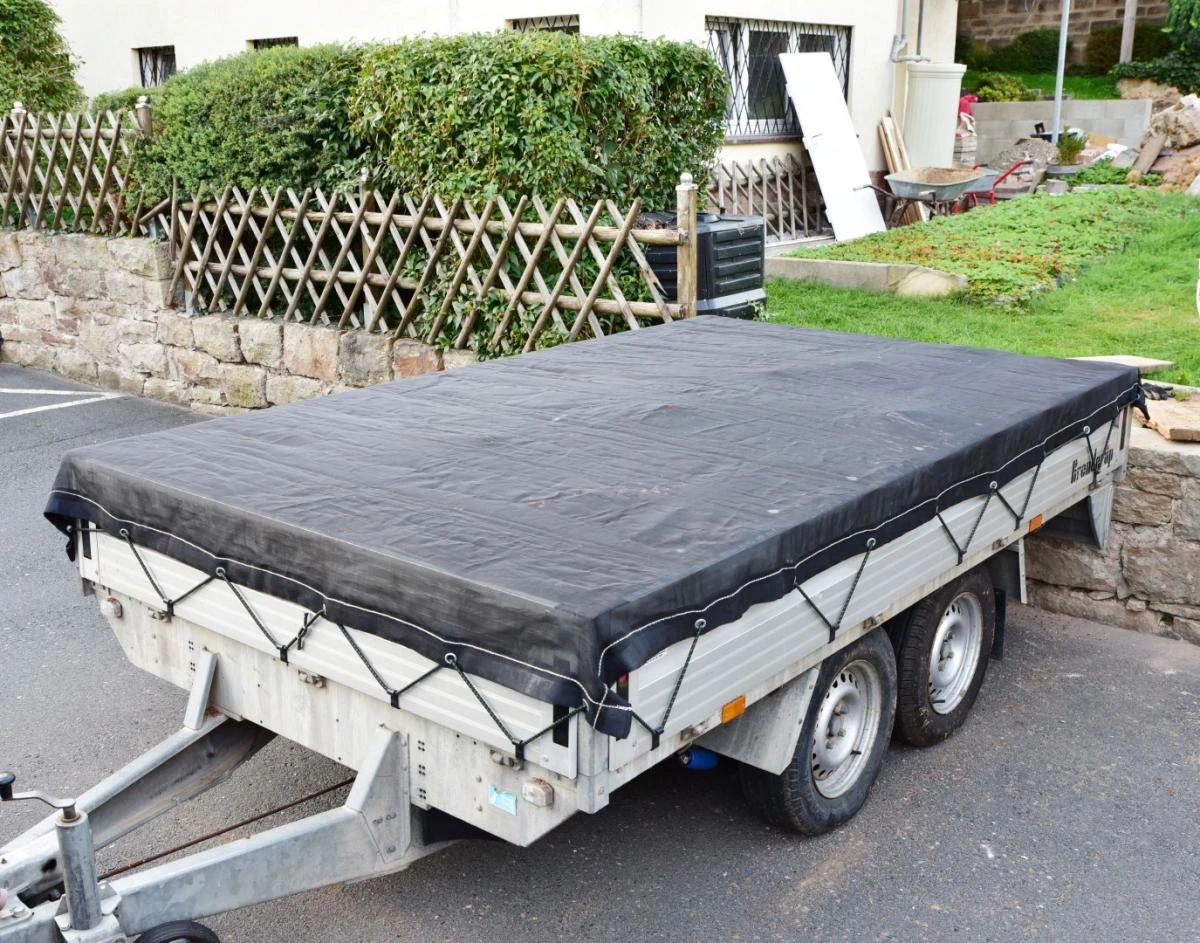
How to Tie Down a Tarp: Rope, Bungees & Grommets
How to Tie Down a Tarp: Rope, Bungees & Grommets
A tarp only protects what it covers if it stays put. To tie down a tarp so it holds in wind, secure it through every grommet with even tension, pull it tight enough that it can't flap, and use a knot you can tighten, such as a trucker's hitch.
This guide covers what to tie a tarp with, the knots worth knowing, how to tie down a tarp over a load, a woodpile or equipment, what to do when a tarp has no grommets, and which tarp grade gives you the most tie-down points.
Tarping a roof? That needs its own method, so see our guide to tarping a roof. Keeping a driveway clear this winter? See our snow tarp guide.
What to tie a tarp down with
Tie-down | Best for | Watch out for |
|---|---|---|
Rope | Most jobs; long runs and odd shapes | Needs a knot that holds tension (see below) |
Bungee cords | Quick covers that you open often | Stretch lets the tarp move in strong wind |
Ball bungees | Tying a tarp to a frame, pole or rail | Small; use plenty of them |
Ratchet straps | Holding a tarp tight over a load | Don't crush or tear the tarp at sharp edges |
Tarp clips | Tarps with no grommets, or extra points | Grip only the tarp's edge |
Sandbags or weights | Pavement and ground covers | Not enough on their own in strong wind |
For most covers, rope through the grommets with a tightening knot gives the best hold. Bungees are fine for light use, but on a windy site they let the tarp lift and slap, which wears out the grommets.
Knots worth knowing
Trucker's hitch. The most useful tarp knot. It works like a simple pulley so you can pull the line tight, then lock it. Use it on any line that needs real tension.
Bowline. Makes a fixed loop that won't slip or jam. Good for tying the rope to a grommet or a stake.
Two half hitches. A quick, secure way to tie a rope off around a post, rail or tie-down point.
Taut-line hitch. An adjustable knot you can slide to tighten or loosen a line, handy for guy lines on a shelter.
How to tie down a tarp step by step
Pick a tarp big enough. You need enough overhang to reach the ground or tie-down points on every side. A tarp that barely covers the item will pull loose.
Pad sharp edges. Corners, metal edges and rough wood can cut a tarp when it moves. Put a folded cloth or a piece of foam between them.
Center the tarp with the overhang even on all sides.
Tie the corners first, then the middle grommets on each side, working around the tarp so the tension stays even.
Use every grommet on windy sites. Each loose grommet is a spot where wind can get under the tarp.
Tighten until it can't flap. A tarp that snaps in the wind wears out fast. Pull the lines tight, but not so tight that the grommets distort.
Shape it to shed water. Raise the center with a ridge or a support so rain and snowmelt run off instead of pooling.
Recheck after the first wind or rain. Rope stretches and loads settle, so retighten the lines.
Tying down a tarp over a load
Covering a trailer, truck bed or pallet load works the same way, with a few extras:
Fold the front edge under or tie it hard. The leading edge catches the most wind on the road.
Run lines over the top of the load, not just around the edge, so the tarp can't balloon.
Strap the load first, then tarp it. A tarp keeps weather off; it doesn't hold the load in place.
Check your state's load-securement rules for covered loads on public roads.
Stop and check the tarp soon after you set off, then at every stop.
Tying down a tarp over a woodpile or equipment
Cover the top and part of the sides, but leave the lower sides open on a woodpile so air can move and the wood can dry.
Tie to the pile or rack, or to stakes driven into the ground, rather than relying on weights alone.
For equipment, cover the whole machine, tie under the frame where you can, and pad mirrors and sharp corners.
For more on covering firewood, see our guide to covering firewood. For a boat, see our boat tarp guide.
How to tie down a tarp without grommets
If the tarp has no grommets, or a grommet has torn out:
Use tarp clips that clamp onto the edge and give you a new tie point.
Make a ball tie. Wrap a small, smooth stone or ball in the tarp's edge, then tie a rope around the neck it forms.
Don't punch holes in the tarp. A hole with no reinforcement tears as soon as it's under tension.
Common mistakes
Tying only the corners. The middle of each side lifts and flaps.
Uneven tension. One overtight line pulls the tarp sideways and loads a single grommet.
Bungees on a windy site. They stretch and let the tarp move.
No padding on sharp edges. The tarp wears through where it rubs.
A flat top. Water pools, stretches the tarp and pulls on every tie-down.
Which BCP tarp gives you the best tie-down
The more grommets a tarp has, the more evenly you can spread the tension. BCP makes three tarp grades, all 100% waterproof with metal grommets. Compare them on the BCP tarpaulin page, and see our tarp thickness guide for how tarp weight affects strength.
BCP tarp | Weight | Grommets | Edge | Best for |
|---|---|---|---|---|
65 to 70 GSM | Rust-resistant metal, every 1 m | Reinforced hems with double stitching | Light covers at home: furniture, firewood, DIY jobs | |
110 to 120 GSM | Brass, every 60 cm | Double-reinforced with poly rope inside | Regular use: construction materials, equipment, farm and transport covers | |
200 to 240 GSM | High-tensile metal, every 50 cm | Triple-reinforced with encapsulated poly rope | Windy, exposed sites, heavy loads and industrial covers |
If your tarp will face real wind, BCP Tarps Super or Heavy Duty is the better choice. The closer grommet spacing (60 cm or 50 cm) and rope-reinforced edges let you tie down more points and hold more tension without tearing.
Frequently asked questions
What is the best knot to tie down a tarp?
The trucker's hitch. It lets you pull the line tight like a pulley and lock it, so the tarp stays taut. Use a bowline to tie the rope to the grommet.
How do you tie down a tarp so it doesn't flap?
Tie every grommet, keep the tension even all the way around, and pull the lines tight. Raise the center so water runs off, and retighten after the first wind or rain.
Are bungee cords good for tying down a tarp?
For light, short-term covers, yes. On windy sites or over loads, rope or ratchet straps hold better because they don't stretch.
How do you tie down a tarp without grommets?
Use tarp clips on the edge, or wrap a small smooth stone in the tarp and tie a rope around it. Avoid punching holes in the tarp.
How do you tie down a tarp on a truck or trailer?
Secure the load with straps first, then lay the tarp over it, fold or tie the front edge firmly, and run lines over the top as well as around the edges. Check it soon after you start driving.
Get a tarp that ties down right
Before you order, have ready:
What you're covering and its size
How exposed the site is to wind
How long the tarp will stay out
How many tarps you need
Tell us what you're covering and our team will recommend the right grade and size. Or call 877-540-5678.
