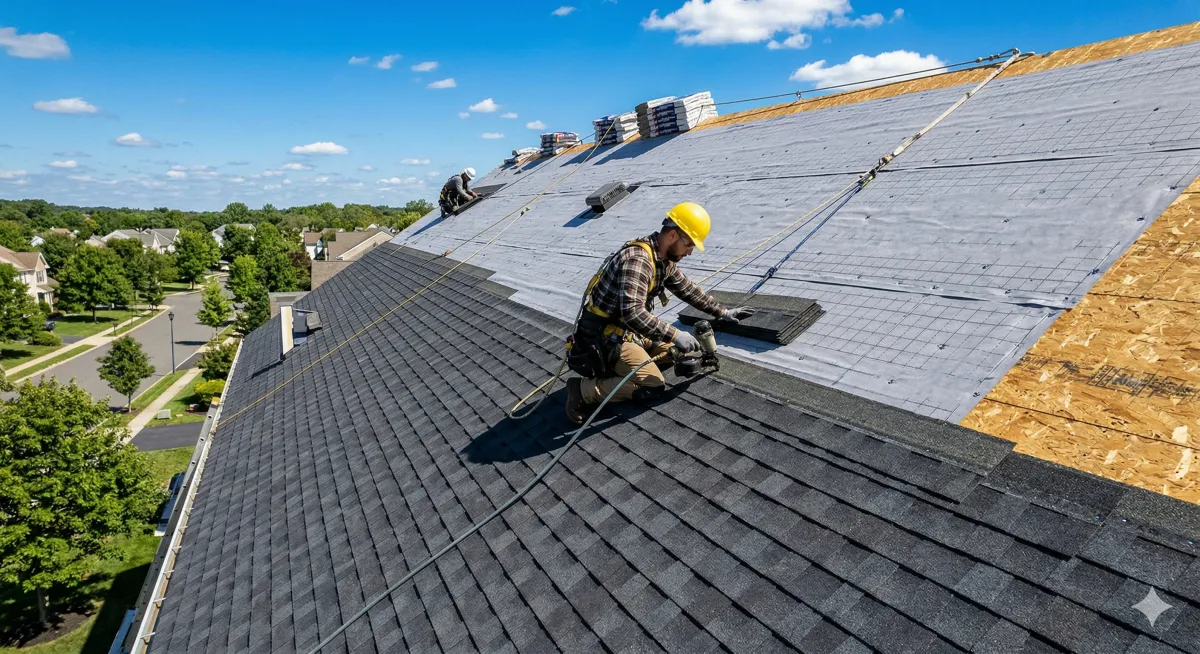
Best Underlayment for Shingles: Top Picks 2026
Roofing Underlayment for Shingles: How to Pick the Right One for Your Roof
Asphalt shingles are on more American homes than any other roofing material. They are affordable, easy to install, and come in dozens of colors and styles. But the shingles you see from the street are only one part of the roofing system.
Underneath every row of shingles is a layer of roofing underlayment that plays a critical role in how well your roof performs and how long it lasts. Choose the wrong underlayment, or skip it entirely, and your roof is at risk of leaks, wood rot, and a voided warranty.
In this guide, we will explain why shingle roofs need underlayment, compare the three types available, walk through what your shingle manufacturer probably requires, and help you pick the right product for your project.
Why Shingle Roofs Need Underlayment
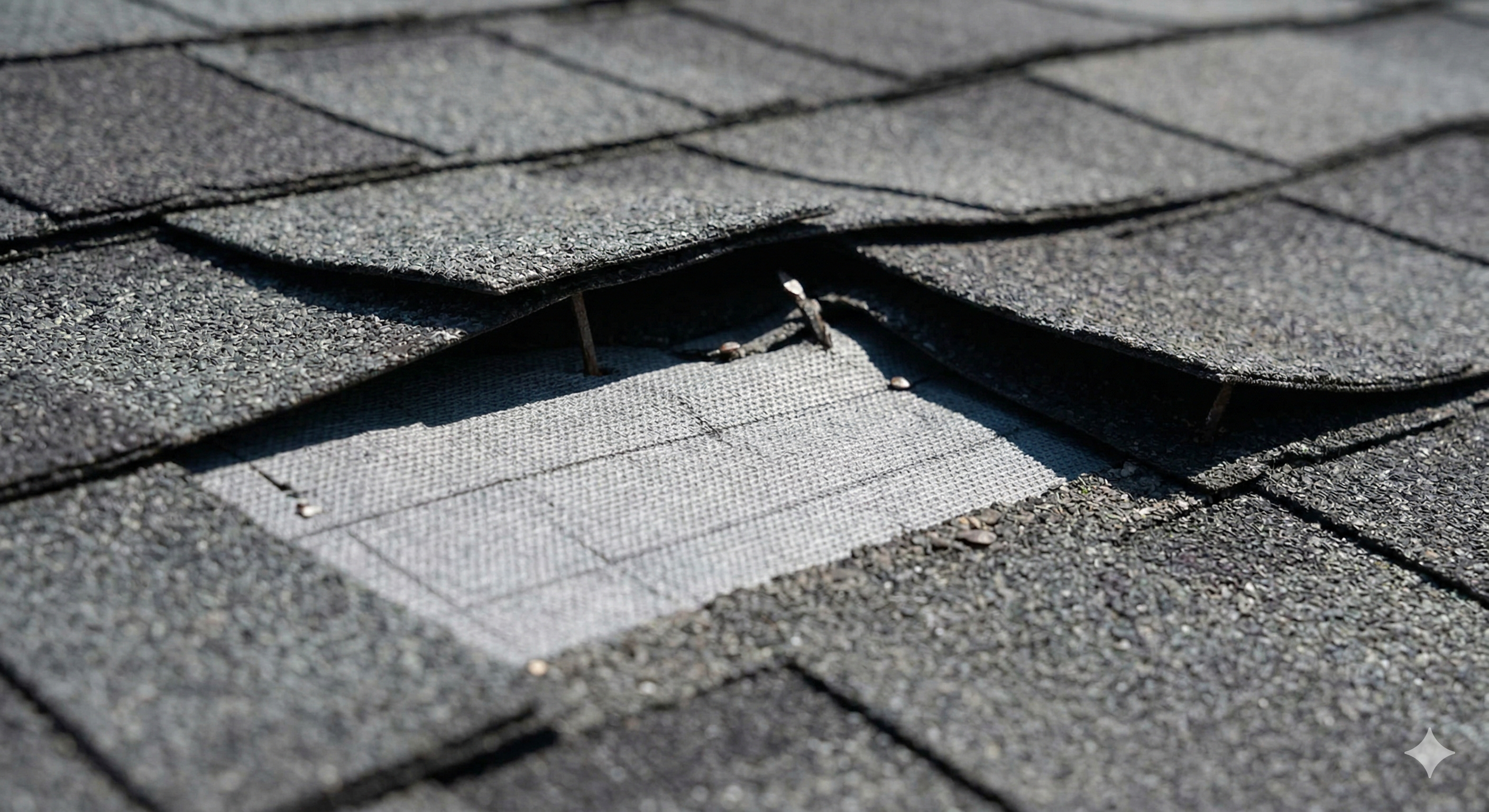
Asphalt shingles are water resistant, but they are not watertight. Wind lifts shingle tabs. Aging causes them to curl and crack. Nails create penetration points. And heavy rain finds its way into every tiny gap.
Roofing underlayment is the backup barrier that sits between the shingles and the roof deck. When water gets past the shingles, the underlayment stops it from reaching the plywood or OSB beneath. Without this layer, even a small amount of water infiltration can lead to deck rot, mold growth, and interior water damage.
Underlayment also protects the roof deck during construction. There is always a window of time between when the deck is exposed and when the shingles are installed. Rain during that window can soak into bare wood and cause problems before the roof is even finished.
Most building codes require underlayment on all shingle roofs. It is not optional. It is a fundamental part of how the roofing system is designed to work.
Three Types of Underlayment for Shingle Roofs
There are three main types of underlayment used under asphalt shingles. Each one has different strengths, and the best choice depends on your climate, budget, and project requirements.
Asphalt Saturated Felt
Felt underlayment is the traditional option that has been used under shingles for decades. It is made from paper or fiberglass fibers saturated with asphalt to create a water resistant sheet. It comes in 15 pound and 30 pound weights.
Felt is the cheapest option upfront. It works for basic residential projects in mild climates where the shingles will be installed the same day or within a few days of laying the underlayment.
The downsides are real though. Felt absorbs water and wrinkles when wet. It tears easily under foot traffic. It breaks down quickly in sunlight if left exposed for more than a day or two. And its lifespan (10 to 20 years) is shorter than the shingles above it, which means the underlayment may fail while the shingles still have years of life left.
For a deeper look at how felt compares to synthetic, check out our synthetic vs. felt comparison guide.
Synthetic Underlayment
Synthetic underlayment is made from engineered polypropylene or polyethylene. It is the most popular choice among modern roofers and is quickly replacing felt as the industry standard for shingle roofs.
Synthetic does not absorb water, so it stays flat and functional even if it gets rained on during installation. It is much stronger than felt, resisting tears from boots, tools, and rough handling on the job site. Most synthetic products can sit exposed to UV for 60 to 180 days without degrading, which gives your crew flexibility if there are weather delays between the underlayment and shingle installation.
Synthetic underlayment also covers more area per roll (400 to 1,000 square feet compared to 200 for felt), which means faster installation, fewer seams, and fewer trips up the ladder.
At BCP Inc., our RoofLayer synthetic underlayment line is built specifically for these advantages. Whether you choose RoofLayer Eco for a budget conscious project or RoofLayer Premium for maximum protection, each product delivers the water resistance, tear strength, and UV durability that felt cannot match.
Peel and Stick (Ice and Water Shield)
Peel and stick underlayment is a self adhesive membrane made from rubberized asphalt. It bonds directly to the roof deck and creates a fully waterproof seal that holds tight even around nail penetrations.
This type of underlayment is not typically used across the entire roof under shingles (though it can be in extreme climates). Instead, it is installed in the areas most vulnerable to water infiltration: along the eaves where ice dams form, in roof valleys where water concentrates, and around penetrations like chimneys, skylights, and vent pipes.
Most building codes require peel and stick underlayment at the eaves in cold climates (extending at least 24 inches past the interior wall line) and in valleys regardless of climate.
The most effective shingle roofing systems use peel and stick in the high risk areas and synthetic underlayment across the rest of the deck. This combination gives you waterproof protection where you need it most and reliable moisture resistance everywhere else.
What Your Shingle Manufacturer Requires
This is the detail that catches many homeowners and even some contractors off guard. Your shingle warranty may depend on which underlayment you use.
Several major shingle manufacturers, including Owens Corning and GAF, now recommend or require synthetic underlayment for their warranty to remain valid. If you install felt under shingles from a manufacturer that specifies synthetic, you could void the warranty entirely. That means if your shingles fail prematurely or develop defects, the manufacturer may deny your claim.
Before purchasing any underlayment, check the installation requirements in your shingle manufacturer's documentation. It will specify which types and sometimes which brands of underlayment are approved for use with their products.
Using the right underlayment is not just about better performance. It is about protecting the warranty on the most expensive component of your roofing system.
How Underlayment Is Installed Under Shingles
The installation process is straightforward but requires attention to detail.
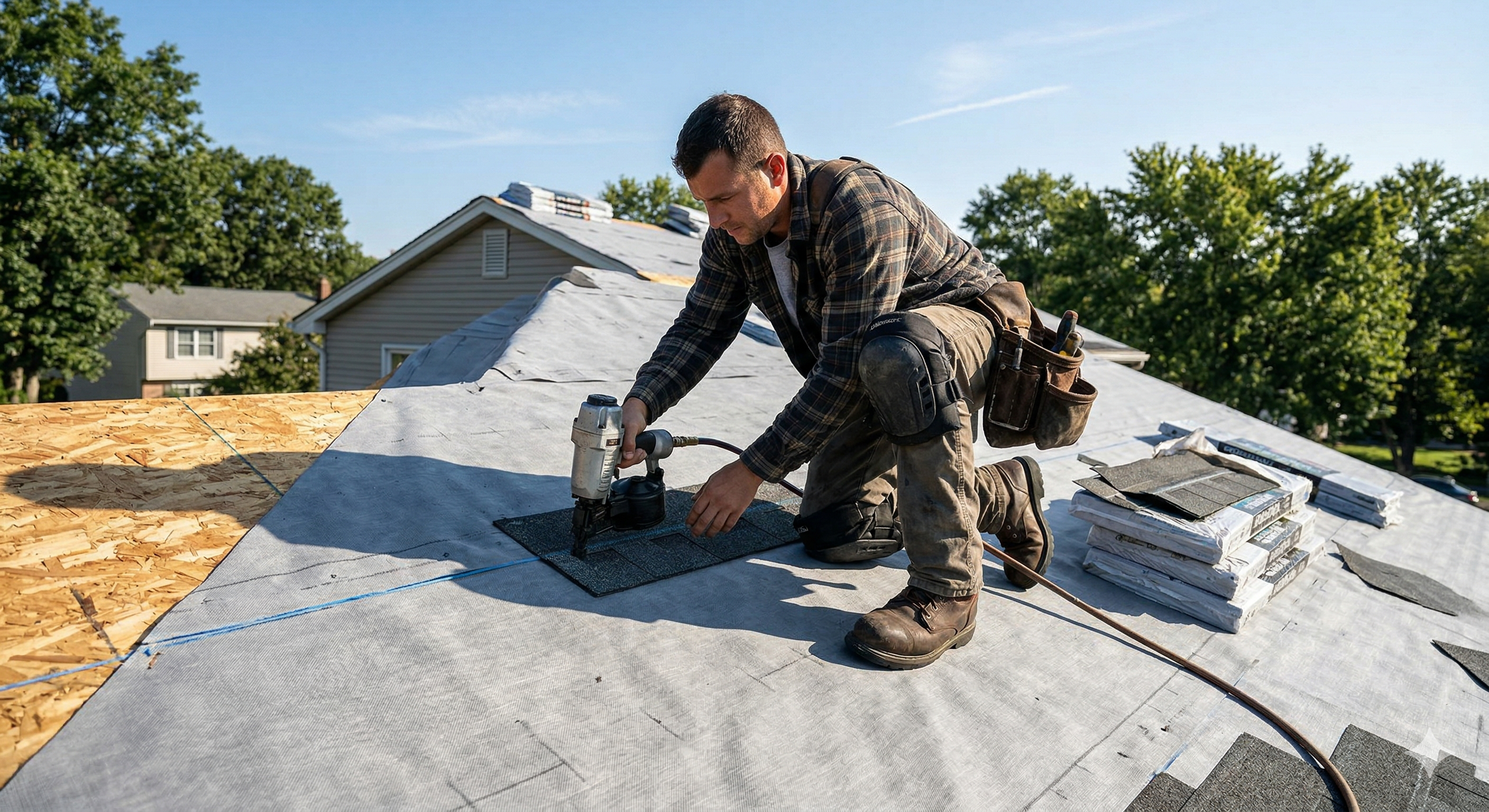
Start at the eave (the lowest edge of the roof). If your project requires peel and stick underlayment at the eaves, install that first. Apply it directly to the clean, dry deck and extend it at least 24 inches past the interior wall line, or further in heavy snow regions.
Next, roll out the synthetic underlayment horizontally across the rest of the deck, starting where the peel and stick ends. Each row should overlap the one below it by at least 4 inches on horizontal seams and 6 inches on end laps.
Fasten with cap nails or cap staples every 12 to 18 inches along the edges. Do not over drive the fasteners. The underlayment should sit flat and snug against the deck without being torn.
For detailed installation steps, including tips on valleys, penetrations, and edge metal, check out our installation guide.
Choosing the Right Underlayment for Your Shingle Roof
Here is a quick guide based on your situation.
Tight budget, mild climate, shingles going on immediately: 30 pound felt is the minimum acceptable option. It works but expect a shorter lifespan and more vulnerability to weather during installation.
Standard residential re-roof in any climate: Synthetic underlayment is the best value. It costs slightly more than felt per roll but covers more area, installs faster, lasts longer, and keeps your warranty intact. BCP RoofLayer Standard is the go to choice for this type of project.
Premium project, harsh climate, or extended construction timeline: Use a premium synthetic underlayment on the main deck with peel and stick at the eaves, valleys, and around all penetrations. BCP RoofLayer Premium paired with ice and water shield gives you the highest level of protection under shingles.
Any climate with ice, snow, or heavy rain: Add peel and stick underlayment at the eaves and in every valley, regardless of what you use on the rest of the deck. Building codes in most cold and wet climates require this, and it is worth doing even where it is not required. We covered climate specific recommendations in detail in a separate guide.
Frequently Asked Questions
Can I put shingles directly on plywood without underlayment? Technically it is possible, but most building codes prohibit it. Without underlayment, your roof deck has zero backup protection against water. One lifted shingle in a storm and water goes straight into the wood.
How many layers of underlayment do I need under shingles? One layer of synthetic underlayment across the main deck is standard. In valleys and at eaves, you may have two layers (peel and stick plus synthetic overlapping). Double layering the entire roof is not necessary for most shingle projects.
Is synthetic underlayment worth the extra cost over felt for a shingle roof? Yes. The faster installation, longer lifespan, better weather resistance, and warranty compliance make synthetic a better investment on nearly every shingle project. The price difference per square foot of coverage is smaller than most people expect.
How long can underlayment be exposed before shingles go on? Felt should be covered within days. Synthetic can handle 60 to 180 days depending on the product. Check the UV exposure rating on the specific product you are using.
Does the color of underlayment matter under shingles? Not for performance. Gray synthetic underlayment absorbs less heat than black felt, which can be a minor advantage in hot climates during installation. But once the shingles are on, the underlayment color has no effect.
Set Your Shingle Roof Up for Success
The shingles get all the attention, but the underlayment is what makes the whole system work. The right product under your shingles protects the deck, manages moisture, and keeps your warranty valid for decades.
At BCP Inc., we offer a full range of synthetic roofing underlayment designed for asphalt shingle roofs. From our RoofLayer Eco for straightforward residential jobs to our RoofLayer Premium for demanding conditions, we have the right product for your shingle project.
Need help choosing? Call us at 877-540-5678 or visit bcpinc.us to compare products and request a quote.
