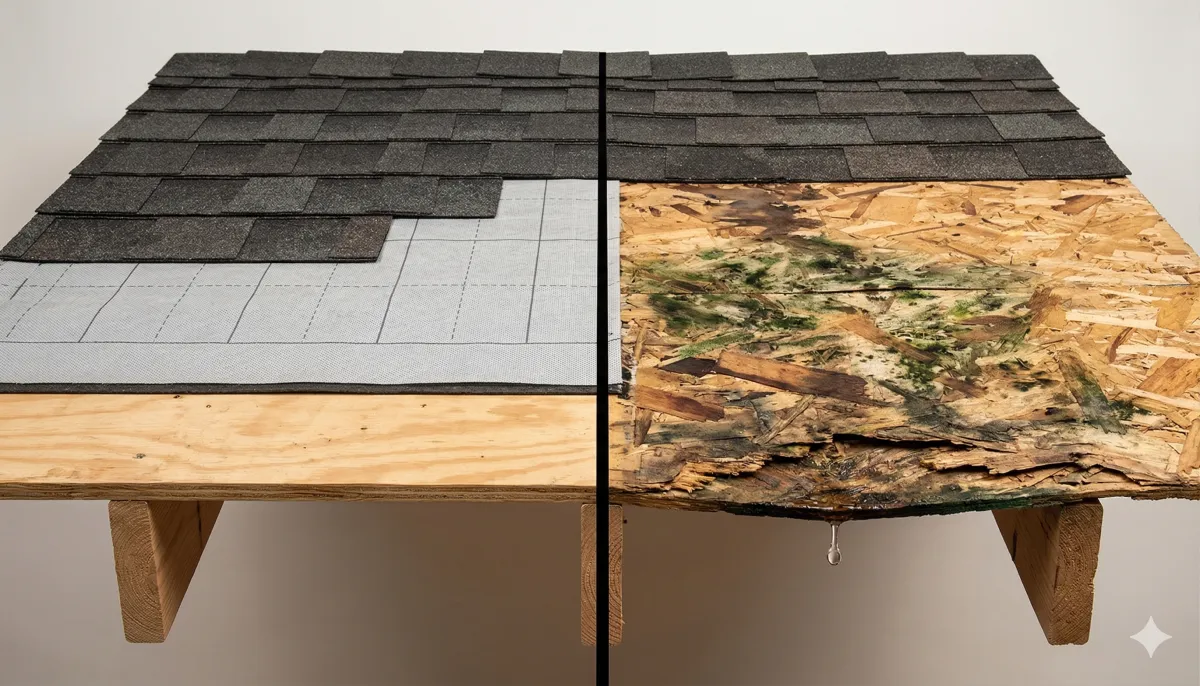
Do You Need Roof Underlayment? Yes, Here's Why
Do You Need Roof Underlayment? What Happens If You Skip It
It is a fair question. If shingles are designed to keep water out, why do you need another layer underneath them?
The short answer: because shingles alone are not enough. They are your roof's first line of defense, but they are not a sealed, waterproof system. Wind lifts them. Age cracks them. Nails puncture through them. And heavy rain finds every tiny gap.
Roof underlayment is the backup barrier that catches everything the shingles miss. Without it, your roof deck is one storm away from water damage that can cost thousands to repair.
In this guide, we will cover exactly what roof underlayment does, what happens when you do not have it, when building codes require it, and how to choose the right type for your project.
What Roof Underlayment Actually Does
Roof underlayment is a sheet material installed directly on top of the roof deck (the plywood or OSB panels that form the structural base of your roof). It goes on before the shingles, tiles, or metal panels and stays there permanently, working silently for the life of the roof.
It serves four critical functions.
It catches water that gets past the shingles. Wind driven rain pushes water sideways and upward under shingle tabs. Aging shingles develop cracks, curls, and gaps. Nail heads work loose over time. Every one of these is a potential water entry point. The underlayment catches that water and directs it down the roof and into the gutter instead of into the wood deck.
It protects the deck during construction. Between the time the deck is built and the shingles are installed, your roof is exposed to whatever weather comes through. Underlayment covers the deck during this window so rain does not soak into bare wood and cause swelling, warping, or mold growth before the roof is even finished.
It provides emergency protection. During a severe storm, shingles can blow off entirely. If there is no underlayment, the deck is immediately exposed to rain. With underlayment in place, your home has a temporary waterproof barrier that buys you time until repairs can be made. This single benefit has saved countless homeowners from catastrophic interior water damage during hurricanes and severe storms.
It contributes to the overall roof system performance. Roofing manufacturers design their systems (shingles, underlayment, ice and water shield, ventilation, flashing) to work together. Each component plays a role. Removing the underlayment is like removing a link from a chain. The whole system is weaker for it.
What Happens When You Skip Underlayment
The consequences of skipping underlayment do not always show up immediately. That is what makes it so risky. The damage builds slowly, hidden behind the shingles and above the ceiling, until it becomes a serious and expensive problem.
Wood rot. Without underlayment, even small amounts of water that get past the shingles soak into the plywood or OSB deck. Wood that stays damp for extended periods begins to rot. Rotted decking weakens the structural support for the entire roof and must be replaced, which means tearing off the shingles, replacing the wood, installing new underlayment, and re-shingling. What should have been a $500 underlayment cost turns into a $5,000 to $15,000 repair.
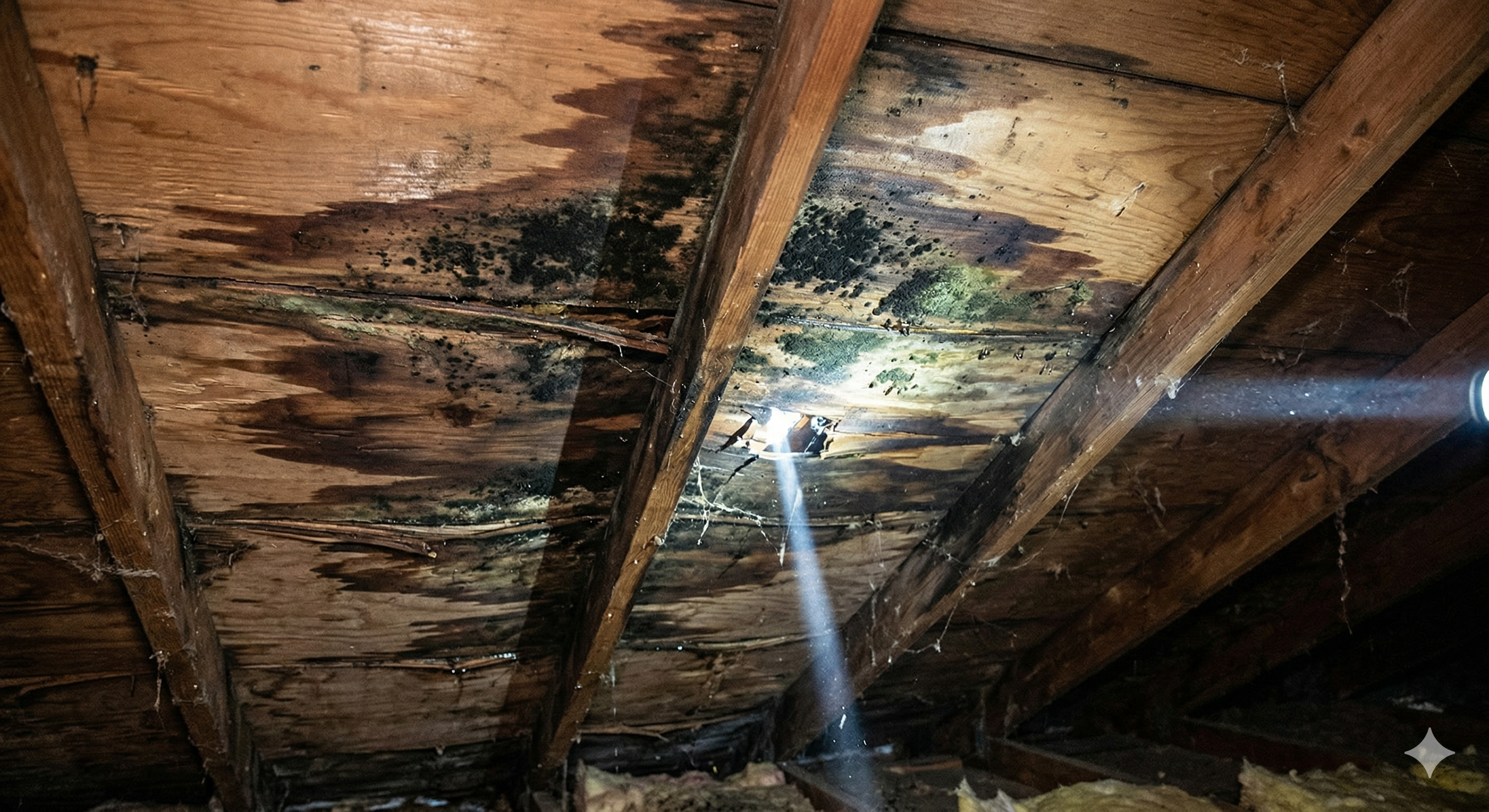
Mold growth. Damp wood in a dark, warm attic is the perfect environment for mold. Mold spreads across the decking, down the rafters, and into the attic insulation. Beyond the structural damage, mold creates health risks for everyone living in the home. Mold remediation in an attic costs $2,000 to $6,000 on average, and that does not include the roof repair itself.
Interior water damage. Once water gets through the deck, it drips onto the attic insulation, soaks through the ceiling drywall, and damages the rooms below. Stained ceilings, peeling paint, warped floors, and damaged belongings are all common results of roof leaks that could have been prevented with underlayment.
Voided shingle warranty. This is the one most people do not think about. Nearly every shingle manufacturer requires underlayment as part of their approved roofing system. If you skip it and later file a warranty claim for shingle failure, the manufacturer will deny the claim because the roof was not installed according to their specifications. You lose the warranty protection you paid for.
Failed building inspection. If the work requires a permit and inspection (which most roof replacements do), the inspector will flag the missing underlayment as a code violation. That means tearing off the work, adding the underlayment, and re-doing the shingles before you can pass inspection. The cost of doing it twice far exceeds the cost of doing it right the first time.
When Building Codes Require It
The simple answer: almost always.
The International Residential Code (IRC) requires roof underlayment on all asphalt shingle roofs. Most state and local building codes follow the IRC or have their own version of this requirement.
In cold climates where the average January temperature is 25 degrees Fahrenheit or lower, codes also require ice and water shield at the eaves, extending at least 24 inches past the interior wall line. Many codes require it in valleys and around penetrations regardless of climate.
Some regions have additional requirements. Florida building code requires a secondary water barrier across the entire roof deck in high velocity hurricane zones. Many coastal areas have similar requirements for wind driven rain protection.
The only situations where underlayment might not be explicitly required by code are on certain types of outbuildings, sheds, or non-habitable structures. But even in those cases, using underlayment is the smart choice for long term protection.
If you are unsure about your local requirements, your roofing contractor should know the specific code in your area. Getting it right avoids failed inspections and costly rework.
Which Type of Roof Underlayment Do You Need?
There are three main types, and the right choice depends on your project, climate, and budget.
Asphalt saturated felt is the traditional option. It is affordable but absorbs water, tears easily, and has a shorter lifespan (10 to 20 years) than modern alternatives. It works for basic projects in mild climates but falls short in demanding conditions. For a full comparison, see our synthetic vs. felt guide.
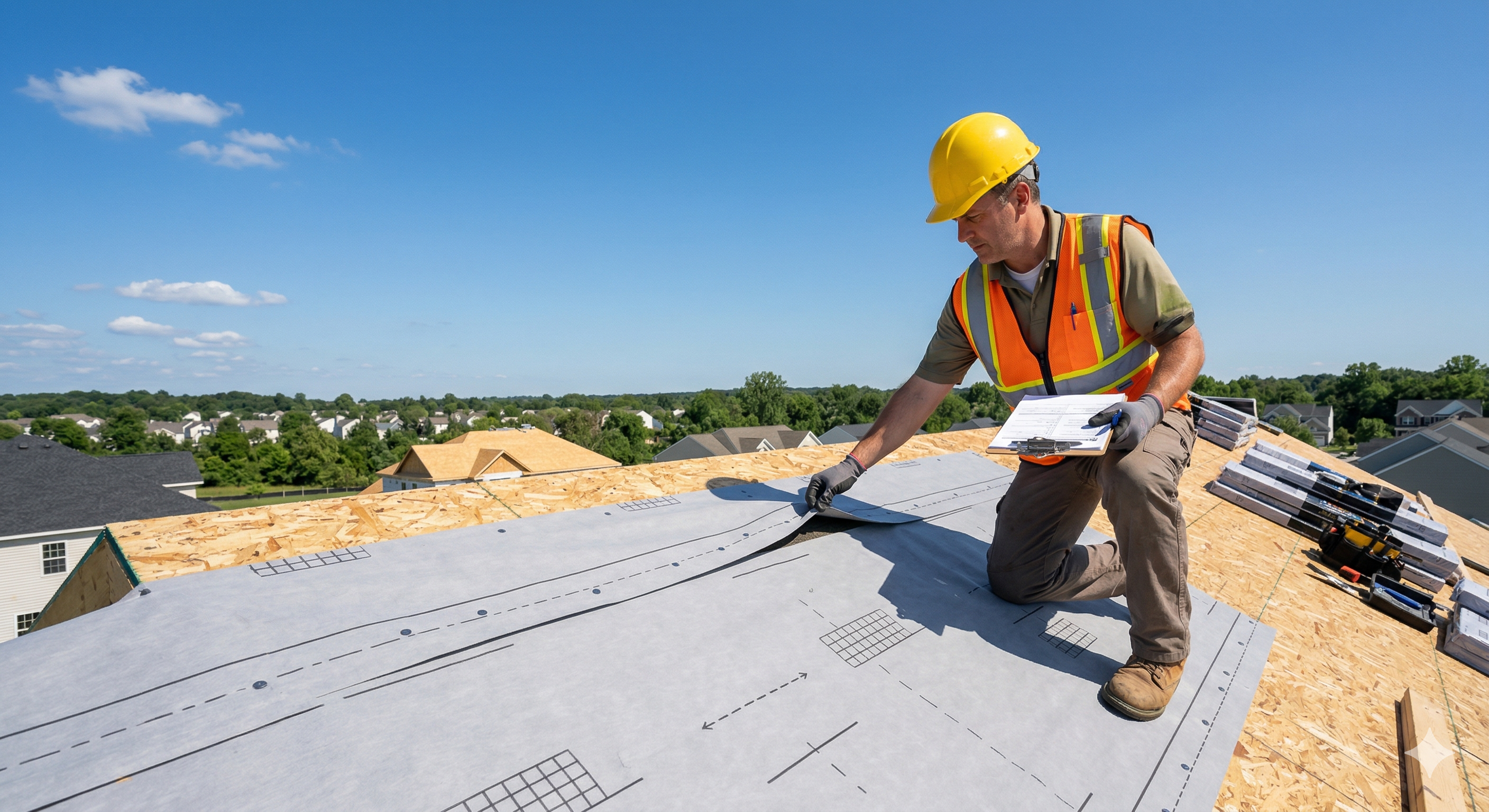
Synthetic underlayment is the modern standard. It does not absorb water, resists tearing, handles UV exposure for weeks or months, and lasts 25 to 40 years. It covers more area per roll and installs faster than felt. Most shingle manufacturers now recommend or require synthetic for warranty coverage. At BCP Inc., our RoofLayer line includes Eco, Standard, and Premium options for every budget and climate.
Peel and stick (ice and water shield) is a self adhesive, fully waterproof membrane used in high risk areas. It bonds to the deck and seals around every nail penetration. Use it at the eaves, in valleys, around chimneys and skylights, and on low slope roof sections. Most roofs use peel and stick in these areas combined with synthetic across the rest of the deck.
For help matching the right underlayment to your specific climate, check our climate selection guide. If you are working on a metal roof, a shingle roof, or a project in a hurricane zone, we have specific guides for each.
Common Excuses for Skipping Underlayment (And Why They Are Wrong)
"My old roof didn't have underlayment and it was fine." Maybe it was fine for a while. But older roofs without underlayment are far more likely to have hidden deck damage. Just because you cannot see the rot does not mean it is not there. And "fine" 20 years ago does not mean your next roof will be fine without it.
"It adds too much to the cost." Underlayment typically costs $300 to $600 for a standard residential roof. A full roof replacement costs $8,000 to $25,000. The underlayment is 3 to 5% of the total project cost. Skipping it to save $400 puts a $15,000 investment at risk.
"The roofer said it's not necessary." Any roofer who tells you to skip underlayment is either cutting corners to win a low bid or does not understand building codes and manufacturer requirements. This is a red flag about the quality of work you will receive on the rest of the project.
"I'm using premium shingles so I don't need it." Premium shingles are better at shedding water, but they still have nail penetrations, seams, and edges where water can get through. No shingle, regardless of price, eliminates the need for underlayment. And skipping it will void the warranty on those expensive premium shingles.
Frequently Asked Questions
Is roof underlayment required by law? In most areas, yes. The International Residential Code requires underlayment on all asphalt shingle roofs, and most local building codes follow this standard. Check with your local building department or your roofing contractor for your specific requirements.
Can you see roof underlayment from outside? No. Once the shingles are installed, the underlayment is completely hidden. It sits between the deck and the shingles and is never visible from the outside.
How long does roof underlayment last? Felt lasts 10 to 20 years. Synthetic underlayment lasts 25 to 40 years. Peel and stick can last 30 to 40 years or more. Ideally, your underlayment should last at least as long as the shingles above it.
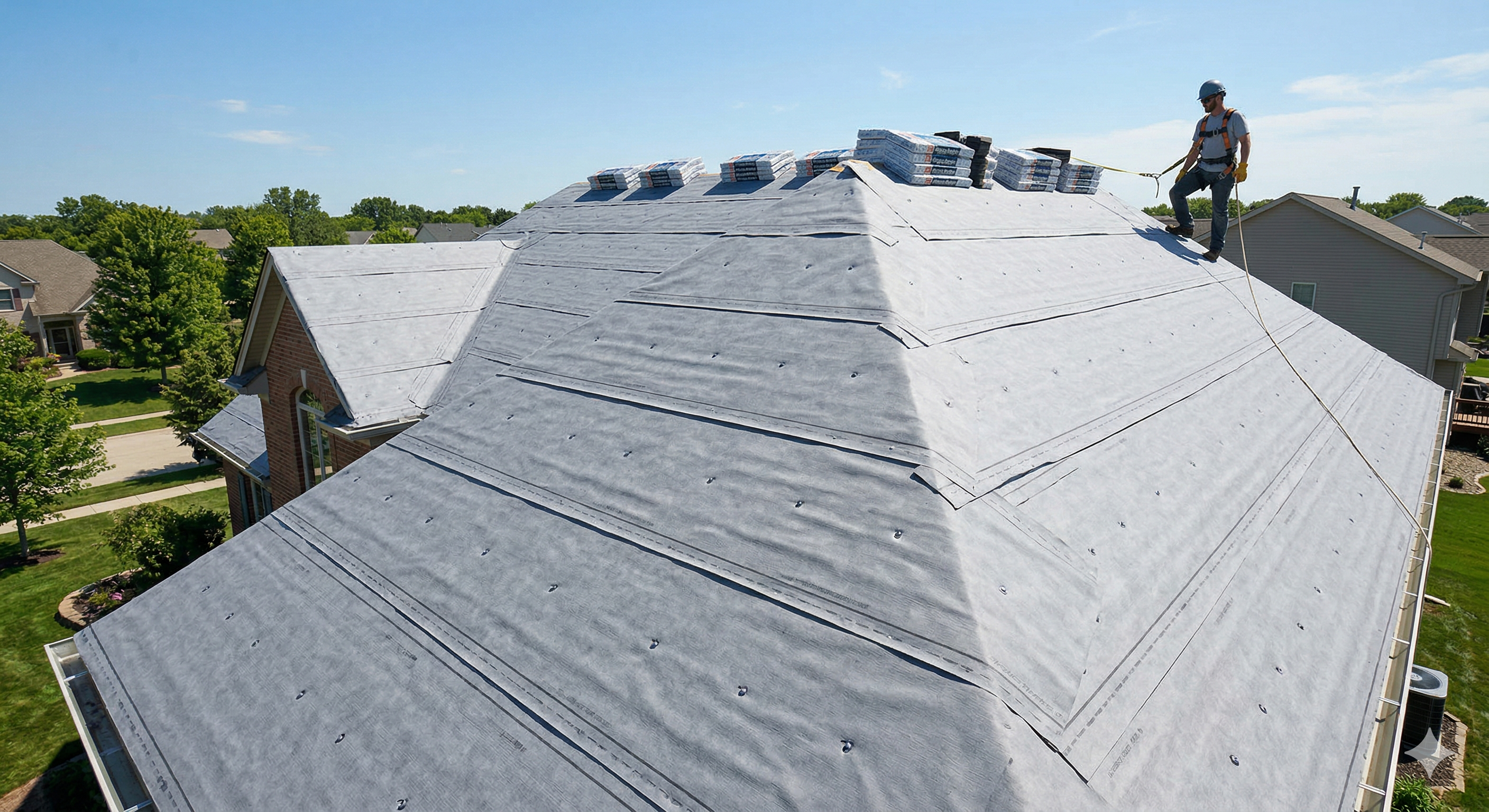
Does underlayment go on every part of the roof? Yes. The entire roof deck should be covered. Synthetic underlayment covers the main field, and peel and stick goes in the high risk areas (eaves, valleys, penetrations). No section of the deck should be left bare.
What if my roof already has underlayment from the previous shingles? During a roof replacement, the old shingles and old underlayment should both be removed. The deck should be inspected for damage, repaired if necessary, and then fresh underlayment installed before the new shingles go on. Installing new shingles over old, degraded underlayment defeats the purpose.
Protect Your Roof From the Start
Roof underlayment is not an optional upgrade. It is a required, code mandated part of every roofing system that protects your home from water damage, mold, and structural failure. Skipping it to save a few hundred dollars puts a multi-thousand dollar investment at risk and voids the warranty that is supposed to protect you.
There are several types of roof underlayment to choose from, each suited to different roofs.
At BCP Inc., we supply synthetic roof underlayment that is built for real world conditions. Our RoofLayer products are trusted by contractors and homeowners who understand that what goes under the shingles matters just as much as the shingles themselves.
Ready to protect your next roof? Call us at 877-540-5678 or visit bcpinc.us/roof-underlayment to compare our Eco, Standard, and Premium options and request a quote.
